Choose pure green tea if you want a short ingredient list, a flavour collection if you want variety in one box, or a clearly labelled decaffeinated tea if reducing caffeine is your priority. Ordinary green tea contains caffeine, and a flavoured or botanical blend needs its own ingredient check—particularly during pregnancy or breastfeeding, or if you take medicines.
Who might choose each type?
The useful distinction is between the reason you are choosing green tea—caffeine reduction, a straightforward daily cup or flavour variety—rather than a single blend for every new parent.
Breastfeeding parents counting caffeine
Green tea belongs in your daily caffeine total alongside sources such as coffee, other tea and cola. If reducing caffeine is the main reason for shopping, start with a product clearly labelled decaffeinated rather than assuming a particular flavour contains less.
Parents who want a simple cupboard tea
A pure green tea lets you compare a short ingredient list, bag count and brewing directions without choosing between several blends. Check the pack size against how often you expect to make a cup.
Parents who prefer a change of flavour
A collection can put several green-tea flavours in one box. Read the ingredients for each variety rather than assuming that every bag has the same botanicals or is equally suitable for your circumstances.
What should you check before buying?
Start with caffeine and ingredients, then choose a pack and preparation method that fit the way you will make tea. If iron intake is a concern, the timing of your cup matters even when the tea is decaffeinated.
| Priority |
What to check |
Your needs |
| Caffeine |
Check whether the exact tea is labelled decaffeinated. If tracking caffeine, check the pack’s serving and brewing information and count other caffeine sources too. |
I want to account for every caffeinated drink rather than treating green tea as caffeine-free. The NHS gives green tea as a caffeine source in its breastfeeding diet guidance. |
| Ingredients and flavour |
Compare pure green tea with the ingredient lists of individual flavoured bags. Check specific botanicals if pregnancy, breastfeeding, medicines or an individual sensitivity affects your choice. |
A short ingredient list makes my choice simpler; alternatively, I might enjoy changing flavours. I would choose a botanical blend for its taste, not an assumed health effect. |
| Daily preparation |
Look at bag count, wrapping and the stated brewing method. A collection offers different flavours in one box; some teas specify a particular water temperature and brewing time. |
For a quick cup, tea bags and clear directions matter to me. If I prefer to control the brew more closely, I can follow the method on the specific tea. |
| Iron-related timing |
Consider when you drink tea in relation to meals. Leeds Teaching Hospitals advises avoiding tea and coffee, including decaf versions, for an hour before or after meals when following its iron-intake guidance. |
If I have been advised to improve my iron intake, I need to plan my tea around meals and ask the clinician managing any iron treatment about supplement timing. |
| Pack format |
Compare bag count and net weight as well as flavour. A box of mixed bags, a larger pack of one tea and a matcha gift set serve different routines. |
I would rather choose a format I will use regularly than assume every green-tea pack offers the same number of cups or preparation steps. |
Common buying mistakes
-
Assuming green tea is caffeine-free
Ordinary green tea contains caffeine. The NHS includes green tea among the sources to count when considering caffeine during breastfeeding; other drinks and foods can contribute too.
If reducing caffeine is your aim, choose a clearly labelled decaffeinated product and check its current pack information. A green or lemon-flavoured label alone does not establish caffeine content.
-
Choosing botanicals for an assumed health effect
Matcha and botanical ingredients describe what is in a blend, not what it will do for recovery, sleep or milk supply. NHS advice about herbal medicines during pregnancy and breastfeeding should not be treated as a claim that a flavoured tea is a remedy.
Choose a blend for its listed flavours. If a particular ingredient concerns you during pregnancy or breastfeeding, or alongside medicines, ask a pharmacist, midwife or GP about that ingredient.
-
Comparing boxes without comparing their contents
Bag counts and formats differ: Tesco lists Clipper Organic Fairtrade Green Tea as an 80-bag pack, while Teapigs lists Mao Feng in a 15-tea-temple pack. The latter also has specific brewing directions.
Check the number of portions, net weight, format and brewing method before deciding which pack fits your routine.
-
Assuming decaf tea makes meal timing irrelevant
Leeds Teaching Hospitals says tea and coffee, including decaf versions, can reduce iron absorption. Its iron-intake guidance advises avoiding them for an hour before or after meals.
If you are following iron-intake advice, keep tea away from meals by that interval and ask the clinician managing any iron treatment how to time your supplements.
Brand ranges to consider
These ranges illustrate different ingredient and pack choices; a brand name alone does not establish the caffeine content or suitability of a particular blend.
Twinings
Twinings lists pure, flavoured and decaffeinated green teas. Its Green Tea Classic Collection contains ginger, lemon, jasmine and mint varieties.
- The collection provides flavour variety in one box.
- The blends have different ingredients; check the individual variety rather than treating the collection as one uniform tea.
Clipper
Clipper’s green-tea range includes pure and flavoured options. Tesco lists organically grown green tea as the ingredient in its Organic Fairtrade Green Tea 80-bag pack.
- The listed pure-green product offers a single tea ingredient in a larger bag pack.
- Organic and Fairtrade descriptions do not mean that the tea is decaffeinated.
Teapigs
Teapigs lists Mao Feng as pure green tea in a 15-tea-temple pack, with an 80°C, three-minute brewing method.
- The stated method helps shoppers who want to follow precise brewing directions.
- Teapigs says Mao Feng naturally contains caffeine; its pack format also differs from an 80-bag box.
Pukka
Pukka describes green-tea blends combining matcha with botanical flavours, including mint and ginger.
- The range offers botanical flavour combinations for shoppers who specifically want them.
- Check the exact blend’s ingredients if pregnancy, breastfeeding, medicines or ingredient sensitivity affects your choice; do not select it for an assumed therapeutic effect.
Tesco
Tesco lists an own-label Green Tea 20 Pack alongside branded green teas.
- The own-label pack gives shoppers another stated bag count to compare.
- Check the current product label and compare pack details with any branded alternative you are considering.
Green tea options on Joybuy
These options cover decaffeinated, plain, roasted and lemon-flavoured green tea, plus a matcha gift set. Choose by the type of tea and preparation you want; the different formats do not answer the caffeine or ingredient question in the same way.
 No image available
Tetley Green Tea Decaffeinated 50 Tea Bags 100g
A decaffeinated option to consider when reducing caffeine matters more than flavour variety. The pack contains 50 tea bags and is labelled 100g; check its current caffeine and brewing information if you are tracking intake.
View on Joybuy
 No image available
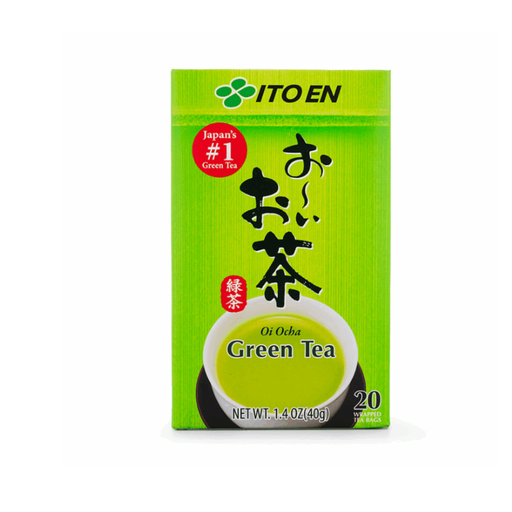
ITOEN OH-I OCHA Green Tea Bags 40g, 20 bags
A plain green-tea bag format for someone who prefers one tea to a mixed-flavour box. The pack lists 20 bags and 40g; check the current pack for brewing directions and caffeine information if those affect your choice.
View on Joybuy
 No image available
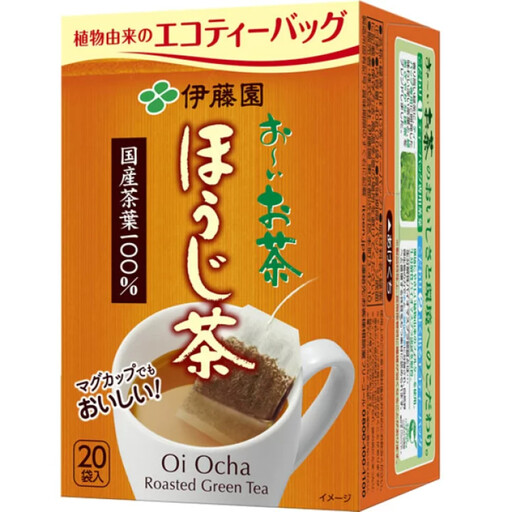
Itoen Oi Ocha Hojicha Premium Roasted Green Tea 1.8g × 20
Consider this Hojicha if you want a roasted green-tea style rather than a plain or lemon-flavoured bag. The name specifies 1.8g × 20; do not rely on a general description of roasted tea to judge caffeine intake—check the current pack.
View on Joybuy
 No image available
OMGTea AA Organic Matcha Gift Set 30g
A matcha gift set is a different choice from a box of green-tea bags if you want to prepare matcha. Its name specifies 30g; check the set contents, serving directions and caffeine information before deciding whether the preparation suits your routine.
View on Joybuy
 No image available
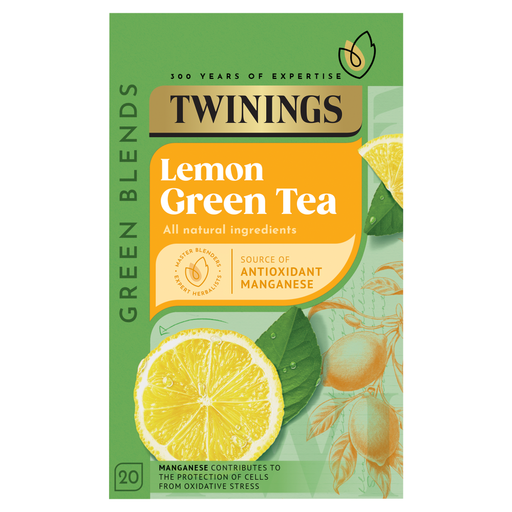
Twinings Lemon Green Tea 20 Pack
This 20-pack offers a lemon-flavoured choice if plain green tea is not the flavour you want. Check the current ingredients and caffeine information rather than assuming a flavoured tea is decaffeinated.
View on Joybuy
Frequently asked questions
Can I drink green tea while breastfeeding?
Count ordinary green tea towards your daily caffeine intake rather than treating it as caffeine-free. NHS breastfeeding pages give different daily figures: its breastfeeding diet page recommends no more than 200mg and gives green tea as 38mg in its example, while NHS Best Start in Life advises trying not to exceed 300mg. Ask your midwife, health visitor, GP or pharmacist which advice to follow for your circumstances, particularly if you are tracking several caffeine sources.
Is a botanical green-tea blend automatically suitable during breastfeeding?
No: a flavour description does not establish that every ingredient suits your circumstances or has a health effect. NHS guidance advises against taking herbal medicines during pregnancy or breastfeeding; that warning should not be turned into a claim about every flavoured tea. Check the specific blend and ask a pharmacist, midwife or GP about an ingredient if you are pregnant, breastfeeding or taking medicines.
Does decaf green tea need different timing around meals if iron is a concern?
No—decaf tea is included in Leeds Teaching Hospitals’ iron-intake advice. It advises avoiding tea and coffee, including decaf versions, for an hour before or after meals. If you take iron supplements, ask the clinician managing your treatment how to time them.


