At-home weekday tea drinkers
If you make green tea at home regularly, compare bag counts and brewing directions. Twinings Simply Sencha, for example, contains 40 loose pyramid bags that are not individually wrapped and has a stated 1–2-minute brew.


For green tea at home most weekdays, a larger pack such as Twinings Simply Sencha gives you 40 loose, non-individually wrapped pyramid bags and a stated 1–2-minute brew. A smaller pack may suit occasional use, while Clipper’s 20-bag Organic Fairtrade Pure Green offers different sourcing and bag-material claims. Check the exact preparation directions before choosing: Teapigs Mao Feng specifies 80°C water and three minutes, whereas Clipper specifies boiling water and 3–5 minutes.
If you make green tea at home regularly, compare bag counts and brewing directions. Twinings Simply Sencha, for example, contains 40 loose pyramid bags that are not individually wrapped and has a stated 1–2-minute brew.
If bags need to travel in a work bag or sit in a desk drawer, check the packaging before buying. A smaller pack may be easier to carry, but pack size alone does not tell you whether each bag is wrapped.
If a pyramid bag, pure green tea or sourcing claim matters to you, compare the exact products. Clipper labels its 20-bag Pure Green pack Organic and Fairtrade; Teapigs describes its Mao Feng Tea Temples as pyramid bags containing whole leaves.
Start with where you will make the tea and how often, then check the pack’s ingredients, packaging and preparation directions.
| Priority | What to check | Your needs |
|---|---|---|
| Pack size | Compare the bag count with how often you drink tea. Check whether bags are individually wrapped if you plan to carry them. | I make green tea at home on most weekdays, so a larger pack may mean fewer repeat purchases. If I take bags to work, I want to know how they are packed. |
| Brewing | Read the exact pack’s water-temperature and infusion-time directions. Twinings states 1–2 minutes for Simply Sencha; Teapigs specifies 80°C and three minutes for Mao Feng. | On a rushed morning, I want preparation instructions that fit the time and equipment I use. |
| Tea and bag format | Check whether the ingredients list names pure green tea or a blend. Confirm that the product uses pyramid bags if that shape matters to you. | I might prefer an unflavoured green tea, or want to try the whole-leaf Tea Temple format Teapigs describes for Mao Feng. |
| Sourcing and materials | Match Organic and Fairtrade wording to the exact product. Clipper labels its 20-bag Pure Green pack Organic and Fairtrade and describes its tea bags as unbleached and plastic-free. | Those claims may matter more to me than pack size. I also want to check what my local collection service accepts before disposing of used bags. |
| Caffeine | Read the product label if you need to avoid caffeine. Teapigs states that its Mao Feng green tea naturally contains it. | For a caffeine-free breakfast drink, I would look for a product specifically labelled decaffeinated rather than assume green tea is caffeine-free. |
A 15-bag pack and a 40-bag pack suit different rates of use, and a listed product may not be available when you need it.
Work out how many bags you are likely to use, then check the current product listing and availability before relying on it for weekday breakfasts.
The stated directions differ: Clipper’s Organic Fairtrade Pure Green specifies boiling water and 3–5 minutes, while Teapigs Mao Feng specifies 80°C and three minutes.
Check the directions for the exact tea you intend to buy, particularly if you do not usually cool or measure the water.
Teapigs identifies its Mao Feng green tea as naturally containing caffeine, so the words ‘green tea’ do not establish that a drink is caffeine-free.
If you need to avoid caffeine, check the label and look for a specifically decaffeinated product.
Clipper describes its tea bags as plastic-free, but that wording alone does not tell you whether your home compost or local food-waste collection accepts them.
Read the exact pack’s disposal instructions and check your local collection rules.
Twinings offers two distinct Sencha pyramid-bag packs: 40 loose Simply Sencha bags and a smaller 15-bag Discovery Pure Sencha pack.
Clipper’s Organic Fairtrade Pure Green product contains 20 pyramid bags of organically grown green tea.
Teapigs sells Mao Feng green tea in a 15-bag Tea Temple format, which the brand describes as pyramid bags packed with whole leaves.
Tesco Finest Green Tea Pyramid 15S is a supermarket own-label pack listing 100% Sri Lankan green tea leaves.
Pukka’s Mint Matcha Green combines mint with sencha and matcha, offering a flavoured alternative to the pure green teas above.
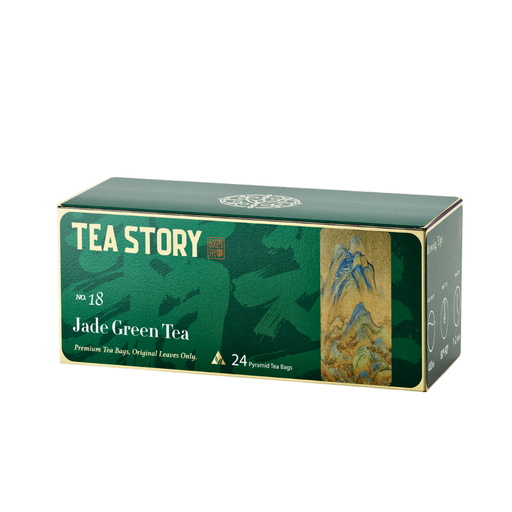
This Joybuy option is a 24-bag green tea pyramid pack to consider for tea made at home on weekdays.
 No image available
The 24-bag pack is an option for repeat use at home. Each bag is stated as 2g, giving 48g in total; the supplied preparation directions call for boiling water and a 3–5-minute infusion. If individual wrapping or organic certification matters to your choice, check the pack details before relying on either claim.
Not necessarily. Teapigs describes its Tea Temples as holding whole leaves, but bag shape alone does not establish which tea you will prefer. Compare the ingredients and the exact preparation directions as well as the format.
A larger pack can reduce how often you need to buy another one. Twinings Simply Sencha contains 40 loose, non-individually wrapped pyramid bags and has a stated 1–2-minute brew; check that the storage format works for you if you also take tea away from home.
No single direction applies to these products. Clipper specifies boiling water and a 3–5-minute infusion for its Organic Fairtrade Pure Green, while Teapigs specifies 80°C water and three minutes for Mao Feng. Follow the instructions on the exact pack.
Do not assume so: Teapigs states that its Mao Feng green tea naturally contains caffeine. If you need a caffeine-free drink, check for a product specifically labelled decaffeinated.
Plastic-free wording does not, by itself, establish that a bag is suitable for home compost. Clipper describes its tea bags as plastic-free; check the exact pack’s disposal directions and what your local collection service accepts.