For a slower weekend breakfast, a pure-green-tea pyramid bag is worth considering if you want a leaf-focused cup without preparing loose tea; the bag shape alone cannot tell you how it will taste. Twinings Discovery Pure Sencha offers large leaves in a 15-bag pack, teapigs Mao Feng has specific lower-temperature brewing directions, and Clipper Pure Green gives shoppers an organic and Fairtrade option. Check the exact pack’s ingredients, brewing instructions and wrapping before choosing.
Who might choose pyramid bags?
Weekend breakfast tea drinkers
If you have time to follow brewing directions but do not want to prepare loose tea, a pyramid bag offers a contained way to make the cup. Twinings describes large leaves in its Discovery Pure Sencha bags, while teapigs describes its tea temples as pyramid bags containing whole leaves. Neither description guarantees a particular flavour.
Ingredient- and sourcing-conscious shoppers
Plain green tea and botanical blends call for different label checks. teapigs lists pure Mao Feng green tea, while Clipper identifies its Pure Green pyramid bags as organic and Fairtrade. If those distinctions matter to you, check the wording on the pack you are buying.
Drinkers who find green tea too bitter
Brewing directions deserve attention alongside bag shape. teapigs specifies 80°C water and three minutes for Mao Feng; other products give different instructions. Pukka notes that tannins can contribute a bitter, drying sensation, so start with the directions for your chosen tea before adjusting the brew to taste.
What should you check?
Choose the leaf and ingredient style you want, then check whether its brewing method and pack format suit your breakfast routine.
| Priority |
What to check |
Your needs |
| Leaf format |
Check whether the pack identifies whole or large leaves, rather than assuming every pyramid bag contains them. Twinings describes large leaves in Discovery Pure Sencha; teapigs describes its tea temples as containing whole leaves. |
I want the convenience of a bag but am interested in the leaf format. I would not choose by bag shape alone if the type of tea matters more to me. |
| Brewing method |
Read the temperature and infusion time for the exact product. teapigs specifies 80°C for three minutes for Mao Feng, whereas Clipper directs a 3–5 minute infusion for its Pure Green pyramid bags. |
If I can control the water temperature at breakfast, teapigs Mao Feng’s directions are practical for me. Otherwise, I need to check the instructions of the tea I choose rather than use one method for every bag. |
| Ingredients and sourcing |
Read the ingredient list and any organic or Fairtrade wording on the current pack. Clipper lists organically grown green tea for its Pure Green pyramid bags; Pukka’s green-tea range also includes blends with other flavours. |
I may want plain green tea rather than mint or another botanical flavour. If sourcing claims influence my choice, I want them to apply to the particular pack in my basket. |
| Pack and disposal |
Check bag count, individual wrapping and the disposal instructions for each component. Twinings says its Discovery Pure Sencha bags are certified industrially compostable; Clipper describes its bags as plastic-free. |
For an occasional weekend cup, I may choose a smaller pack. I also want to know where the bags, any wrappers and the box can go locally, rather than treating different packaging claims as the same instruction. |
Buying pitfalls
-
Brewing every green tea bag the same way
The makers give different directions: teapigs specifies 80°C for three minutes for Mao Feng, Twinings advises a 2–3 minute infusion for Discovery Pure Sencha, and Clipper gives 3–5 minutes for Pure Green. One routine will not follow all three sets of instructions.
Start with the directions on your exact pack, then adjust the brew gradually to your taste.
-
Reading packaging claims as disposal instructions
Twinings’ industrial-compostability claim and Clipper’s plastic-free bag claim describe different things. Neither tells you on its own how to dispose of every part of the pack at home.
Read the current pack’s instructions for bags, wrappers and boxes, and check which materials your local collections accept.
-
Overlooking how many bags you will use
A pack chosen for occasional weekend breakfasts may not match a routine that uses several bags each week. The named Twinings Discovery Pure Sencha and teapigs Mao Feng packs contain 15 bags each; Clipper Pure Green contains 20.
Check the bag count and whether individual wrapping matters for how you plan to serve or store the tea.
-
Picking a blend when you want plain green tea
Pukka’s green-tea range includes matcha and botanical flavours, while the named teapigs Mao Feng and Clipper Pure Green products list green tea as their ingredient. The distinction affects what you are putting in the cup.
Choose a blend deliberately, and read its full ingredient and allergen information before buying.
Brand references
These product lines show different ways to approach a weekend green tea; check the individual pack rather than applying a brand-wide description to every tea.
Twinings
Discovery Collection Pure Sencha is a 15-bag, pure-green-tea pyramid option described by Twinings as containing large, gently steamed Chinese green-tea leaves.
- Twinings gives a 2–3 minute brewing direction for this product.
- Twinings describes these bags as certified industrially compostable; check the pack and local collection arrangements rather than assuming they can go in home compost.
teapigs
Mao Feng is a pure-green-tea choice within teapigs’ whole-leaf pyramid-bag range, which the brand calls tea temples.
- teapigs specifies 80°C water and a three-minute brew for Mao Feng.
- teapigs states that Mao Feng naturally contains caffeine. Its lower-temperature directions also matter if you normally make tea straight from a boiling kettle.
Clipper
Organic Fairtrade Pure Green is a 20-pyramid-bag option listing organically grown green tea as its ingredient.
- Clipper gives a 3–5 minute infusion direction and describes its tea bags as plastic-free.
- Check the pack if a named leaf variety or origin is important to your choice; the Pure Green product description identifies the ingredient more generally.
Pukka
Pukka’s green-tea range includes matcha and botanical flavours for shoppers considering a blend instead of plain green tea.
- The range gives you ingredient and flavour combinations to compare with a pure-green-tea option.
- Check the format and ingredient list of the particular Pukka pack if pyramid bags and plain green tea are requirements.
Green tea pyramid bags on Joybuy
This Joybuy option is a green-tea pyramid-bag pack for making a measured breakfast brew. Its product directions differ from those of some other teas discussed above, so use the instructions for the pack you choose.
 No image available
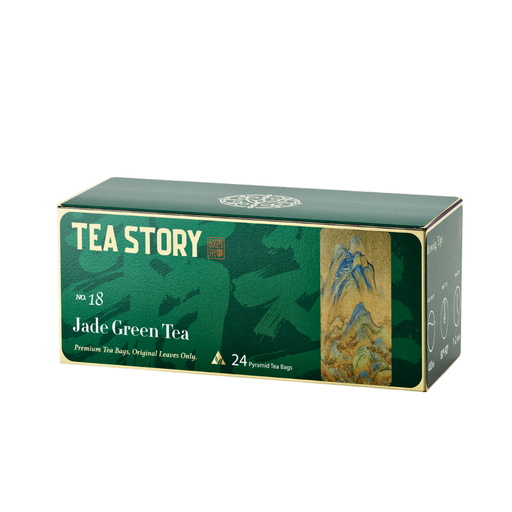
TEA STORY Jade Green Tea Spring First Flush, 24 pyramid bags × 2g
For a weekend cup without loose-leaf preparation, this pack contains 24 green-tea pyramid bags of 2g each. The product description lists green tea as the ingredient and instructs using one bag in boiling water for 3–5 minutes. If organic certification, leaf size, individual wrapping or disposal instructions affect your choice, check the current pack.
View on Joybuy
Questions about green tea pyramid bags
Do pyramid bags automatically make green tea taste better?
No. Twinings and teapigs describe the leaf format of their pyramid-bag products, but those descriptions do not establish which flavour you will prefer. Compare the tea itself and follow its brewing directions before judging whether the format suits you.
How should I brew a green tea pyramid bag at breakfast?
Follow the directions for the exact pack rather than using one temperature or infusion time for every green tea. teapigs recommends 80°C water for three minutes for Mao Feng, while Twinings gives a 2–3 minute infusion for Discovery Pure Sencha. Adjust gradually to taste after trying the maker’s method.
Is a plain-green-tea ingredient list enough to check for allergens?
No. Read the current product label, including its allergen information, rather than relying only on a short product description. GOV.UK states that prepacked food or drink containing any of the 14 specified allergens must clearly identify them in the ingredients list.


