What should you check before buying?
Decide on the flavour first, then compare the brewing method, bag format and pack information that fit the way you will make and store the tea.
| Priority | What to check | Your needs |
|---|
| Flavour |
Check whether the ingredients are pure green tea or include mint or matcha. Pukka Mint Matcha Green Tea contains mint, sencha and matcha, but its pyramid-bag format is unconfirmed. |
I would like the tea leaf to be the main flavour; alternatively, mint might make a hot cup more appealing to me. |
| Brewing |
Follow the chosen pack. Twinings gives 1–2 minutes for Simply Sencha; Teapigs directs 80°C water and around three minutes for Mao Feng; Clipper directs boiling water and 3–5 minutes for its Pure Green pyramids. |
A short steep suits my routine, or I am happy to prepare water at the temperature my chosen tea requires. |
| Bag format |
Confirm the bag count, shape and wrapping. Twinings describes its Simply Sencha 15-pack as individually wrapped pyramids; Teapigs calls its bags tea temples. |
I want bags I can carry separately, or I will keep the pack at home and care more about its ingredients and brewing method. |
| Sourcing and disposal |
Check credentials on the exact pack. Clipper labels its Pure Green pyramids organic and Fairtrade. Read recycling and composting instructions by component, and check what local collections accept. |
Sourcing credentials matter to me, but I also want to know how the carton, any wrapping and the used bag should each be disposed of. |
| Caffeine and ingredients |
Read the ingredient and caffeine information on the chosen product. Teapigs states that its Mao Feng and Green Tea with Mint naturally contain caffeine. |
If I want an evening drink without caffeine, I will not assume a green tea or a green-tea-and-mint blend is caffeine-free. |
Which brands illustrate the options?
These product lines show how flavour, format and brewing instructions differ; a brand’s inclusion here does not establish that every tea it makes comes in a pyramid bag.
Twinings
Its Simply Sencha is a pure-green-tea option in individually wrapped pyramid bags. Twinings also offers a Discovery Collection Pure Sencha pyramid-bag product.
- Twinings lists 15 individually wrapped bags and a 1–2 minute brew for Simply Sencha.
- Check the disposal instructions by component: a claim of industrial compostability does not establish home compostability.
Clipper
Clipper labels its 20-bag Pure Green pyramid product organic and Fairtrade.
- Its directions specify boiling water and a 3–5 minute infusion.
- The product page describes a recyclable box; that does not establish the disposal route for every other pack component.
Teapigs
Teapigs offers pure mao feng green tea and a chunmee-green-tea-and-peppermint blend in bags it calls tea temples.
- Its directions specify 80°C water and around three minutes of brewing for the listed teas.
- Teapigs states that both contain caffeine; its tea-temple name should not be mistaken for confirmation of a conventional pyramid-bag classification.
Pukka
Mint Matcha Green Tea is a blend of field mint, spearmint, sencha and matcha rather than a pure green tea.
- Its stated ingredients provide a mint-and-matcha flavour alternative to pure sencha.
- Check the bag format if a pyramid bag is essential; the product information does not establish that this blend uses one.
Green tea pyramid bags on Joybuy
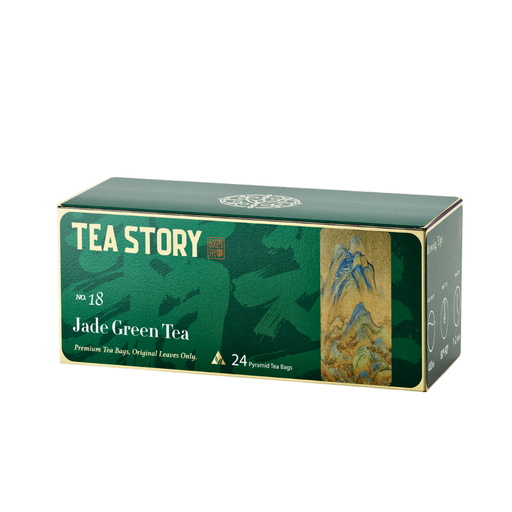
This Joybuy option is a pure green tea in pyramid bags for making a hot cup. Compare its pack details with your preferred flavour and routine rather than treating it as a mint-blend option.
 No image available
TEA STORY Jade Green Tea Spring First Flush, 24 Pyramid Bags × 2g
For a hot cup without added flavourings, this product lists green tea as its ingredient. The pack contains 24 pyramid bags of 2g each. Check the pack’s brewing, wrapping and caffeine information if those details affect your choice; confirm any organic certification claim separately if it is decisive.
View on Joybuy
Common questions
Are green tea pyramid bags caffeine-free?
Do not assume they are. Teapigs states that its Mao Feng and Green Tea with Mint products naturally contain caffeine, so check the exact product label if caffeine matters to your choice.
Should I use boiling water for every green tea bag?
No: use the chosen maker’s instructions. Teapigs specifies 80°C water for its Mao Feng and Green Tea with Mint tea temples; Clipper directs boiling water and a 3–5 minute infusion for its Pure Green pyramids. Twinings gives a 1–2 minute brew for Simply Sencha.
Should I choose pure green tea or green tea with mint for a winter drink?
Choose pure sencha or mao feng if you want the tea leaf to remain the main flavour. Choose a green-tea-and-mint blend if you would rather taste mint in your hot drink, and check its bag format if a pyramid shape is important.
Can every pyramid tea bag go in home compost or food waste?
No general rule follows from the bag shape. Twinings describes its tea bags as industrially compostable, which does not establish home compostability. Follow the chosen pack’s component-specific instructions and check what your local collection accepts.
How should I store green tea bags between drinks?
Keep them cool and dry, as Clipper directs for its Pure Green pyramid bags. If you need bags to carry separately, check whether the particular pack is individually wrapped; Twinings identifies its Simply Sencha 15-pack as such.


