What should you check before buying?
For a student move-in shop, decide on flavour and caffeine first, then check whether the pack size and brewing directions fit the way you will make tea.
| Priority | What to check | Your needs |
|---|
| Flavour |
Compare a plain green-tea ingredient list with the additions in a flavoured blend. Clipper lists green tea alone in Pure Green, while its Green Tea & Lemon contains green tea, natural flavour and lemon peel. |
I would rather choose a flavour I expect to drink regularly than buy a plain tea solely because it sounds simpler. |
| Caffeine |
Check whether the pack says standard green tea, decaffeinated green tea or caffeine-free herbal or fruit infusion. Twinings states that standard green tea naturally contains caffeine; do not treat “decaffeinated” as identical to “caffeine-free”. |
For an evening cup, I want to know which kind of tea or infusion I am putting in the cupboard. |
| Brewing |
Read the directions for the exact tea. Twinings Pure Green specifies freshly boiled water for 3 minutes; Clipper Pure Green says to cool boiled water for a minute and infuse for 1–3 minutes. Teapigs specifies 80°C and 3 minutes for Mao Feng. |
With a basic kettle in a shared kitchen, I want directions I can follow without extra equipment or much temperature judgement. |
| Ingredients |
Read the whole ingredient list when switching between pure green tea and lemon, mint, jasmine or matcha blends. Pukka says its Supreme Matcha Green contains whole-leaf green tea and matcha, and states that matcha makes up 2% of that blend. |
If I avoid a particular ingredient or want pure matcha powder, the words on the front of a green-tea sachet are not enough to make that choice. |
| Pack size |
Check the number of bags and the storage directions. The Twinings Pure Green example has 20 bags, while Clipper lists an 80-bag Pure Green pack and advises cool, dry storage. |
A smaller pack may suit me while I work out what I like; a larger one makes more sense if I already know I will use it and have somewhere dry to keep it. |
Brand ranges to compare
These brand examples illustrate different green-tea formats and flavours; their inclusion does not indicate which individual products are available on Joybuy.
Twinings
Twinings offers plain and flavoured green teas as well as a decaffeinated green-tea option.
- Its Pure Green 20-bag product specifies one bag in 200 ml of freshly boiled water for 3 minutes.
- Twinings states that standard green tea naturally contains caffeine; check which variant you have selected.
Clipper
Clipper’s Pure Green and Green Tea & Lemon illustrate the choice between a one-ingredient tea and a citrus blend.
- The Pure Green 80-bag listing names organic green tea as its ingredient and gives a 1–3 minute infusion after boiled water has cooled for a minute.
- Its lemon blend also contains natural flavour and lemon peel, so check the exact pack if ingredients matter to you.
Pukka
Pukka’s green-tea range includes Supreme Matcha Green and Mint Matcha Green for shoppers considering blended flavours.
- Pukka describes Supreme Matcha Green as a blend of whole-leaf green tea and matcha powder.
- Pukka states that the blend contains 2% matcha; it should not be mistaken for pure matcha powder.
Teapigs
Teapigs Mao Feng is a pure green-tea option in individual tea temples.
- Teapigs lists pure Mao Feng green tea as the ingredient and recommends brewing for 3 minutes at 80°C.
- That temperature instruction takes more judgement with a basic boiling kettle than a freshly boiled-water instruction.
Green-tea options on Joybuy
These tea bags cover plain, flavoured and decaffeinated green-tea choices for a student cupboard. Compare the exact ingredients, pack directions and caffeine wording before choosing a variant.
 No image available
Tetley Decaffeinated Green Tea, 50 bags, 100 g
A 50-bag green-tea option if you want a decaffeinated variant for your cupboard. Decaffeinated does not mean caffeine-free: check the pack details if you need to avoid caffeine, and follow its brewing directions.
View on Joybuy
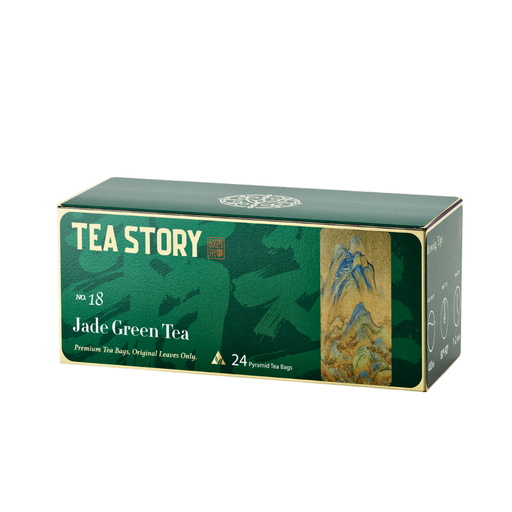 No image available
TEA STORY Jade Green Tea Pyramid Bags, 24 × 2 g
A plain green-tea bag for an unflavoured cup; the product information lists green tea as the ingredient and gives a 3–5 minute infusion in boiling water. Standard green tea contains caffeine, so check the pack if that affects when you drink it.
View on Joybuy
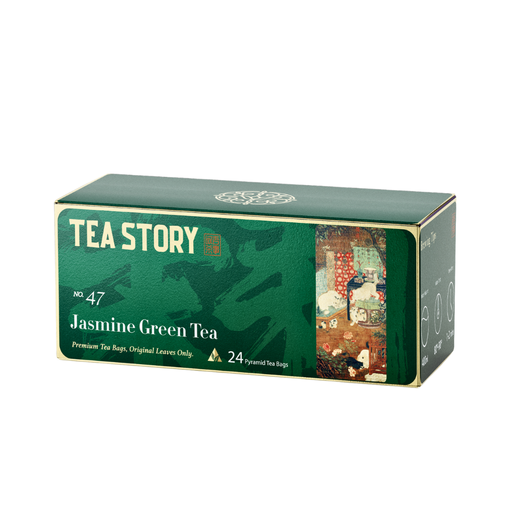 No image available
Tea Story Jasmine Green Tea, 24 × 2 g
Choose this variant for a jasmine-flavoured green tea rather than a plain one. Its stated directions call for 75–80°C water and a 2–3 minute brew, which may take some temperature judgement with a basic kettle. Do not assume it is a low-caffeine or caffeine-free evening tea.
View on Joybuy
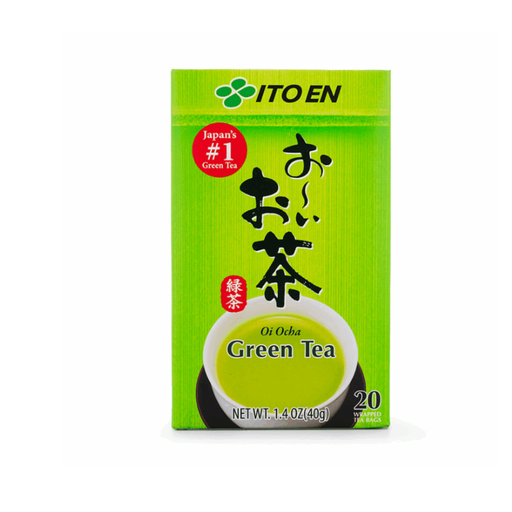 No image available
ITOEN OH-I OCHA Green Tea, 20 bags, 40 g
A 20-bag plain green-tea option for a shared-kitchen cupboard; green tea is the listed ingredient. Check the pack for brewing directions and caffeine information if either affects your choice.
View on Joybuy
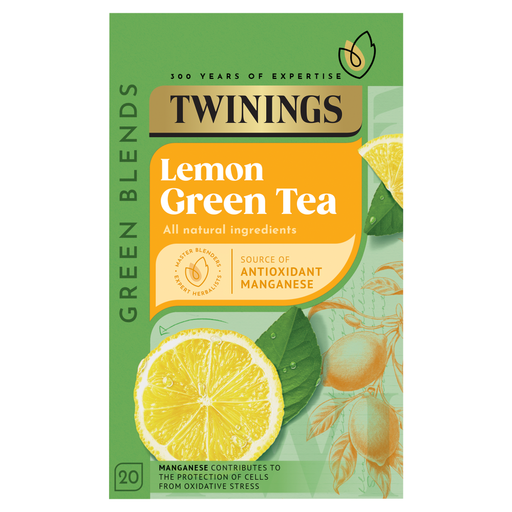 No image available
Twinings Lemon Green Tea, 20-pack
A citrus-flavoured alternative to plain green tea in a 20-pack. The product information lists green tea and natural lemon flavouring, along with other natural flavourings; read the exact pack if you avoid particular ingredients. Check its brewing directions and caffeine wording before use.
View on Joybuy
Green-tea questions
Does green tea contain caffeine?
Yes, standard green tea naturally contains caffeine. Twinings estimates around 30–40 mg per 200 ml cup in its green-tea guidance, while noting that growing and brewing conditions affect the amount. If caffeine matters to you, check the specific pack rather than applying that estimate to every blend; decaffeinated green tea and caffeine-free herbal or fruit infusions are different options.
Which green tea can I make with a basic kettle?
Choose directions you can comfortably follow. Twinings Pure Green specifies freshly boiled water and 3 minutes; Clipper Pure Green says to let boiled water cool for a minute before a 1–3 minute infusion. Teapigs Mao Feng specifies 80°C, which takes more temperature judgement without a temperature-controlled kettle.
What should I check if I avoid certain ingredients?
Read the ingredient and allergen information on the exact pack, particularly when moving from plain green tea to a flavoured or botanical blend. Clipper’s Pure Green lists green tea alone, while its Green Tea & Lemon also lists natural flavour and lemon peel; that comparison does not establish the contents of other products.
Is a matcha-labelled tea bag the same as pure matcha powder?
Not necessarily. Pukka describes Supreme Matcha Green as whole-leaf green tea blended with matcha and states that matcha makes up 2% of it. Check whether the product is a green-tea blend or is labelled 100% matcha powder before choosing between the two formats.
Where should I keep tea bags in student accommodation?
Follow the storage directions on your pack. Clipper advises keeping its Pure Green tea cool and dry, so a dry cupboard away from steam or a damp sink area fits that product’s instructions; also check its best-before information.


