If you expect to sleep soon after supper, start with decaffeinated green tea for green-tea flavour, or an explicitly caffeine-free herbal infusion if avoiding caffeine is the priority. Regular and matcha-containing green teas contain caffeine; Oxford Health NHS Foundation Trust notes that caffeine can affect falling asleep and sleep quality. A bold flavour description does not tell you how much caffeine is in the cup.
Who is each drink for?
People heading to bed after supper
If caffeine is a concern close to bedtime, consider decaffeinated green tea or an explicitly caffeine-free herbal infusion instead of regular green tea. Oxford Health NHS Foundation Trust says caffeine can affect how quickly you fall asleep and the quality of your sleep.
Green-tea drinkers who want a fuller flavour
Choose the tea type before judging flavour descriptions. A decaffeinated green tea keeps the green-tea base; check its ingredients and brewing instructions rather than assuming that a “bold” label indicates low caffeine.
People who want tea after supper but are staying up
Regular green tea or a matcha-containing blend may fit when minimising evening caffeine is not the aim. Check the exact blend and your plans for bedtime rather than treating every late supper alike.
What should you check?
Decide whether you want to retain green-tea flavour, avoid caffeine or choose a fuller-tasting regular tea. Then check the exact pack rather than relying on flavour words.
| Priority | What to check | Your needs |
|---|
| Caffeine near bedtime |
Check whether the drink is regular green tea, decaffeinated green tea or explicitly caffeine-free. Decaffeinated does not necessarily mean caffeine-free: Tetley describes one decaf green tea as decaffeinated to 0.2%. |
I expect to sleep soon after supper, so the drink’s caffeine designation matters more to me than a strong-flavour description. |
| Green-tea flavour |
Read the ingredients for decaffeinated green tea, regular green tea or matcha. Check the pack’s infusion instructions before changing the brewing time; Twinings says a longer brew increases caffeine extraction. |
I want a recognisable green-tea cup with supper without assuming that a longer steep leaves caffeine unchanged. |
| Flavoured blends |
Check the tea base as well as mint or other flavourings. Pukka’s Mint Matcha Green Tea contains sencha and matcha; its separately identified caffeine-free range consists of herbal teas. |
A mint flavour appeals to me, but I still need to know whether I am choosing green tea or a caffeine-free infusion. |
| Regular tea later in the evening |
Look for a caffeine statement for the exact tea and preparation. Twinings puts its own green tea at around 30–40 mg per 200 ml cup; that figure does not describe every brand or brew. |
I am staying up after supper and may choose regular green tea, but I do not want “strong” to stand in for caffeine information. |
Common buying mistakes
-
Reading “bold” as a caffeine statement
Flavour descriptions do not establish the caffeine content of a green tea. Twinings also says longer brewing increases caffeine extraction.
Choose the tea type and check its caffeine statement first; use flavour descriptions to narrow your options afterwards.
-
Equating decaffeinated with caffeine-free
Tetley describes its decaffeinated green tea as decaffeinated to 0.2%, while Pukka identifies a separate naturally caffeine-free herbal range.
If you need to avoid caffeine, check the exact label for a caffeine-free statement rather than relying on “decaf”.
-
Choosing mint matcha as though it were a herbal infusion
A mint flavour does not change the tea base: Pukka identifies sencha and matcha in its Mint Matcha Green Tea.
Read the ingredients. Choose a product explicitly labelled caffeine-free when that is the requirement.
-
Substituting a different tea without checking the pack
A change of blend or pack can change the tea base or decaffeination statement that mattered to your decision.
Before ordering, check availability and confirm the exact tea type and pack size of any substitute.
Brand and retailer references
These ranges illustrate different tea types to check; a brand name alone does not establish the caffeine content of a particular pack.
Twinings
Its UK range includes regular green teas and Pure Green Decaffeinated.
- Twinings states that its green tea contains around 30–40 mg of caffeine per 200 ml cup.
- That brand figure should not be applied to every green tea or brewing method.
Clipper
Its Organic & Fairtrade Decaf Green Tea is an option for shoppers who want an unflavoured decaf green tea.
- Clipper lists decaffeinated organically grown green tea as the ingredient.
- Decaffeinated is not a caffeine-free designation; check the exact pack if complete avoidance matters.
Pukka
Its range includes matcha-containing green-tea blends and separately identified caffeine-free herbal teas.
- The separate ranges let shoppers check whether they want green tea or a herbal infusion.
- Pukka’s Mint Matcha Green Tea contains sencha and matcha; its mint flavour does not make it caffeine-free.
Teapigs
Its green-tea selection includes Mao Feng, jasmine pearls and green tea with mint.
- Teapigs describes its green teas in flavour-led terms, including bold taste.
- Those descriptions do not establish that a tea is decaffeinated or suitable when avoiding caffeine.
Tesco
Its grocery listings distinguish a general green-tea category from a decaf-green-tea browsing category.
- Its listings provide examples of regular green teas and Tetley Green Tea Decaffeinated.
- A product appearing in a browsing category is not a substitute for checking its exact tea base: Tesco also lists Tick Tock Organic Rooibos Green in its decaf-green-tea category.
Green teas on Joybuy
These are regular green-tea options for shoppers considering flavour with supper. Neither product is identified here as decaffeinated or caffeine-free, so check caffeine information on the exact pack if bedtime is near.
 No image available
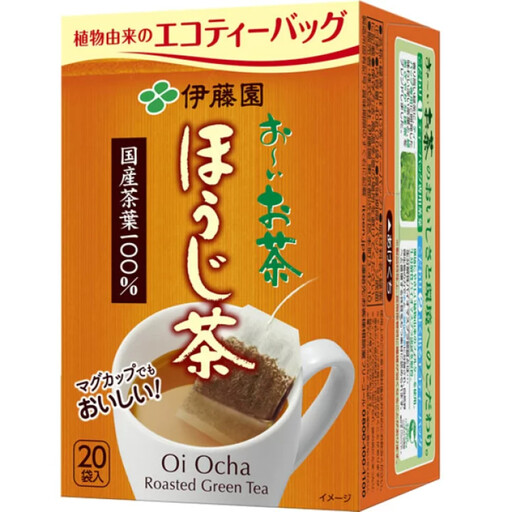
Itoen Oi Ocha Hojicha Premium Roasted Green Tea, 1.8 g × 20
Consider this tea if you want a roasted green-tea flavour with supper. The listing describes a toasty, slightly nutty profile and calls the tea low-caffeine, but gives no amount; it is not identified as decaffeinated or caffeine-free. Check the pack’s caffeine and infusion information if you expect to sleep soon.
View on Joybuy
 No image available
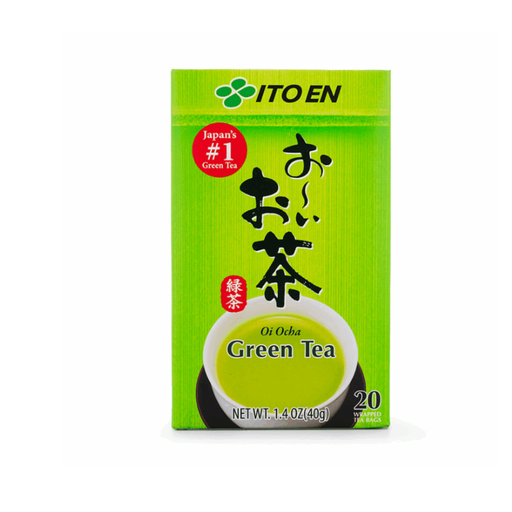
ITOEN OH-I OCHA Green Tea Bags, 40 g, 20 bags
Consider this regular green tea when a fuller flavour matters more than minimising evening caffeine. The seller describes a bold taste; the pack contains 20 tea bags and weighs 40 g. Check its caffeine information and brewing instructions before choosing it close to bedtime or extending the steep.
View on Joybuy
Questions about evening green tea
Should I drink regular green tea just before bed after supper?
If you are trying to sleep soon, consider decaffeinated green tea or an explicitly caffeine-free infusion instead. Regular green tea contains caffeine, and Oxford Health NHS Foundation Trust says caffeine can affect falling asleep and sleep quality.
Is decaffeinated green tea caffeine-free?
Not necessarily. Tetley describes its decaffeinated green tea as decaffeinated to 0.2%; that is different from a product explicitly described as caffeine-free. Check the exact label if avoiding caffeine is your priority.
Should I brew green tea longer for a stronger late-night cup?
A longer steep is not a caffeine-neutral way to pursue a stronger cup. Twinings says brewing for longer increases caffeine extraction, so follow the pack’s instructions and choose the tea type first if evening caffeine matters to you.
Is mint matcha green tea a caffeine-free infusion?
No: Pukka identifies sencha and matcha in its Mint Matcha Green Tea. If you want to avoid caffeine, look for a product explicitly identified as caffeine-free rather than judging it by its mint flavour.


