What to check before ordering
Work out how many cups you need and what brewing equipment is available. Those two decisions narrow the format before you choose a coffee.
| Priority |
What to check |
Your needs |
| Portion count |
Look for an explicit count of individual bags or sachets. If buying loose ground coffee, establish the intended dose and number of cups separately; a pack weight is not a serving count. |
I need to set out a known number of portions for attendees, without guessing how many cups a weighted pack will make. |
| Service set-up |
Confirm whether the format brews in a mug, sits over a cup or needs a shared machine. Taylors says its Rich Italian coffee bags brew in a mug for four minutes; Rombouts describes a one-cup filter used over a cup with hot water. |
With only mugs and hot water in the room, I want people to make their own coffee without waiting for someone to operate a machine. |
| Brewer fit |
Check the named brewing methods on the particular pack. Tesco lists its Finest Café Blend for cafetières, filter machines, moka pots and percolators, with a 3–5 minute cafetière brew. |
We already have a shared brewer, so the grounds need to match it and someone must be able to prepare the coffee. |
| Decaf choice |
Choose a product explicitly labelled decaffeinated and check whether its serving method fits the room. An Amazon.co.uk marketplace listing identifies Lavazza Dek as 80 decaffeinated ground-coffee sachets; confirm the preparation method before ordering. |
I want attendees to be able to distinguish decaf from standard coffee at the refreshment table. |
| Food information |
Read the delivered labels for the coffee and any milk, alternatives or snacks. If a catering business supplies the refreshments, ask it for allergen information covering the food and drink provided. |
People need clear information about everything served with their coffee, not just the grounds. |
Relevant brand references
These examples show how formats differ; a brand’s wider range does not establish the portion count or brewing method of every pack.
Taylors of Harrogate
Coffee Supplies Direct lists Rich Italian Coffee Bags as 1x80 individually wrapped portions, while Taylors gives instructions for brewing the Rich Italian range in a mug.
- A stated 80-count format helps when individual meeting portions must be counted.
- Taylors specifies four minutes of brewing per mug, which needs allowing for during a short break.
Lavazza
Lavazza ground coffee appears in both loose-pack and decaffeinated sachet formats. The format and serving method must be checked for the particular product.
- An Amazon.co.uk marketplace listing identifies Lavazza Dek as 80 decaffeinated ground-coffee sachets.
- Lavazza Espresso Italiano Classico 250g is loose ground coffee, not an 80-count box; the listed Dek sachets also need a serving-method check.
Rombouts
Rombouts describes a one-cup filter placed over a cup and brewed with hot water, without a machine.
- The one-cup method offers individual preparation where there is no shared brewer.
- Check the count of the specific pack if 80 portions are required.
Tesco Finest
Tesco lists Finest Café Blend as a 227g roasted-and-ground coffee for cafetières, filter machines, moka pots and percolators.
- Tesco provides named brewer compatibility and a 3–5 minute cafetière method.
- A 227g loose-ground pack requires a separate dosing plan for meeting portions.
illy
illy lists ground coffee for espresso and filter preparation, including a decaffeinated espresso-ground option.
- Named preparation formats help narrow the choice when the venue already has brewing equipment.
- Check the count and serving method of the specific pack before using it for an 80-portion plan.
Ground coffee options on Joybuy
These options include coffee bags for individual cups and loose grounds for venues with a shared brewer. Check the total bag count or planned loose-ground yield before relying on any of them for 80 servings.
 No image available
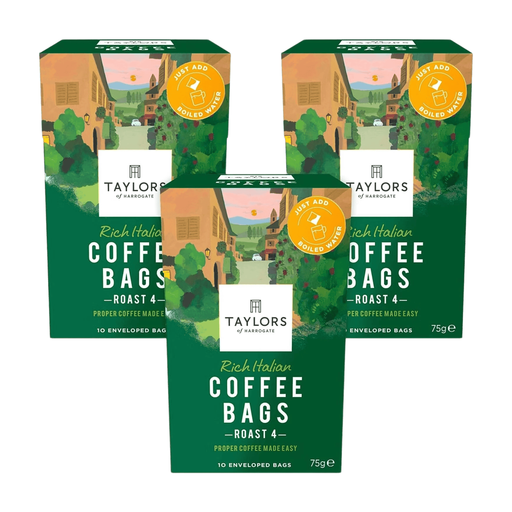
Taylors of Harrogate Rich Italian Coffee Bags 75g x 3
Individually wrapped bags offer cup-by-cup preparation where the meeting room has no shared coffee brewer. This bundle is 75g x 3; check its total number of bags before ordering it for 80 portions.
Joybuy
 No image available
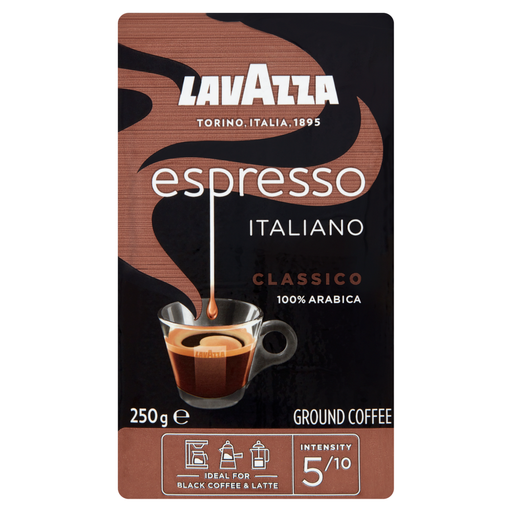
Lavazza Espresso Italiano Classico Ground Coffee 250g
This loose ground coffee is listed for moka pots, filter coffee machines and French presses, making the available brewer the first check for a meeting. The 250g pack needs a dosing and cup-count plan; it is not an 80-portion box.
Joybuy
 No image available
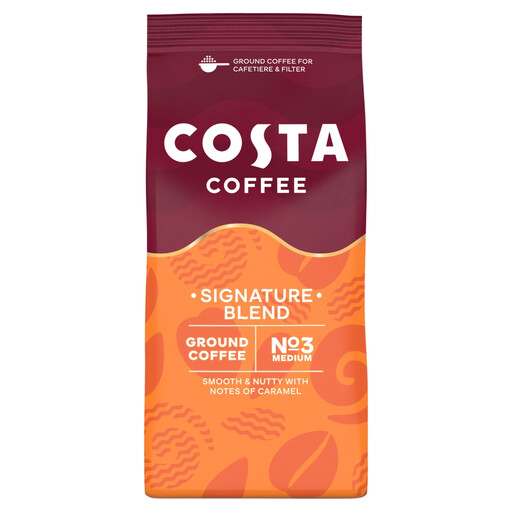
Costa Coffee Mocha Italia Signature Blend No. 3 Ground Coffee 200g
For a meeting with a cafetière or filter machine, this loose ground coffee is listed for those brewing methods. The pack is 200g with No. 3 medium coarseness; calculate the intended dose and number of cups separately.
Joybuy
Questions about meeting coffee
Does a box of 80 coffee bags provide the same number of portions as a loose-ground pack?
No. A stated 80-count coffee-bag pack contains 80 individual portions, while loose ground coffee is sold by weight. To plan cups from loose grounds, establish the dose you will use with the available brewer.
How long do Taylors Rich Italian coffee bags take to brew?
Taylors instructs users to put a bag in a mug, add boiled water that has stopped bubbling, swirl and brew for four minutes before removing the bag. Allow that time for each cup when scheduling a meeting break.
When does loose ground coffee make sense for a work meeting?
Choose loose grounds when the venue has a compatible brewer and someone can prepare and clear away batches. For example, Tesco lists Finest Café Blend for cafetières, filter machines, moka pots and percolators, with a 3–5 minute cafetière brew.
How should organisers choose a decaf option?
Choose coffee explicitly labelled decaffeinated, keep it identifiable alongside standard coffee and check how it is prepared. Roast or flavour descriptions do not identify a product as decaf.
What should be checked if milk or snacks are served with the coffee?
Check the delivered labels for all the refreshments, not only the coffee. If a catering business supplies them, ask for allergen information covering prepacked and non-prepacked food and drink; the Food Standards Agency provides guidance for food businesses on both.


