Airport café and coffee-bar operators
If the counter makes espresso, filter coffee or cafetière coffee, check the product’s stated preparation method against each brewer. A roast description alone does not establish equipment fit.


Choose ground coffee for an airport counter by matching its stated preparation method and grind to the equipment before deciding on a roast or blend. An espresso-led counter needs an espresso-suitable product, while filter or cafetière service calls for coffee specified for those methods. A house coffee, a darker-tasting option and a half-caff choice can serve different menu purposes, but each needs its own equipment and pack checks.
The right starting point depends on how the outlet prepares coffee and how many distinct drinks it intends to offer.
If the counter makes espresso, filter coffee or cafetière coffee, check the product’s stated preparation method against each brewer. A roast description alone does not establish equipment fit.
A compact menu might include a house coffee, a distinctly dark option and a half-caff choice. These serve different preferences; the half-caff option should not be presented as decaffeinated.
Teams holding coffee across shifts need to follow each pack’s opening and storage instructions. For served drinks and accompanying food, keep ingredient and allergen information aligned with the actual products and recipes in use.
Start with the brewer, then decide which flavour and caffeine choices the menu needs. Finish by checking the instructions and ingredients on the exact packs you will use.
| Priority | What to check | Your needs |
|---|---|---|
| Brewing method | Check the stated grind and preparation method against the installed espresso machine, filter brewer or cafetière. Lavazza UK says its ground coffees are ground for their intended brewing methods; illy specifies CLASSICO espresso ground coffee for Italian espresso, while Rombouts specifies medium-ground Cachet d'Or for filter and cafetière use. | I need coffee intended for the equipment at this counter, not just a roast name that sounds suitable. |
| Menu profile | Compare the stated blend and flavour of each exact product. Lavazza describes Qualità Rossa as an aromatic, smooth Arabica–Robusta blend; Taylors of Harrogate describes Hot Lava Java as extra-dark and robusta-containing. Neither description establishes a match for every brewer. | For an all-day menu, I may want a house coffee and a more pronounced dark option rather than expecting one profile to cover both roles. |
| Caffeine choice | Check the product’s composition or explicit caffeine description rather than judging by roast colour. Sainsbury's lists its Taste the Difference Half Caff as 50% coffee and 50% decaffeinated coffee; it is not a decaffeinated product. | Guests asking for less caffeine need a clearly identified choice. If the menu promises decaf, I need a separately labelled decaffeinated coffee. |
| Opened-pack handling | Read the exact pack’s storage and post-opening instructions, then set stock rotation accordingly. Lavazza advises cool, dry storage; Sainsbury's gives product-specific storage directions for its ground coffees. | When a pack stays open across shifts, I need a handling routine based on that coffee’s instructions rather than another brand’s timeframe. |
| Ingredients and allergens | Check the current coffee pack and the full served recipe, including milk, syrups, toppings and accompanying food. GOV.UK and Food Standards Scotland state that food businesses must provide allergen information for prepacked and non-prepacked food and drink. | I need customers to receive information about the drink or food actually served, not only the ingredients of plain ground coffee. |
Ground coffees intended for different preparation methods are not interchangeable simply because they share a roast description. illy specifies CLASSICO espresso ground coffee for espresso, whereas Rombouts specifies medium-ground Cachet d'Or for filter and cafetière use.
Record the brewer used at each counter, check the coffee’s stated method and follow the equipment instructions when setting a recipe.
An extra-dark roast does not, by itself, establish a coffee’s caffeine content. Taylors of Harrogate attributes Hot Lava Java’s stated extra caffeine effect to its robusta content; Sainsbury's identifies Half Caff by its 50:50 coffee and decaffeinated-coffee composition.
Use the exact product’s composition or caffeine description when labelling menu choices. Do not describe half-caff as decaf.
Opening and storage directions can differ between ground coffees. A timeframe printed on one product is not an instruction for every pack on the shelf.
Check each current pack, keep its instructions accessible to staff and rotate opened stock accordingly.
Milk, syrups, toppings and accompanying food can change the allergen information relevant to a served order. GOV.UK and Food Standards Scotland state that food businesses must provide allergen information for prepacked and non-prepacked food and drink.
Maintain ingredient and allergen records for the complete recipes being served, and check the applicable information requirements for how each item is sold.
These brand examples illustrate different product routes; their stated features apply to the named coffees, not every product made by each brand.
Lavazza UK describes Qualità Rossa as an aromatic, smooth Arabica–Robusta blend and says its ground coffees are prepared for intended brewing methods.
illy UK identifies CLASSICO espresso ground coffee as a 100% Arabica blend intended for Italian espresso preparation.
Taylors describes Hot Lava Java ground coffee as an extra-dark roast containing robusta, with a smoky, peppery profile.
Rombouts UK specifies Cachet d'Or as 100% Arabica, medium-ground coffee for filter and cafetière preparation.
Tesco Groceries lists several Tesco Finest ground coffees identified by origin, including Peruvian, Colombian Supremo, Sumatra Mandheling, Brazilian and Kenyan options.
The Sainsbury's range includes Half Caff ground coffee alongside separately described medium- and dark-roast products.
These ground coffees offer packs to consider for a house-coffee menu, filter or cafetière service, and an espresso-style counter. Check the exact pack and installed brewer before making one a standard serve.
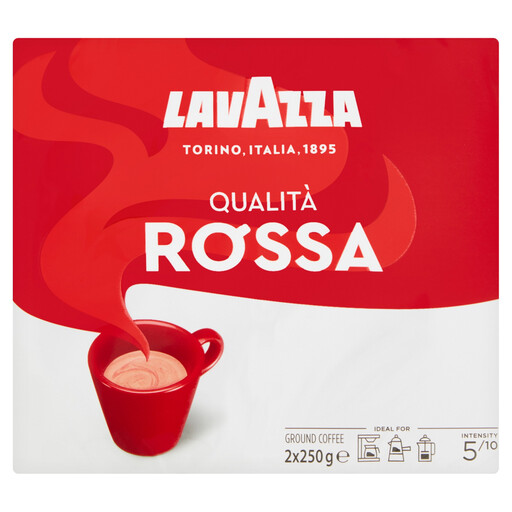 No image available
For a counter considering a house coffee, check this 500g ground-coffee pack’s preparation instructions against the installed brewer and planned drinks.
 No image available
If considering this 200g ground coffee for filter or cafetière service, check its pack instructions and grind against the equipment used at the outlet.
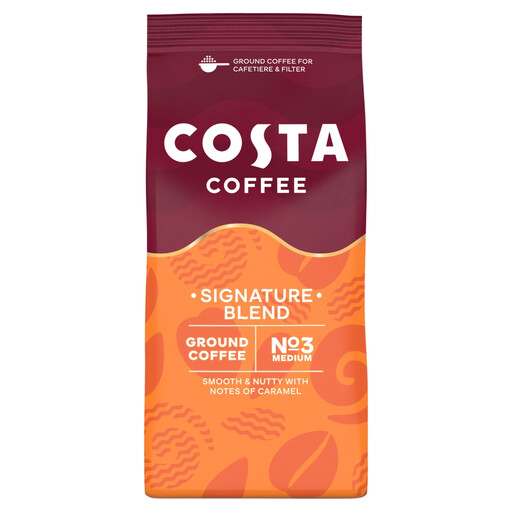 No image available
Ground for cafetière and filter preparation, with a No. 3 medium grind stated in the product name. Confirm that designation against the outlet’s particular equipment before setting a recipe.
 No image available
For a counter considering espresso-style drinks, check this 200g ground coffee’s stated preparation method and grind against the specific machine before choosing it for service.
Do not assume that one grind suits every brewer. illy specifies CLASSICO espresso ground coffee for Italian espresso, while Rombouts specifies medium-ground Cachet d'Or for filter and cafetière use; check each product against the installed equipment.
Start with the instructions for the exact coffee and brewer, then assess the resulting drink before standardising the recipe. A preparation recommendation for one coffee should not be transferred to every machine or product.
No. Sainsbury's lists its Taste the Difference Half Caff ground coffee as 50% coffee and 50% decaffeinated coffee. For a decaf menu choice, select a separately labelled decaffeinated product rather than describing half-caff as caffeine-free.
Follow the exact pack’s opening and storage instructions. Lavazza advises cool, dry storage for its ground coffee, while other products may give additional directions; use each pack’s guidance when rotating stock.
No. The served drink may also contain milk, syrup or toppings, and accompanying food needs its own ingredient checks. GOV.UK and Food Standards Scotland state that food businesses must provide allergen information for prepacked and non-prepacked food and drink; keep records aligned with the complete items being sold.