Who is each format for?
The useful distinction for a weekly shop is how the coffee will be prepared and how quickly the quantity will be used.
Households brewing several pots a week
Loose ground coffee is worth considering if you already use a cafetière, filter machine, filter cone or another brewer suited to the product’s stated grind. Check pack weight against your usual brewing routine rather than treating it as a count of cups.
People making coffee one mug at a time
Individually wrapped ground-coffee bags offer a way to brew in a mug without a cafetière or filter machine. Check the number of bags in the pack if each bag is intended for a separate serving.
Offices and hosts planning portioned service
A catering-style bag count can help plan for guests or shared spaces, but only when the listing identifies the individual portions and the expected demand justifies the quantity. Confirm the count and preparation method before ordering.
What should you check before buying?
Start with the brewing method, then establish what the pack quantity measures. For a larger purchase, consider when each pack will be opened.
Loose ground coffee
Choose it when: You regularly brew with equipment suited to the coffee’s stated preparation method.
Bear in mind: An opened pack needs careful resealing and suitable storage; its weight does not tell you how many individual servings it contains.
Individual coffee bags
Choose them when: Mug-by-mug preparation or separately wrapped portions suit the people making the coffee.
Bear in mind: Individual wrapping creates more packaging than one loose-coffee pack, and a bag count must not be confused with a weight in grams.
| Priority |
What to check |
Your needs |
| Brewing method |
Check the product’s stated preparation method against your brewer. For coffee bags, check the mug-brewing instructions. |
I use a cafetière, filter machine or another specific brewer, so the grounds need to suit it. If I make single mugs without that equipment, coffee bags may fit the routine better. |
| Quantity and format |
Read both net weight and bag count. Check whether ‘240’ means individual bags, servings, grams or a multipack before estimating weekly supply. |
I need a quantity I can use: 240g of loose coffee and 240 individual bags would be very different orders. A catering count only helps if I need that many portions. |
| Storage |
Check how many packs will be opened at once and where the rest can be kept. Lavazza UK advises cool, dry storage and careful resealing of opened ground coffee. |
If I buy several packs in one shop, I want to keep unopened packs separate and have suitable space for the one in use. |
| Roast and decaf |
Check the named roast or variant and look for an explicit decaffeinated designation. Compare preparation styles as well as flavour descriptions. |
Different people may want different coffee choices, including decaf. I would check the actual variant rather than assume every pack in a range is the same. |
Which brands and ranges are relevant?
These range descriptions help distinguish brewing methods and pack formats; they do not establish that every brand offers a ‘box of 240’.
Lavazza
Lavazza UK presents ground blends for moka, espresso and filter preparation.
- Lavazza says its blends are ground for their intended brewing methods, making the stated method worth checking against your equipment.
- Check the pack’s actual weight and format separately from its brewing designation.
Illy
Illy UK lists ground-coffee variants differentiated by roast, decaffeination and preparation style.
- Its listed 250g options include Classico, Intenso and Decaffeinato variants.
- A 250g retail pack is a weight of coffee, not a count of individually wrapped bags.
Taylors of Harrogate
Taylors appears in both loose ground coffee and individually wrapped ground-coffee bag formats.
- Sainsbury’s lists Flying Start coffee bags as 10 bags/75g and Flying Start loose ground coffee as a separate 200g product.
- Choose between these products by preparation method as well as pack size; a bag pack is not loose coffee for a brewer.
Rombouts
Rombouts UK offers household ground coffee alongside a separate professional coffee range.
- Rombouts specifies its 250g Cachet d’Or ground coffee for cafetières, filter machines and filter cones.
- Check the individual product’s pack size rather than applying a professional-range description to a household pack.
Tesco Finest
Tesco Groceries lists several Tesco Finest roast-and-ground coffees in 227g packs.
- The listed choices include Peruvian, Colombian Supremo, Sumatra Mandheling and Brazilian ground coffee.
- The 227g figure is a pack weight; check the specific product if a counted portion format is needed.
Sainsbury’s
Sainsbury’s ground-coffee listings include own-label loose coffee and branded coffee bags.
- Its category listing includes 227g own-label coffee, a 454g Italian-style option and Taylors coffee bags in a pack of 10.
- These are different weights and formats, so compare the relevant unit before planning a weekly quantity.
Ground coffee options on Joybuy
This case is an option for buying loose ground coffee in multiple packs for repeat brewing. Its stated quantity is by pack count and weight, not by individually portioned coffee bags.
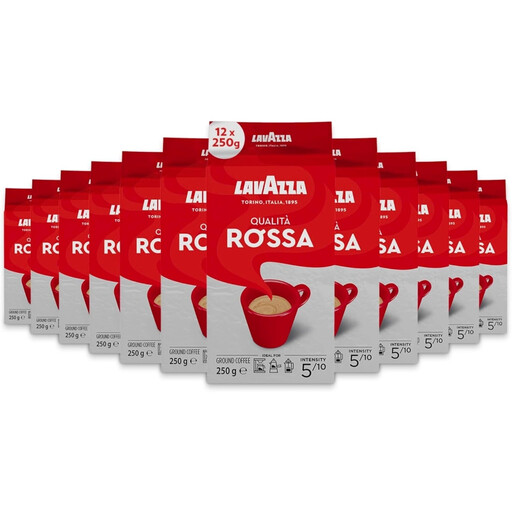 No image available
Qualita Rossa Ground Coffee Case, 12 × 250g
For a larger shop centred on loose ground coffee, this case contains 12 packs of 250g. Check that this weight suits your expected use and storage space; it is not a count of 240 individual coffee bags or servings.
View on Joybuy
Frequently asked questions
Does ‘box of 240’ mean 240 coffee bags?
Not without a stated unit on the product listing. UK listings from Sainsbury’s and Tesco Groceries distinguish loose ground coffee by weight from Taylors coffee bags sold as 10 bags/75g; hospitality retailer Out of Eden separately lists 300-bag packs. Check whether ‘240’ refers to individual bags, servings, grams or a multipack before working out a weekly quantity.
Should I buy loose ground coffee or coffee bags for a weekly shop?
Choose loose ground coffee if you will brew it with equipment suited to the product’s stated preparation method. Choose coffee bags if individually portioned, mug-by-mug brewing is more useful. Check the pack weight or bag count against how many cups you expect to make.
How should I store ground coffee from a larger shop?
Keep unopened packs somewhere cool and dry, then reseal an opened pack carefully. Lavazza UK advises keeping ground coffee away from light, heat and moisture and recommends an opaque airtight container; it advises against refrigerator storage because condensation can affect flavour.
How much loose coffee should I use for a filter pot?
Follow the coffee and machine instructions for the product you buy. For its Cachet d’Or ground coffee, Rombouts UK suggests starting with 60g per litre of water and adjusting to taste; that figure is a product-specific starting point, not a conversion from an unspecified ‘box of 240’.
What if I am serving or repacking coffee through a business?
Check the food-information requirements for the way your business provides the product before serving or repacking it. Food Standards Agency guidance distinguishes between ways food is supplied and addresses manufacturers, retailers, caterers and other food businesses; an ordinary household shop is a different situation.


