First-time buyers with a cafetière or filter brewer
Look for preparation guidance that names your equipment. Rombouts specifies Cachet d’Or as medium ground for filter and cafetière use; a roast name alone does not tell you how a pack is ground.


Choose ground coffee by the brewer you already own before deciding between blends: a pack labelled for a moka pot is a different choice from one specified for a cafetière or filter machine. Then use bean composition and the maker’s flavour notes to choose a direction you would like to try, while checking pack size and whether you want caffeinated or decaf coffee.
Your existing brewer and the kind of coffee you want to try are useful starting points for a first pack.
Look for preparation guidance that names your equipment. Rombouts specifies Cachet d’Or as medium ground for filter and cafetière use; a roast name alone does not tell you how a pack is ground.
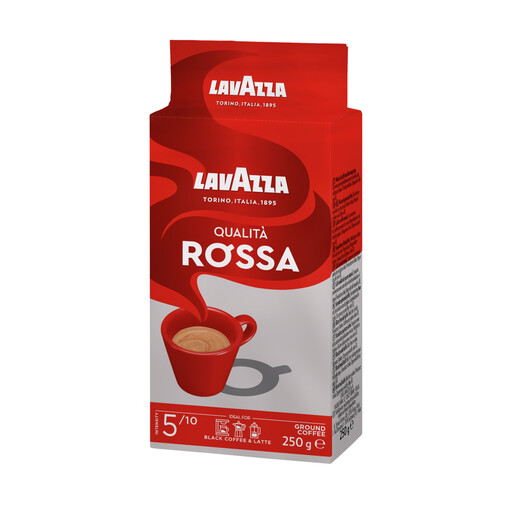
Compare the blend and the maker’s tasting notes rather than assuming all ground coffee tastes alike. Lavazza describes chocolate notes for its Arabica-Robusta Qualità Rossa, while Taylors of Harrogate describes chocolate, nut and subtle citrus notes for Rich Italian.
Check whether the pack is decaf and consider caffeine from other sources as well as coffee. The NHS advises no more than 200 mg of caffeine a day during pregnancy.
Start with the preparation instructions, then compare the blend and pack against what you expect to use regularly.
| Priority | What to check | Your needs |
|---|---|---|
| Brewer and grind | Read the named preparation method and grind description. illy labels its cited Classico pack for moka pots; Rombouts specifies a medium grind for filter and cafetière. | My first pack needs to work with the brewer already in my kitchen, not just have a roast name I recognise. |
| Blend and flavour | Check bean composition, roast wording and product-specific tasting notes. Lavazza describes Qualità Rossa as an Arabica-Robusta blend with chocolate notes; illy identifies its moka Classico as 100% Arabica. | I would like a flavour direction to try, but I do not want to treat a brand’s tasting notes as a guarantee of how my brew will taste. |
| Caffeine choice | Check whether the exact pack is caffeinated or decaf. If pregnant, account for caffeine from all sources against the NHS guidance of no more than 200 mg a day. | If I am keeping track of caffeine, the coffee label is only part of what I need to consider. |
| Pack size | Check the stated weight and storage instructions. The options discussed here include 200 g, 227 g, 250 g and 500 g packs, depending on the product. | For a first try, I may prefer a smaller pack before buying more of a blend I have not used. |
A moka-labelled coffee and a medium grind specified for filter and cafetière are not presented as interchangeable by illy and Rombouts.
Read the preparation line on the exact pack and match it to your moka pot, cafetière or filter equipment.
“100% Arabica”, roast wording and a maker’s flavour notes describe different features. One does not establish the others or guarantee a particular taste.
Compare those details separately, and consider a smaller pack if you are trying an unfamiliar blend.
The NHS guidance for pregnancy covers total daily caffeine, not coffee alone; tea, cola, energy drinks and chocolate can also contribute.
If this guidance applies to you, consider all sources when choosing between caffeinated and decaf coffee.
These examples show how individual product descriptions can help narrow a choice; check the details of the pack you intend to buy.
Qualità Rossa is an Arabica-Robusta ground-coffee option.
The cited 250 g Classico pack is a 100% Arabica ground coffee labelled for moka pots.
Rich Italian is a named ground-coffee blend with a stated flavour direction.
Cachet d’Or gives cafetière and filter users an explicit grind description.
Tesco Groceries lists several 227 g ground coffees under its Finest range.
Sainsbury’s lists house-blend, decaf and Taste the Difference ground-coffee options.
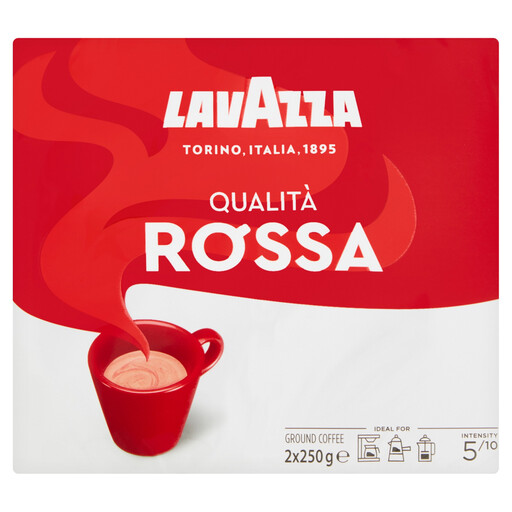
These ground-coffee packs cover a decaf choice, named cafetière or filter options and two sizes of the same Lavazza blend. Match the exact pack to your brewer and intended use.
 No image available
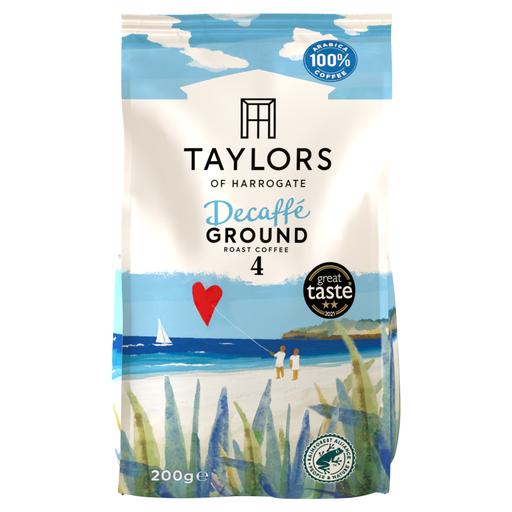
A 200 g ground-coffee pack to consider if you want to try this named blend. Check the pack’s preparation guidance against your brewer.
 No image available
The 250 g option for trying Lavazza’s Arabica-Robusta Qualità Rossa blend. Lavazza names espresso and moka as preparations and describes chocolate notes.
 No image available
The 500 g size of the same Qualità Rossa blend may suit you if you want a larger pack. Lavazza identifies its Arabica-Robusta composition and names espresso and moka as preparations; follow the pack’s storage instructions after opening.
 No image available
A 200 g decaf-labelled ground coffee for shoppers considering that option. Check the pack for brewing instructions and caffeine information if either affects your choice.
 No image available
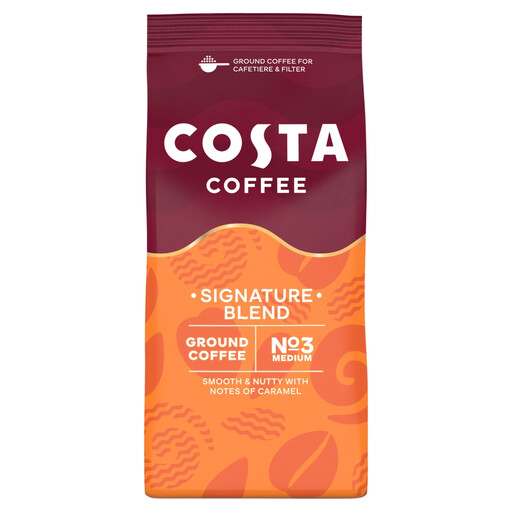
The product name specifies ground coffee for cafetière and filter use, with a No. 3 Medium grind and a 200 g pack. Check the pack if bean composition matters to your blend choice.
Choose a pack that names your brewing method or specifies a suitable grind. Rombouts describes Cachet d’Or as medium ground for filter and cafetière, whereas illy labels the cited Classico pack for moka pots. “Ground coffee” on its own does not identify a preparation method.
Start with the instructions for your particular coffee and brewer. Rombouts suggests 60 g per litre of water for Cachet d’Or; use that as guidance for that product rather than a fixed dose for every ground coffee.
Follow the instructions on the pack you buy, as packaging guidance differs. The cited illy moka coffee says to keep it away from light and heat, while the cited Sainsbury’s product advises an airtight container after opening.
The NHS advises no more than 200 mg of caffeine a day during pregnancy, counting sources beyond coffee, including tea, cola, energy drinks and chocolate. A decaf-labelled coffee is an option to consider, but do not treat the word “decaf” as a measure of your total daily intake.