
24/7 Customer Support

Free returns

Same-day & Next-day Delivery

Quality Guaranteed

Unlock Your Welcome Offers: FREE Delivery | Up to 80% OFF | Free 30-day JoyPlus trial
Download the APP
Buying ground coffee for a UK home, office or travel bag can seem straightforward, but the label often leaves out the details that affect value and flavour. A 200g bag may suit occasional drinkers, while a 500g pack can be more practical for a busy household. Similarly, coffee bags are convenient, but they brew differently from loose grounds.
The main purchasing pitfalls are easy to overlook:
For a standard drip coffee maker or pour-over setup, choose a medium grind labelled for filter coffee. A cafetière or French press usually works better with a coarser grind, which reduces the amount of sediment passing into the cup.
Some products are designed for more than one method. Costa Coffee Mocha Italia Signature Blend Ground for Cafetière & Filter No. 3 Medium 200g, for example, is specifically described for cafetière and filter brewing. This makes it a practical cupboard option if your household uses both methods.
For single-serve brewing, coffee bags and drip coffee bags remove the need to measure loose grounds. The filter is already filled, making them useful at work, in rented accommodation or when travelling.
Arabica coffee is commonly associated with softer acidity and more varied flavour notes, although the final cup also depends on roast and brewing. Blends containing Robusta can provide a fuller body and stronger bitterness.
Lavazza Qualità Rossa Ground Coffee uses both Robusta and Arabica beans. The product information states that it can be prepared using a moka pot, filter or French press, with the result varying according to the method. By contrast, several Taylors of Harrogate products listed here specify 100% Arabica coffee.
Do not assume that “Italian coffee” automatically means a dark roast or espresso grind. Italian-style products may be suitable for moka, filter or cafetière brewing, so read the preparation guidance rather than relying only on the name.
A medium roast coffee is generally a flexible choice for everyday filter brewing, while a dark roast coffee may offer deeper roasted, chocolate or nutty notes. Roast descriptions are useful for comparison, but they do not guarantee that every drinker will taste the same characteristics.
If you want coffee without the usual caffeine level, look for clearly labelled decaf ground coffee. Taylors of Harrogate Decaf Ground Coffee 200g is described as a 100% Arabica decaffeinated coffee with caramel and malt notes. Decaffeinated does not necessarily mean completely caffeine-free, so check the packaging if caffeine sensitivity is a concern.
Once opened, keep ground coffee in a cool, dry place and reseal the bag or transfer it to an airtight container. Follow the manufacturer’s storage instructions, including any recommended period for use after opening.
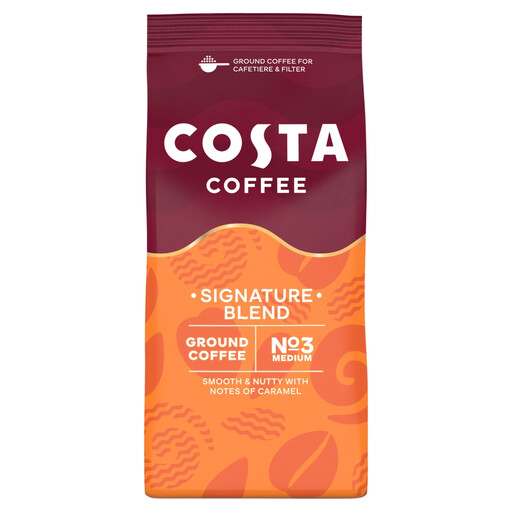
Why This Fits Their Persona: A 200g pack and medium grind offer a manageable starting point for households choosing between filter coffee and cafetière brewing.
The stated cafetière and filter compatibility is more useful than choosing a product based only on broad words such as “rich” or “smooth”.
Medium roast; 200g quantity; suitable for two common home brewing methods.
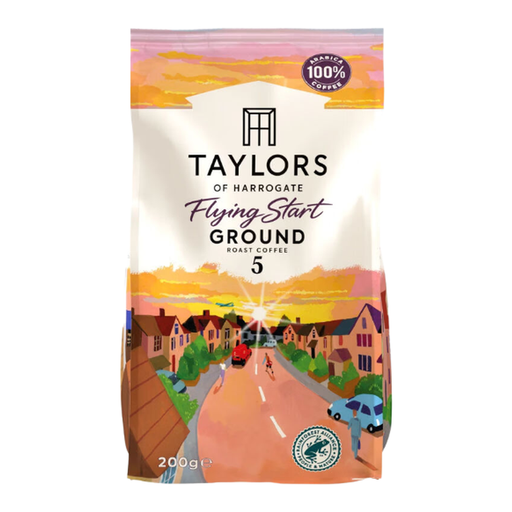
Why This Fits Their Persona: This suits drinkers who want 100% Arabica grounds with a medium consistency for filter, French press or cafetière coffee.
The stated grind and brewing options help prevent an attractive roast description from masking poor brewer compatibility.
100% Arabica; medium grind; 200g resealable pack guidance.
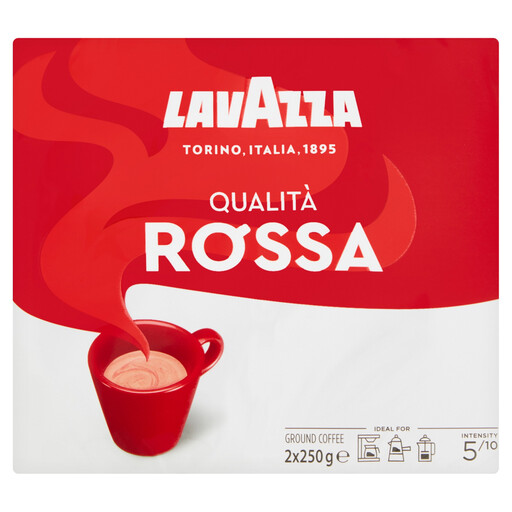
Why This Fits Their Persona: The 500g pack is suited to frequent coffee drinkers who use filter, moka pot or French press methods regularly.
The larger format can reduce frequent repurchasing, provided it is stored correctly and consumed before the flavour fades.
500g quantity; Arabica and Robusta blend; listed for moka pot, filter and French press use.
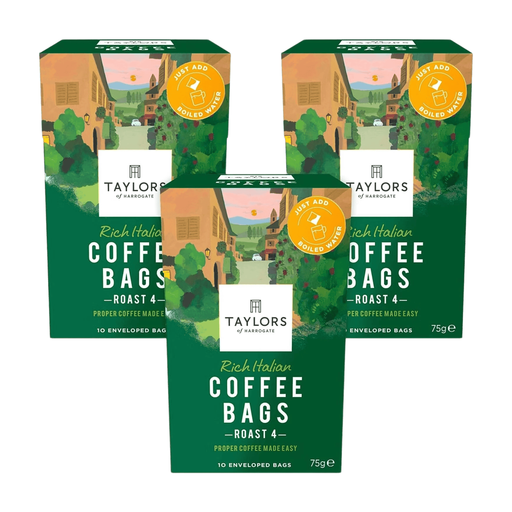
Why This Fits Their Persona: Individually portioned coffee bags are convenient for desks, hotel rooms and journeys where carrying a cafetière or measuring grounds is impractical.
The single-serve format avoids buying equipment or guessing the coffee-to-water ratio for each cup.
100% Arabica; medium roast; individually wrapped coffee bags.
We have compiled a complete, real-time list of products that fully satisfy these strict selection criteria and UK safety regulations.
For low-waste preparation, Rombouts Original Compostable One Cup Filter Coffee uses filters made with sugar cane fibres and plant-based paper. The product information states that used filters can be home composted or placed with food waste, but local council arrangements differ, so check your area’s guidance.
For a lighter, portable option, drip bags such as RiXing Premium Filter Coffee – Colombia Verla Series 2.0 come in individual 10g portions. They hang over a cup and use hot water poured gradually through the grounds. This is useful for work or travel without a coffee machine.
Coffee bags from Taylors of Harrogate Flying Start provide another simple method: place the bag in a mug, add boiled but not boiling water, brew for two to four minutes and remove it. Always follow the product label, particularly for storage and caffeine information.
Yes, provided the grind is coarse enough for immersion brewing. Some products are specifically labelled for cafetière or French press coffee. A very fine grind can leave excess sediment and make pressing the plunger more difficult.
The unopened best-before date is printed on the packaging, but aroma can diminish after opening. Reseal the bag or use an airtight container, keep it away from heat, moisture and strong odours, and follow the stated storage guidance. Smaller 200g packs may be sensible for occasional drinkers.
Loose grounds can cost less per cup when brewed in larger quantities, especially from a 500g pack. Coffee bags may offer better practical value when you want one serving, minimal equipment and no loose coffee to measure or clean up. Compare the number of servings, not only the pack price.