
24/7 Customer Support

Free returns

Same-day & Next-day Delivery

Quality Guaranteed

Unlock Your Welcome Offers: FREE Delivery | Up to 80% OFF | Free 30-day JoyPlus trial
Download the APP
Buying ground coffee for a UK kitchen should be straightforward, but packaging can make comparison difficult. Roast numbers, origin claims and phrases such as “Italian style” do not always tell you whether a coffee will suit your cafetière, filter machine or moka pot.
There are three common ways shoppers waste money:
The right choice depends on flavour preference, brewing equipment, caffeine requirements and how quickly your household gets through a pack.
Roast descriptions are useful, but they are not a complete measure of flavour. A light roast can taste brighter and more acidic, while a medium roast ground coffee often provides a balanced profile for everyday brewing. A dark roast ground coffee generally offers a fuller, more intense taste, with roasted or chocolate-like notes.
For example, Taylors Brasilia is described as a medium, energetic roast with walnut and chocolate notes. Taylors Lazy Sunday is a lighter roast with milk chocolate and citrus notes. Costa’s Intensely Dark Amazonian Blend is listed as a No. 5 strength coffee with caramel and dark chocolate notes.
If you add milk, prefer a moka pot or enjoy a stronger breakfast coffee, a darker blend may suit you. For a gentler black coffee, a light or medium roast may be easier to drink.
Arabica ground coffee is commonly chosen for its varied aroma and smoother flavour profile. Robusta can contribute more body and intensity, which is why some Italian blends combine Arabica and Robusta.
Lavazza Qualità Rossa Ground Coffee uses a blend of Robusta and Arabica beans sourced from South America and Africa. Its product information describes different results depending on preparation, from a more aromatic moka pot cup to a fuller filter or French press brew.
By contrast, Taylors Brasilia and Taylors of Harrogate Flying Start list 100% Arabica coffee. Origin and composition should guide expectations, but neither should be treated as a guarantee of personal preference.
Check the pack before buying coffee for a cafetière, filter machine or moka pot. The recommended dose also matters: Lavazza Espresso Italiano Classico suggests approximately 7–9g per 100ml of water for moka pot or filter preparation, with adjustments for French press brewing.
A few practical starting points are:
Do not assume that ground coffee labelled “espresso” is suitable for every espresso machine. Many domestic machines require a specific fine grind and may be incompatible with supermarket-style ground coffee.
Pack size is another practical consideration. 200g ground coffee suits occasional drinkers, smaller households or anyone who likes to rotate between flavours. 250g ground coffee packs, such as several Lavazza varieties, offer a little more supply for regular weekday brewing. A 500g pack may be sensible for offices or larger households, provided it can be stored securely and used within a reasonable period after opening.
Storage is important regardless of pack size. Reseal opened coffee, keep it in a cool, dry place away from direct sunlight and strong odours, and follow the label instructions. Costa advises storing opened coffee in an airtight container and refrigerating it, while several Taylors products recommend sealing the pack with a clip in a cool, dry place. Always follow the instructions on the specific product packaging.
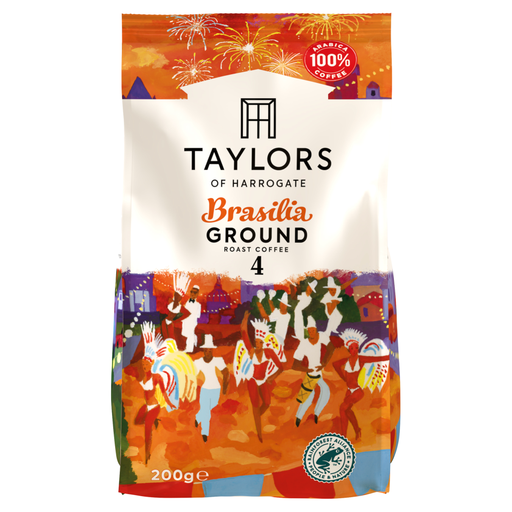
Why This Fits Their Persona: A 200g pack is manageable for a smaller household or a first-time buyer comparing everyday ground coffee options.
The medium roast description gives more useful guidance than choosing only by a strength number, while the Arabica composition is clearly stated. Check the allergen information on the pack before purchase.
200g quantity; 100% Arabica; described with walnut and chocolate notes.
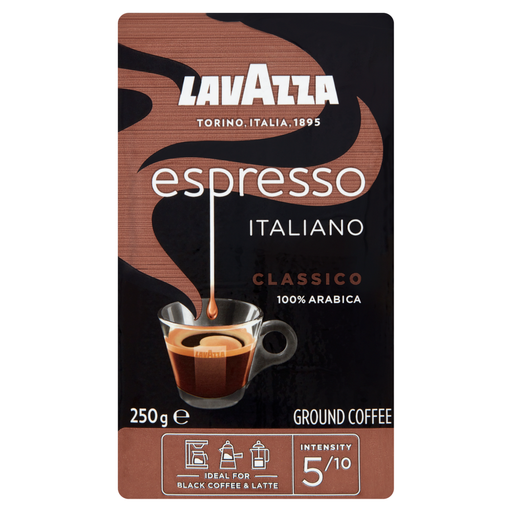
Why This Fits Their Persona: Suitable for shoppers who enjoy Italian ground coffee and want one pack for moka pot, filter or French press preparation.
Its listed brewing guidance helps prevent the common mistake of buying an espresso-style coffee without checking other preparation options.
250g pack; medium roast; level 5 intensity; fruity notes listed; compatible with moka pots, filters and French presses.
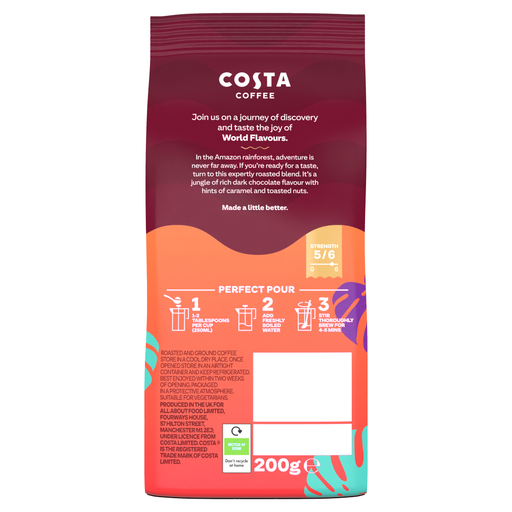
Why This Fits Their Persona: Designed for regular cafetière or filter users who prefer a fuller, darker cup and want clearly stated brewing compatibility.
The product is specifically labelled for cafetière and filter use, reducing the risk of buying a grind intended for another machine.
200g pack; No. 5 strength; Arabica and Robusta blend; caramel and dark chocolate notes listed.
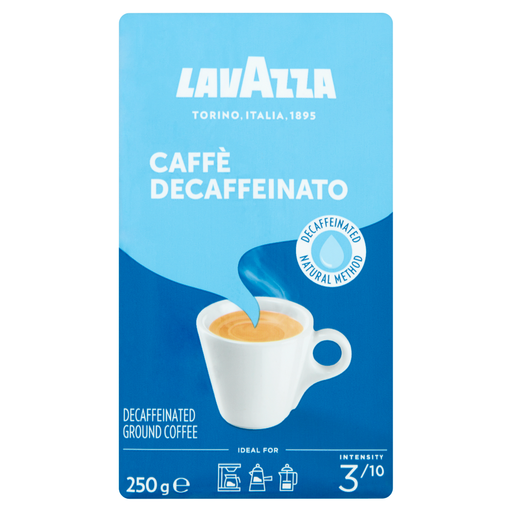
Why This Fits Their Persona: A practical option for households wanting a decaf ground coffee for evening drinks or for sharing with people who avoid regular caffeine.
The decaffeinated label makes the caffeine choice clear. Check the packaging for the precise decaffeination and caffeine information before serving.
250g pack; decaffeinated format; made in Italy according to the product listing.
We have compiled a complete, real-time list of products that fully satisfy these strict selection criteria and UK safety regulations.
A useful starting point is around 7–9g per 100ml of water, but the correct amount depends on the brewing method and personal taste. Use less for a lighter cup or more for a stronger result, then adjust gradually.
Follow the product label, but reseal the pack promptly and store it in a cool, dry place. Airtight storage helps limit exposure to air and moisture. Smaller 200g or 250g packs may be more suitable if you brew only a few cups each week.
Decaffeinated coffee is not necessarily entirely caffeine-free. If caffeine intake is important, check the product packaging for the applicable information and follow the manufacturer’s preparation and serving guidance.