What should the canteen check?
Identify the brewer first, then decide whether one regular coffee covers lunch service or whether distinct flavour and caffeine choices are worth managing.
| Priority | What to check | Your needs |
|---|
| Brewer fit |
Check the exact pack’s stated brewing methods and grind against the installed machine. Lavazza says its ground coffees are calibrated for particular preparations; follow the brewer’s instructions as well. |
I need a coffee that works with the equipment used at lunch, whether that is a filter machine, cafetière, moka pot or espresso machine. |
| Regular flavour |
Read the roast and flavour description for the exact blend. Treat strength numbers as product labels, not a common scale for comparing different brands. |
One regular option would keep ordering and service straightforward; a stronger coffee could be offered separately if people want a distinct choice. |
| Caffeine choice |
Distinguish regular, half-caff and products sold as decaffeinated. Sainsbury’s Half Caff contains 50% coffee and 50% decaffeinated coffee; check each option’s brewing directions. |
Someone choosing less caffeine should be able to tell half-caff from decaf at the coffee station. |
| Service and packs |
Compare pack size with expected use, opened-pack storage directions and the work involved in replenishing each choice. For its Decaf coffee, Rombouts gives 60 g per litre as a starting dose, not a universal recipe. |
If lunch service is busy, I want a repeatable brewing routine and packs that suit how often the canteen makes coffee. |
Ground coffee options on Joybuy
These options include regular ground coffees and one decaf choice for a workplace canteen. Match any shortlisted pack to the lunch-service brewer before settling on a menu.
 No image available
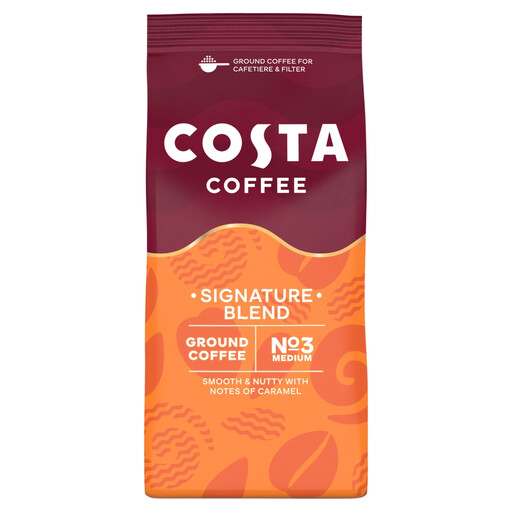
Costa Coffee Mocha Italia Signature Blend, 200 g
A regular blend option for filter-machine or cafetière service. The stated format is No. 3 medium-ground coffee; confirm that it matches the canteen’s brewer instructions.
 No image available
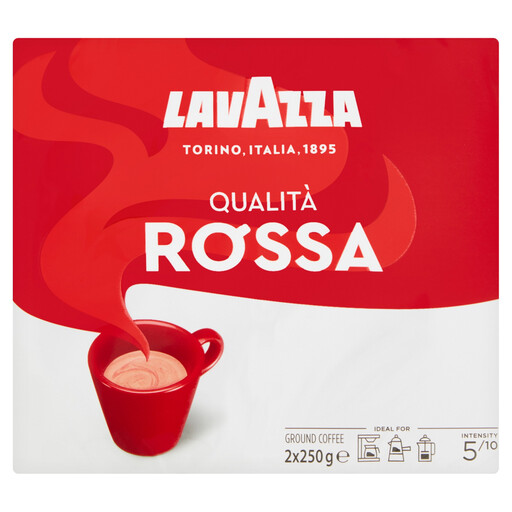
Lavazza Qualità Rossa Ground Coffee, 500 g
A regular Arabica-and-Robusta blend for a canteen using a compatible brewer. Lavazza identifies espresso and moka as intended preparations; check the current pack or supplier specification before using it in a filter machine or cafetière.
 No image available
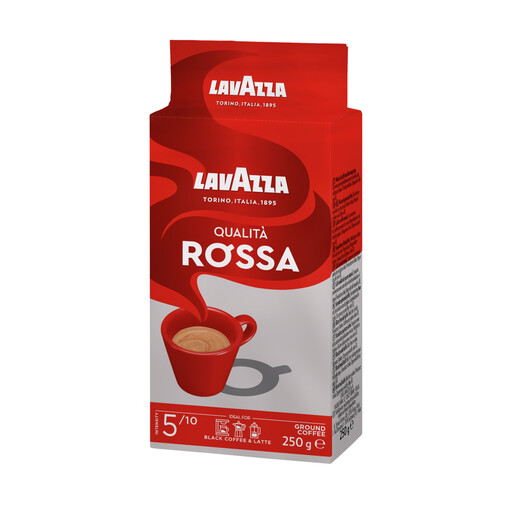
Lavazza Qualità Rossa Ground Coffee, 250 g
A 250 g pack of the regular Qualità Rossa blend. Confirm the current pack’s preparation directions before using this variant in a filter brewer, and consider whether its pack size suits the canteen’s rate of use.
 No image available
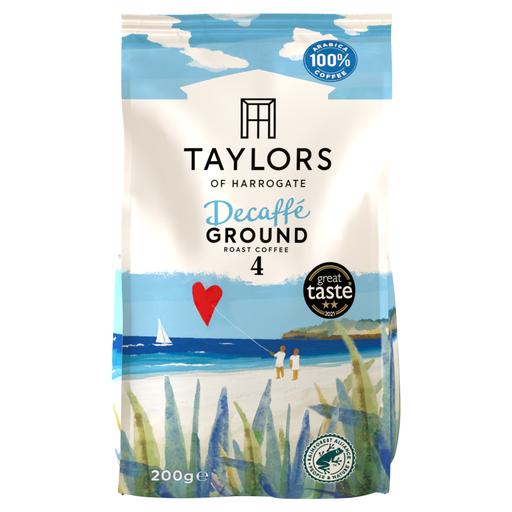
Taylors of Harrogate Decaf Ground Coffee, 200 g
A separately labelled decaf option for the lunch menu. Check the current pack’s brewing directions against the canteen’s machine before buying it for service.
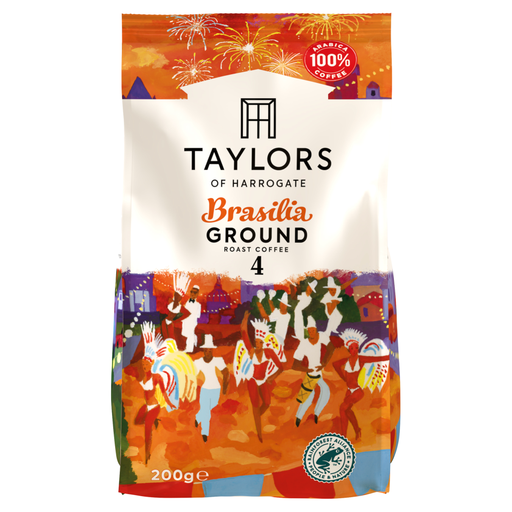 No image available
Taylors Brasilia Ground Coffee, 200 g
A 200 g regular ground-coffee option. Check the current pack’s identity and brewing directions before choosing it for the canteen’s equipment.
Common questions
Should a workplace canteen serve one ground-coffee blend or several?
One regular blend keeps preparation and stock control simpler if it suits the brewer. Add a labelled intense option when a distinct stronger flavour is wanted, or a separate half-caff or decaf option when caffeine choice matters. Sainsbury’s Half Caff contains 50% coffee and 50% decaffeinated coffee, so it is not a decaf substitute.
Can any ground coffee go in the canteen’s brewer?
No: match the exact coffee pack to the brewer’s stated preparation method and instructions. Lavazza says its grounds are calibrated for intended methods, illy lists separate espresso, moka and filter formats, and Rombouts specifies its Decaf ground coffee for filter machines, filter cones and cafetières.
How much coffee should a canteen use for a filter brew?
Start with the installed machine’s instructions and the directions for the chosen coffee. Rombouts recommends 60 g per litre of water as a starting point for its Decaf ground coffee; that figure is not a universal dose for other products or machines.
How should opened ground coffee be stored?
Follow the current pack’s directions. Sainsbury’s advises cool, dry storage away from direct sunlight and resealing or using an airtight container for its referenced ground coffees; organise opened packs so staff can identify each blend during service.
What product information matters when serving coffee with additions?
Keep current ingredient and product information for the coffee and any milk, syrups or other additions used at the station. If the canteen produces food that is prepacked for direct sale in England, Wales or Northern Ireland, the Food Standards Agency says it must carry the food name and a full ingredients list; the applicable procedure depends on how the canteen prepares and supplies each item.


