Hosts serving scones, jam and clotted cream
If you want coffee to accompany the food without making it the focus, consider a smooth chocolate-and-nut profile or a lighter, subtly fruity one. Check that your chosen coffee is intended for your brewer.


For a cream tea, a smooth medium-roast coffee with chocolate or nut notes is a useful starting point if guests want a noticeable cup without choosing a dark-roast profile. Match the coffee to the brewer and number of cups you plan to serve: a lighter, subtly fruity option suits guests who prefer a gentler cup, while a fuller-bodied blend suits those who want a more pronounced coffee flavour.
The guests’ preferred coffee flavour and the equipment you have are more useful starting points than a blend name alone.
If you want coffee to accompany the food without making it the focus, consider a smooth chocolate-and-nut profile or a lighter, subtly fruity one. Check that your chosen coffee is intended for your brewer.
Choose coffee labelled for your brewing method when making several cups. Rombouts specifies a medium grind for filter and cafetière use for Cachet d’Or and suggests 60 g per litre as a starting recipe.
Look for coffee specified for a moka pot rather than assuming any pre-ground coffee will suit it. illy describes its Classico Moka product as intended for that method.
Decide how prominent you want the coffee to taste, then check its preparation instructions and format against the way you will serve it.
| Priority | What to check | Your needs |
|---|---|---|
| Flavour profile | Read the roast, body and tasting notes. Tesco describes Taylors Rich Italian as a medium roast with dark-chocolate and almond notes; Rombouts describes Cachet d’Or as light and subtly fruity, while Lavazza calls Qualità Rossa full-bodied with chocolate notes. | I’d like coffee to sit alongside sweet scones and cream rather than dominate them. If my guests prefer a stronger-tasting cup, I can choose a fuller-bodied profile instead. |
| Brewing method | Match the stated preparation and grind to your cafetière, filter brewer or moka pot. Rombouts specifies filter and cafetière use for Cachet d’Or; illy identifies Classico Moka for moka pots. | My existing brewer should guide which ground coffee I buy. Coffee bags are another format to consider if I’m making individual cups rather than a pot. |
| Serving quantity | Check the pack format and any product-specific recipe. Rombouts suggests starting Cachet d’Or at 60 g per litre of water, then adjusting to taste. | For several guests, I want a recipe I can scale for the pot. For individual cups, I may prefer a single-serve format. |
| Storage | Check the selected pack’s instructions after opening. Tesco says to seal Taylors Rich Italian, keep it cool and dry, and use it within up to two weeks. | If I’m opening the pack before the gathering, I want to know how to store what remains. |
Coffees with Italian-style names can have different bodies and tasting notes. Lavazza describes Qualità Rossa as full-bodied and chocolate-led, while Tesco describes Taylors Rich Italian as a medium roast with dark-chocolate and almond notes.
Read the roast and flavour description, then choose according to whether your guests prefer a gentler or more pronounced cup.
Rombouts specifies filter and cafetière preparation for Cachet d’Or, whereas illy identifies Classico Moka for a moka pot. The words ‘ground coffee’ alone do not establish compatibility.
Check the stated preparation on the pack alongside your appliance instructions before buying.
Post-opening instructions can affect how you plan for a gathering and use the rest of a pack. Tesco gives specific sealing, storage and use guidance for Taylors Rich Italian.
Choose a pack format that fits your plans and follow its own storage instructions.
Tesco lists several Finest roast-and-ground coffees, while Sainsbury’s says it reviews its ranges. A different product name does not establish the same flavour or preparation method.
Check the exact pack’s roast, tasting notes and brewing directions if your planned coffee is not on the shelf.
These examples illustrate different flavour and brewing choices; a brand name by itself does not identify the right grind or cup for your cream tea.
Rich Italian is a medium-roast example for cafetière or filter brewing, according to its Tesco listing.
Cachet d’Or offers a lighter flavour route with a medium grind specified for filter and cafetière brewing.
Qualità Rossa is an option for guests who prefer a fuller-bodied, chocolate-led coffee.
Classico Moka is a moka-pot-specific option for guests who favour sweet, aromatic notes.
Tesco lists several Finest roast-and-ground coffees, including Colombian Supremo, Peruvian and Brazilian options.
For a Sainsbury’s own-label choice, assess the particular ground coffee on its pack rather than choosing by retailer name.
These options include loose ground coffee for named brewers and single-serve coffee bags. Compare their flavour descriptions and preparation formats against your plans for the cream tea.
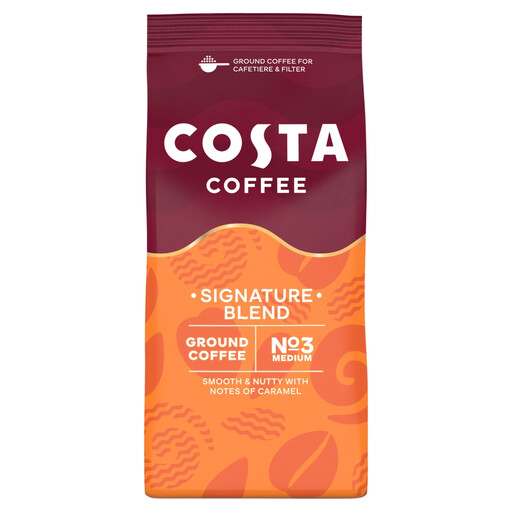 No image available
For a cafetière or filter pot alongside cream tea, this coffee is described as rich, smooth and nutty. Its stated coarseness is No. 3 Medium; check the pack for brewing quantities if you are serving several guests.
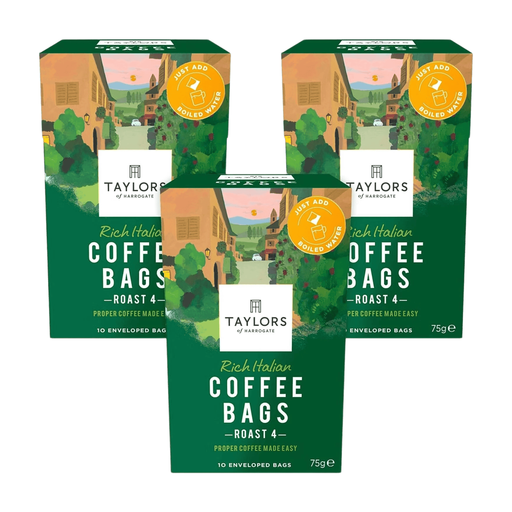 No image available
For individual cups rather than a cafetière batch, these are single-serve coffee bags, not loose grounds. The described coffee is a medium roast with dark-chocolate and almond notes; follow the pack’s brewing directions for this format.
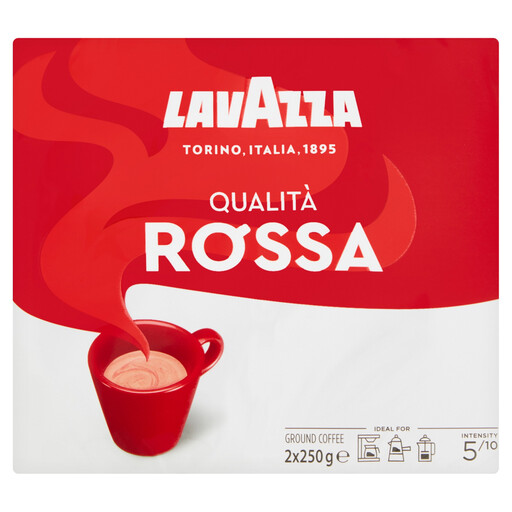 No image available
For guests who prefer a more pronounced coffee flavour with cream tea, Lavazza describes Qualità Rossa as a full-bodied Arabica-Robusta blend with chocolate notes. This pack’s description names moka, filter and French-press preparation; check its grind and your appliance guidance before brewing.
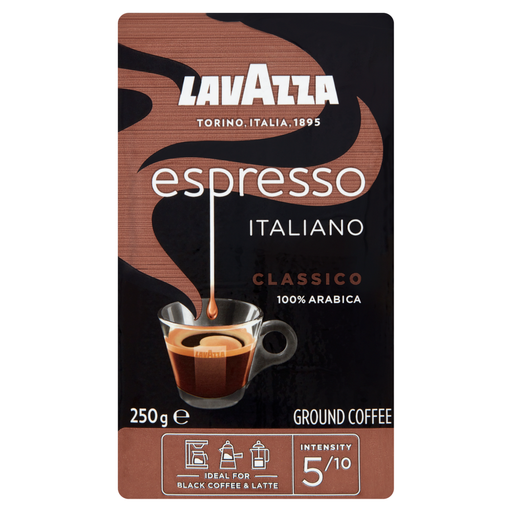 No image available
For guests who prefer a sweeter, fruitier profile, this coffee is described as a medium roast with fruity notes. The product description names moka, filter and French-press brewing; check the pack’s grind details against your brewer.
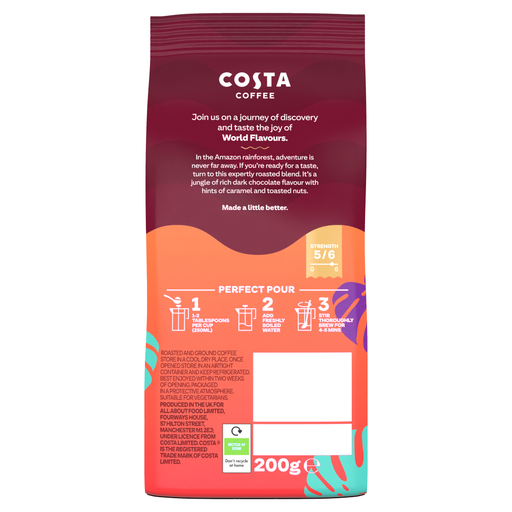 No image available
For guests who specifically want a bold cup alongside cream tea, this intensely dark roast is described with caramel and dark-chocolate notes. It is stated for cafetière and filter brewing; its pronounced profile may be less suited to guests who prefer a delicate coffee.
A smooth medium roast is a starting point if you want coffee with noticeable flavour but not an explicitly dark-roast profile. Tesco describes Taylors Rich Italian as a medium roast with dark-chocolate and almond notes; a lighter, subtly fruity coffee such as Rombouts Cachet d’Or may suit guests who prefer a gentler cup.
Check both the coffee’s stated preparation method and your appliance instructions. Rombouts specifies filter and cafetière use for Cachet d’Or, while illy identifies Classico Moka for moka pots; the fact that both are ground coffee does not make their preparation guidance interchangeable.
For Rombouts Cachet d’Or in a filter brewer or cafetière, the maker suggests starting with 60 g per litre of water and adjusting to taste. For another product, follow its own brewing directions rather than treating that ratio as universal.
Follow the instructions on the pack you choose. For Taylors Rich Italian ground coffee, Tesco says to seal the opened pack, keep it cool and dry, and use it within up to two weeks.