Who each format suits
Start with the brewer you own: the coffee format must match a preparation method or machine system it accepts.
Ground-coffee buyers with a moka pot, filter brewer or cafetière
Loose grounds let you measure your own dose, provided the coffee’s preparation guidance suits your brewer. Lavazza, for example, lists moka, filter and French-press preparation for its Espresso Italiano Classico ground coffee; that guidance does not apply automatically to every ground coffee.
Machine owners considering paper pods or capsules
An E.S.E. pod needs an E.S.E.-capable machine, while a capsule needs the named capsule system. illy describes its Easy machine as E.S.E.-only and its X1 Anniversary as accepting both E.S.E. pods and ground coffee. Check the model you own rather than relying on the word “pod”.
Ground-coffee buyers looking for a half-caffeinated blend
Changing caffeine preference need not mean changing brewer format. Sainsbury’s describes its Taste the Difference Half Caff ground coffee as a blend of 50% coffee and 50% decaffeinated coffee; check its preparation instructions against your brewer.
What to check before buying
Settle machine compatibility first, then compare the preparation routine, the coffee’s description and any pod-disposal arrangements.
Loose ground coffee
Choose it when: Your brewer takes loose grounds and you want to measure the coffee yourself.
Allow for: Measuring, clearing used grounds and cleaning the brewer; loose grounds cannot simply replace a sealed capsule.
E.S.E. paper pods
Choose them when: Your machine explicitly accepts E.S.E. pods and you want a pre-portioned format.
Allow for: A distinct machine format and local disposal rules; illy qualifies food-waste disposal with “where permitted”.
Machine-specific capsules
Choose them when: You prefer single-serve preparation and can match the capsule’s named system to your machine.
Allow for: System-specific purchases and a collection routine if you intend to recycle the used capsules.
| Priority |
What to check |
Your needs |
| Machine compatibility |
Check the machine manual for a ground-coffee basket, E.S.E. capability or the exact capsule system. Match that wording to the coffee pack. |
I need coffee that my existing machine can actually prepare, not just a pack described as “pods”. |
| Preparation routine |
Compare measuring and clearing loose grounds with a pre-portioned pod or capsule. For ground coffee, check the stated brewing methods and grind guidance. |
Some mornings I may prefer a measured portion; at other times, choosing my own dose matters more. |
| Coffee and pack details |
Read the product’s roast and flavour description, caffeine composition, pack size and after-opening storage instructions. Treat flavour notes as descriptions, not quality scores. |
I want a coffee profile and pack size that suit how I make and use coffee, whether I choose grounds or pods. |
| Used-pod disposal |
Identify the exact pod material and any supported collection scheme. Check the brand’s instructions and the options for your postcode before choosing a disposal route. |
If I use pods regularly, I need a collection or disposal routine I can follow where I live. |
Brand and range references
These examples show how brands describe different coffee formats; a brand name alone does not establish machine compatibility.
Lavazza
Lavazza sells loose ground coffee alongside capsules in named machine formats.
- Lavazza lists moka, filter and French-press preparation for Espresso Italiano Classico ground coffee.
- Its A Modo Mio capsules are stated for A Modo Mio machines; check the system named on any other Lavazza capsule pack.
illy
illy’s machine descriptions provide examples of E.S.E.-only and combined E.S.E.-and-ground setups.
- illy says its X1 Anniversary accepts ground coffee and E.S.E. pods.
- Its Easy machine is described as E.S.E.-only. Follow local rules rather than assuming its E.S.E. pods can go in household food waste.
Rombouts
Rombouts provides a packaged ground-coffee range for buyers choosing loose grounds rather than a capsule system.
- Rombouts describes its ground coffees as vacuum-packed.
- Check the preparation guidance for the particular coffee and your brewer rather than choosing by packaging alone.
Tesco Finest
Tesco’s Finest range lists both ground coffee and coffee capsules as separate products.
- Tesco lists a Peruvian roast and ground coffee in a 227 g pack alongside a 10-capsule product.
- A capsule’s place in the same range does not establish that it fits your machine; check the named system on the pack.
Sainsbury’s Taste the Difference
The ground-coffee range includes blends with different stated compositions and flavour descriptions.
- Sainsbury’s describes Half Caff as 50% coffee and 50% decaffeinated coffee.
- Its Fire Up Your Morning coffee is described as a strength-6 dark roast with dark chocolate and cardamom flavour notes; those details describe that product, not the whole range.
Ground coffee and capsule options on Joybuy
These options include loose ground coffees and one machine-specific capsule product. Match each to your brewer; the capsule option is not an E.S.E. paper pod.
 No image available
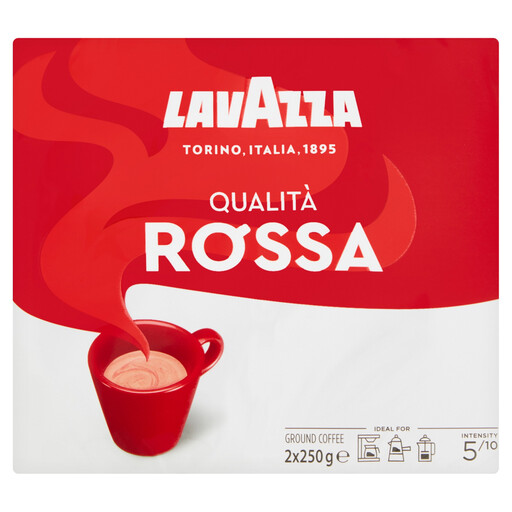
Lavazza Qualità Rossa ground coffee 500 g
A loose-ground option for a brewer that takes ground coffee. Check the pack’s preparation and grind guidance against your particular brewer; it is not a capsule for a capsule-only machine.
View on Joybuy
 No image available
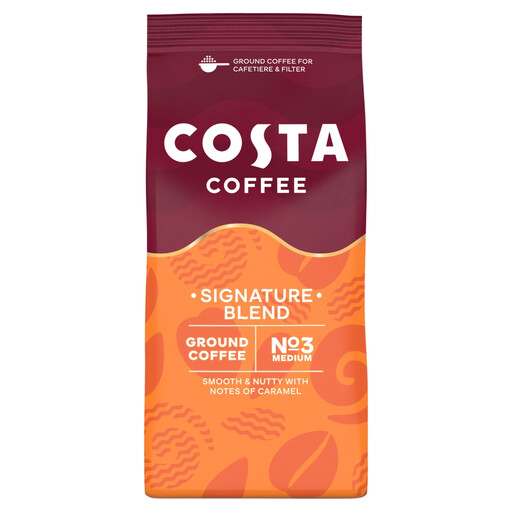
Costa Coffee Mocha Italia Signature Blend ground coffee, No. 3 medium, 200 g
Named for cafetière and filter preparation, with a No. 3 medium designation. Check the pack and brewer instructions before using it for another method.
View on Joybuy
 No image available
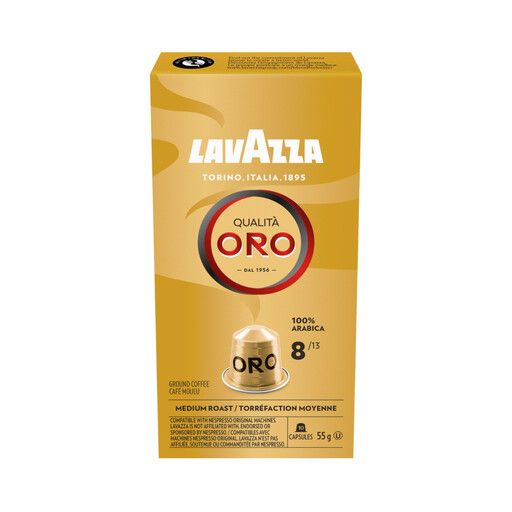
Lavazza Qualità Oro Nespresso-compatible capsules × 10
A pre-portioned capsule option rather than loose ground coffee or E.S.E. pods. Confirm that your exact machine accepts these Nespresso-compatible capsules, and check the collection route for this capsule where you live.
View on Joybuy
 No image available
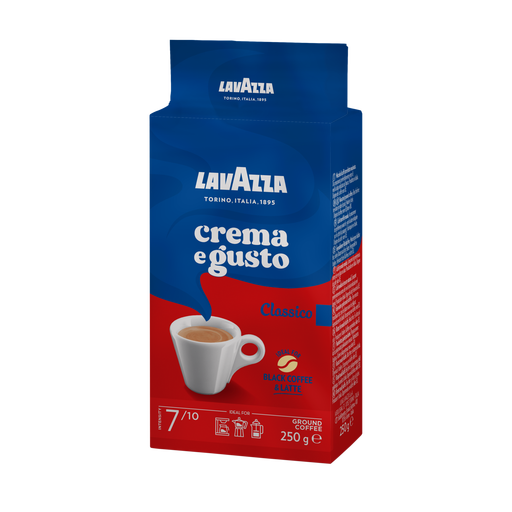
Lavazza Crema e Gusto coffee 250 g
For a loose-ground coffee routine, check this 250 g pack’s preparation and grind instructions against your brewer before choosing it.
View on Joybuy
 No image available
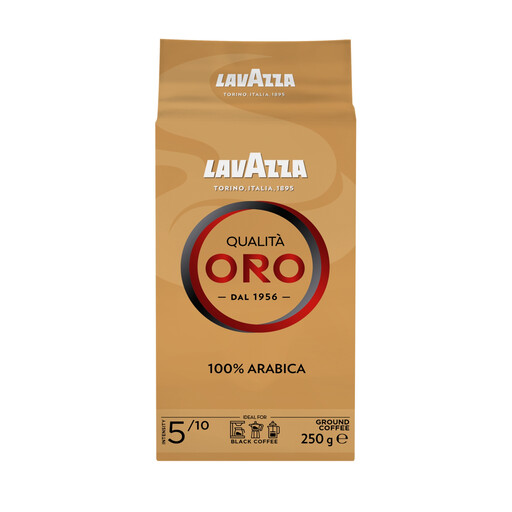
Lavazza Qualità Oro ground coffee 250 g
A 250 g loose-ground option, distinct from the Qualità Oro capsules above. Check its preparation instructions and grind suitability for your brewer rather than assuming the two formats are interchangeable.
View on Joybuy
Common questions
Can I put ordinary ground coffee into a capsule machine?
Only if the manufacturer specifies a ground-coffee function for that machine. Otherwise, use capsules that match its named system; Lavazza, for example, states that A Modo Mio capsules fit A Modo Mio machines.
Are E.S.E. paper pods the same as coffee capsules?
No. E.S.E. is a separate pod format that requires E.S.E.-capable equipment. illy describes its Easy machine as E.S.E.-only and its X1 Anniversary as accepting both E.S.E. pods and ground coffee.
Can E.S.E. pods go in my food-waste bin?
Check your local collection rules before putting them there. illy says food-waste disposal of its E.S.E. pods is possible where permitted; that condition does not establish the rules for your address or for other pod products.
How do I arrange recycling for used coffee capsules?
Use a collection route that accepts your specific capsule. Nespresso lists options including supermarket drop-off and doorstep collection, while Podback offers a checker for participating pods and local routes; neither route should be assumed to accept every format.
How should I store ground coffee after opening it?
Follow the instructions on that coffee’s pack, including how to reseal it and any stated after-opening period. Storage directions are product-specific, so do not apply one blend’s instructions to every ground coffee.


