Teams serving batch breakfast coffee
If the main service uses a filter brewer, urn or cafetière, choose coffee with preparation guidance for that method. Agree a dose and test it on the equipment staff will use during breakfast.


Choose ground coffee for the breakfast brewer before choosing its flavour: use coffee labelled for filter or cafetière preparation for those services, and reserve espresso-ground coffee for equipment that accepts pre-ground coffee for espresso. Trial the dose and taste on the hotel’s equipment before making it the regular breakfast coffee; a separately prepared decaf can broaden the choice.
If the main service uses a filter brewer, urn or cafetière, choose coffee with preparation guidance for that method. Agree a dose and test it on the equipment staff will use during breakfast.
Check whether the installed espresso equipment accepts pre-ground coffee. An espresso-labelled product is a separate choice from coffee prepared in a batch filter brewer.
A decaf option needs its own clearly identified preparation and service containers. Buyers seeking Fairtrade or single-origin coffee should check those declarations on the particular product, alongside its brewing instructions.
Start with the machines and service method, then trial the coffee’s preparation and flavour before settling on a regular order.
| Priority | What to check | Your needs |
|---|---|---|
| Brewer fit | Check the coffee’s stated brewing method and grind against the machine instructions. Illy labels separate CLASSICO ground products for filter coffee and espresso; Rombouts specifies a medium grind for its Decaf filter and cafetière coffee. | Our main coffee must work with the brewer used at breakfast, rather than merely sharing a roast name with a familiar product. |
| Flavour | Compare the makers’ descriptions, then taste candidates through the intended brewer. Taylors describes Rich Italian as rich and smooth, while Lavazza describes chocolate notes in Qualità Rossa; these descriptions do not establish guest preference. | We serve coffee both black and with milk, so the house coffee needs a trial in the ways guests will actually drink it. |
| Preparation | Use product directions as starting points, subject to the brewer instructions. Rombouts suggests 60 g per litre for its Decaf; illy gives 12 g for 300 ml for Filter CLASSICO. Do not treat either dose as universal. | Staff need a documented starting dose they can repeat during a busy breakfast service. |
| Separate choices | Check the preparation method for a decaf product and identify its storage and serving containers. For a Fairtrade or single-origin choice, check the declaration on the exact pack; Sainsbury’s makes both declarations for its Peruvian Machu Picchu ground coffee. | Guests should be able to identify the decaf option, while any origin or certification requirement must apply to the coffee we actually serve. |
| Regular supply | Confirm pack size, opening frequency and ordering arrangements for the intended service. A retail-sized pack does not, by itself, establish how it will fit a hotel’s breakfast volume. | Our team needs enough coffee for the service without making its preparation and storage routine difficult to manage. |
Ground coffees can be prepared for different brewing methods. An espresso-labelled coffee is not automatically suitable for a filter urn, and filter or cafetière coffee should not be assumed to suit an espresso machine.
Record the breakfast equipment, check the pack’s stated method and the machine instructions, then trial the coffee before placing a regular order.
Words such as smooth or chocolatey describe a maker’s intended profile; they do not show how hotel guests will respond to coffee prepared on the breakfast equipment.
Taste a candidate black and with the milk options served at breakfast, and use guest feedback before standardising it.
If regular and decaf coffee are not identified clearly, staff and guests may confuse the two during service.
Use separate, labelled storage and serving containers, and keep the decaf pack’s preparation directions available to staff.
These examples show different brewing methods and product types to check; a brand name alone does not establish suitability for the hotel’s machine.
Rombouts says its UK professional operation supplies hotels, restaurants and caterers. Its Decaf ground coffee has separate preparation guidance for filter and cafetière service.
Illy offers distinct CLASSICO ground coffees labelled for filter and espresso preparation.
Lavazza says it grinds coffees for their intended brewing methods. Its Qualità Rossa is an Arabica-and-Robusta blend described for espresso and moka preparation.
Taylors describes Rich Italian as rich and smooth; Tesco lists the 200 g ground coffee for cafetière or filter preparation.
Tesco lists Finest ground coffees identified by origins including Colombia, Sumatra, Brazil, Kenya and Peru.
Sainsbury’s identifies its Peruvian Machu Picchu and Colombian Sundried Quinchia ground coffees as single-origin, Fairtrade and 100% Arabica.
The Joybuy option below is labelled for cafetière and filter preparation. Check its grind against the breakfast brewer’s instructions before using it for regular service.
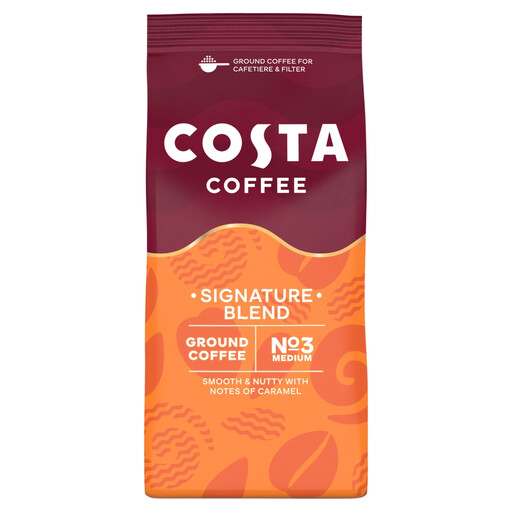 Image unavailable
For a cafetière or filter-coffee trial, this ground coffee is labelled for both methods and specifies a No. 3 medium grind. Check the brewer instructions and trial a batch dose on the hotel’s equipment; confirm the pack’s opened-storage directions and ordering arrangements before making it a regular breakfast coffee.
Do not assume so: choose coffee labelled for each brewer’s preparation method. Illy sells separate filter and espresso ground coffees, while Rombouts specifies its Decaf product for filter and cafetière use. Check the machine instructions before using pre-ground coffee, particularly in automatic or espresso equipment.
Start with the brewer instructions and the directions for the coffee being served, then trial the result. Rombouts suggests 60 g per litre for its Decaf, whereas illy specifies 12 g for 300 ml for Filter CLASSICO; neither figure is a dose for every product or machine.
Follow the storage directions on the exact pack and make them available to breakfast staff. Set a routine for closing and identifying opened packs rather than applying one product’s directions to every coffee.
Choose a decaf coffee labelled for the brewer used to prepare it, then keep its storage and service clearly identified. Rombouts specifies its medium-ground Decaf for filter machines, filter cones and cafetières, with a product-specific starting dose of 60 g per litre.