People minimising caffeine at bedtime
Look for ground coffee explicitly labelled decaffeinated. A mild flavour or medium roast does not establish that caffeine has been removed; decaf itself does not necessarily mean caffeine-free.


Choose decaffeinated ground coffee if minimising caffeine with or after a late supper is your priority. Half-caff still contains regular coffee, while a gentle-tasting regular blend is a flavour choice, not a caffeine-reduced one. Once you have chosen between them, check that the ground coffee suits your brewer.
The useful starting point for a late-supper coffee is whether you want to minimise caffeine, accept some, or choose mainly by flavour.
Look for ground coffee explicitly labelled decaffeinated. A mild flavour or medium roast does not establish that caffeine has been removed; decaf itself does not necessarily mean caffeine-free.
Half-caff is a distinct option if you want a blend containing both regular and decaffeinated coffee. Check the particular pack rather than assuming every half-caff has the same composition.
Choose a coffee whose stated grind or preparation method fits your equipment. Rombouts describes its Decaf as medium ground for filter and cafetière use; check other packs against your own brewer.
Decide on caffeine first, then narrow the choice by brewing method, flavour and how often you will open the pack.
| Priority | What to check | Your needs |
|---|---|---|
| Caffeine choice | Look for an explicit decaf label or a stated caffeine limit if you need one. Check a half-caff pack’s ingredients: Sainsbury’s says its Taste the Difference Half Caff contains 50% regular coffee and 50% decaffeinated coffee. | I would rather minimise caffeine close to bedtime, so I’ll choose decaf. If some caffeine is acceptable, I can consider half-caff instead. |
| Brewer fit | Match the pack’s stated grind and preparation methods to your cafetière, filter machine, moka pot or other brewer. Rombouts specifies a medium grind for filter and cafetière brewing. | There’s little use choosing a flavour I like if the ground coffee is not intended for the brewer I have at home. |
| Flavour | Read flavour and roast descriptions only after settling the caffeine choice. Taylors of Harrogate describes its regular Lazy Sunday coffee with citrus and chocolate notes; that description does not make it decaf. | I want a coffee that suits the meal, but a gentle flavour is not a substitute for a decaf label. |
| Occasional use | Check the pack size and its instructions for storage after opening. Choose a size that fits how often you make coffee. | If I only brew coffee after an occasional late supper, I need a pack I can store as directed between uses. |
A regular coffee can have a gentle flavour without being labelled decaf. Taylors of Harrogate describes Lazy Sunday as a gentle-flavoured regular blend and identifies Decaffé separately as decaffeinated.
If reducing caffeine is the point of your late-supper choice, check for an explicit decaf label before choosing roast or flavour notes.
Sainsbury’s states that its Taste the Difference Half Caff contains 50% regular coffee and 50% decaffeinated coffee. That ingredient ratio does not make the blend caffeine-free.
Choose half-caff when some caffeine is acceptable; choose an explicitly decaffeinated product when minimising it is the priority.
Ground coffees can specify different preparation methods. Rombouts identifies its Decaf as medium ground for filter and cafetière brewing.
Check the pack’s preparation guidance against the equipment you plan to use, rather than relying on the roast name.
Pack size and storage directions matter when late-supper coffee is an occasional purchase.
Choose a size that suits your brewing frequency, and follow that pack’s directions for storing it once opened.
These examples illustrate different caffeine and brewing choices; a brand name alone does not identify whether a particular pack is decaffeinated.
Lavazza UK identifies a Decaf ground coffee with espresso and moka preparation guidance.
illy states that its Decaffeinated Ground coffee has a caffeine content no higher than 0.1%.
Its Decaffé and regular Lazy Sunday coffees serve different caffeine choices, despite both being options for shoppers interested in flavour.
Rombouts identifies its Decaf ground coffee as medium ground for filter and cafetière brewing.
Tesco lists a Finest Peruvian Roast & Ground Coffee among its range.
Sainsbury’s lists a Colombian Decaff ground coffee and gives the ingredient split for its separate Taste the Difference Half Caff.
These two ground-coffee options suit shoppers starting with an explicitly decaffeinated pack for a late supper. Check each pack’s brewing guidance and caffeine information against your requirements.
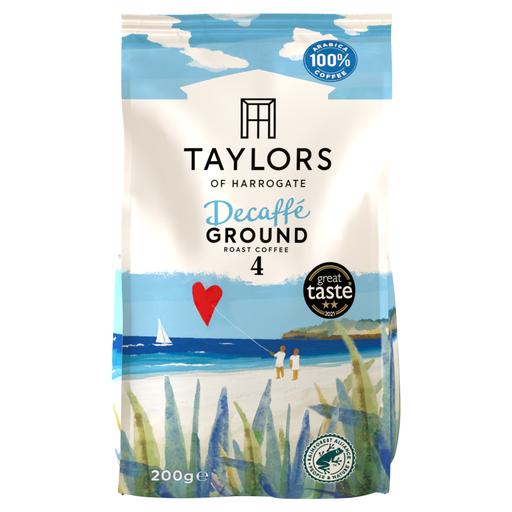 No image available
An explicitly decaffeinated ground-coffee option when you want to minimise caffeine with a late supper. Check the pack’s brewing guidance and caffeine information if you need a particular method or limit.
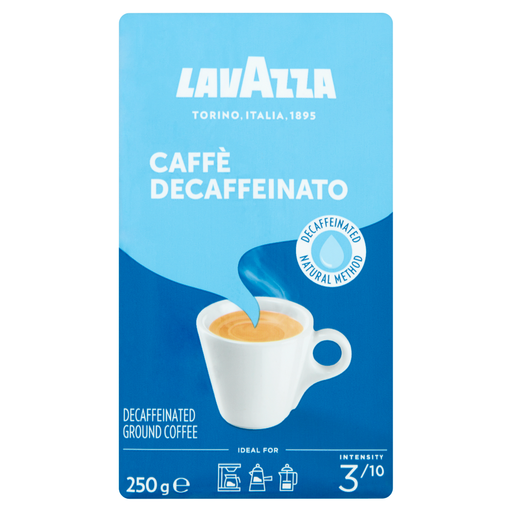 No image available
An explicitly decaffeinated ground-coffee option for a late-supper cup. Check this pack’s preparation guidance for your brewer, and its caffeine information if you require a specific limit.
Not necessarily. illy states that its Decaffeinated Ground coffee has a caffeine content no higher than 0.1%, so check the particular product’s statement if a numerical limit matters to you.
Choose decaf if minimising caffeine is your main aim; consider half-caff only if some regular coffee is acceptable. Sainsbury’s says its Taste the Difference Half Caff contains 50% regular coffee and 50% decaffeinated coffee, an ingredient split rather than a measured caffeine amount per cup.
A flavour or roast description does not establish a caffeine reduction. Taylors of Harrogate describes Lazy Sunday as a gentle-flavoured regular coffee, while its separate Decaffé product is identified as decaffeinated; use the product label to make that distinction.
Check the preparation method and grind stated for the exact pack. Rombouts specifies its Decaf as medium ground for filter and cafetière use; for another coffee or brewer, check the corresponding guidance before buying.
Choose a pack size that suits how often you brew, then follow its instructions for storage after opening. Make the caffeine and brewer decisions first: convenient storage will not turn regular coffee into decaf or change which equipment a grind is intended for.