Students making coffee between lectures
If lunch is a short break, start with a flavour profile you would be happy to make repeatedly. Check that the grounds suit the brewer you can use, whether that is a cafetière, filter machine or another setup.


A balanced blend is a starting point for a repeatable lunch coffee if you prefer a less assertive flavour; choose a fuller-bodied profile for bolder taste, or a blend labelled half-caffeinated or decaffeinated if reducing caffeine matters. Check that the grounds suit your brewer rather than relying on a strength number: illy cautions that moka grind is too coarse for proper espresso extraction.
If lunch is a short break, start with a flavour profile you would be happy to make repeatedly. Check that the grounds suit the brewer you can use, whether that is a cafetière, filter machine or another setup.
A blend labelled half-caffeinated or decaffeinated addresses caffeine preference more directly than a roast or intensity number. Sainsbury's lists a Half Caff ground-coffee option; check the current pack for its description and brewing instructions.
Choose grounds labelled for the equipment available to you. This matters particularly for moka pots and espresso machines: illy says its moka grind is too coarse for proper espresso extraction.
Choose your flavour and caffeine preference, then confirm the grind and pack instructions before settling on a lunch coffee.
| Priority | What to check | Your needs |
|---|---|---|
| Flavour and body | Compare the stated roast, tasting notes and the maker's intensity description. Lavazza describes intensity as an aroma and body cue, not a complete guide to taste. | I would prefer a familiar lunch coffee, or a more pronounced flavour when I have time to enjoy it. Taylors of Harrogate describes its Rich Italian blend as rich and smooth; Tesco describes its Café Blend with chocolate and nut notes. |
| Caffeine preference | Look for an explicit half-caffeinated or decaffeinated label. Do not use a flavour-strength number to determine caffeine content. | If I want to reduce caffeine during an afternoon of lectures, I need the pack to identify that option clearly. Sainsbury's lists a Half Caff ground blend, while illy lists decaffeinated ground coffee. |
| Brewer fit | Check the named brewing methods and grind on the pack. illy advises against using moka grind for espresso; Tesco identifies cafetière, filter machine, moka pot and percolator suitability for its Café Blend. | The coffee has to work with the brewer I can actually use in halls, a shared kitchen or at home. |
| Using the pack | Read the product's preparation and post-opening storage instructions. For a one-cup filter format, check how it is prepared and whether your setup needs a holder. | I want a serving format that fits my lunch routine and a pack I can store as directed between uses. |
| Current label | Check the physical pack's ingredients and allergen information, particularly if a listing or photograph is older. GOV.UK says regulated allergens present as ingredients in UK prepacked food or drink must be clearly identified in the ingredients list. | If an ingredient or allergen matters to me, I need to use the details on the pack I am buying, not assume an earlier listing is unchanged. |
Lavazza describes intensity in terms of a coffee's overall aroma and body. A higher number alone does not establish the caffeine content or whether you will prefer the flavour.
Use the roast description and tasting notes for flavour; look for an explicit half-caffeinated or decaffeinated label when caffeine is the deciding factor.
Grinds are not interchangeable across every method. illy says moka grind is too coarse for proper espresso extraction and can produce a weak, watery cup.
Check the pack for your cafetière, filter machine, moka pot or espresso machine before buying, especially if you use shared equipment.
Ingredients and product details can change. For UK prepacked food and drink, GOV.UK says any of the 14 regulated allergens present as ingredients must be clearly labelled in the ingredients list.
Read the current physical pack if an ingredient or allergen matters to you, rather than relying only on a photograph or earlier listing.
Post-opening storage instructions affect how you use a pack between lunch breaks; they can differ by product and packaging format.
Follow the current pack's resealing and storage directions. If you choose a one-cup filter product, check its own instructions rather than applying directions for loose grounds.
These ranges offer different flavour labels and brewing formats; check the particular product rather than assuming every blend from a brand has the same grind or profile.
Lavazza's ground-coffee range includes grounds designated for moka, espresso and filter brewing.
illy lists ground-coffee profiles including CLASSICO, INTENSO and FORTE, alongside decaffeinated options.
Taylors of Harrogate describes its Rich Italian ground coffee as a rich, smooth blend from two continents.
Rombouts lists a ground-coffee range, including a decaffeinated option, and describes its grounds as vacuum-packed.
Tesco Finest Café Blend combines Arabica and Robusta coffee and is described with chocolate and nut notes.
The Taste the Difference range includes Half Caff ground coffee and Revitalise Your Day, a medium-dark roast.
These options include balanced and fuller-bodied ground coffee, a one-cup filter format and blends labelled for particular brewers. Choose according to your flavour preference and available equipment; check individual packs if reducing caffeine is a priority.
 No image available
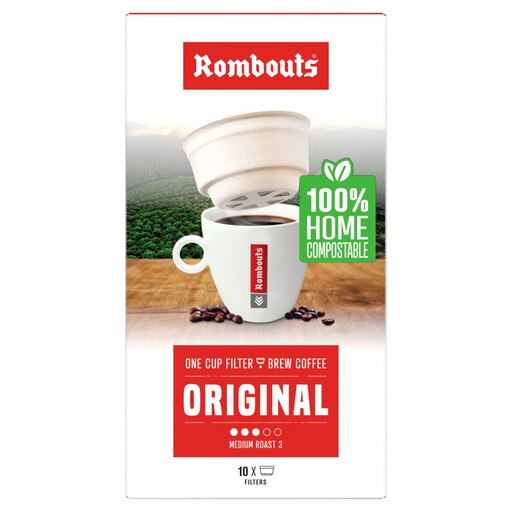
The one-cup filter format is worth considering for a single lunch serving if its preparation method fits your setup. The product description identifies a medium-bodied coffee with rich aroma and describes the filter as compostable; check the pack for preparation steps and any equipment needed.
 No image available
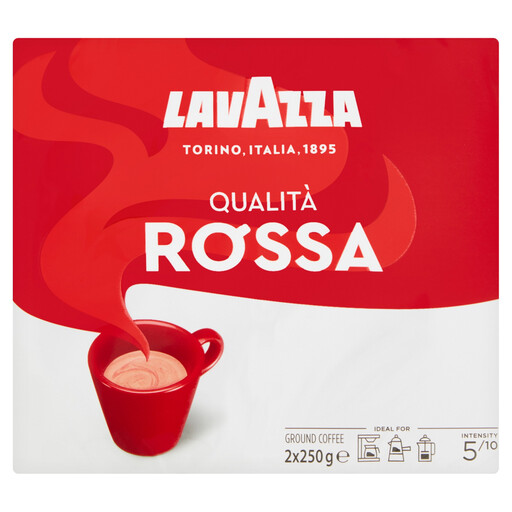
This Arabica-and-Robusta blend is listed for moka pots, filter brewing and French presses, giving you named methods to check against your lunch setup. Its description says flavour can vary from mild to bold with preparation, so do not assume the same cup from each method.
 No image available
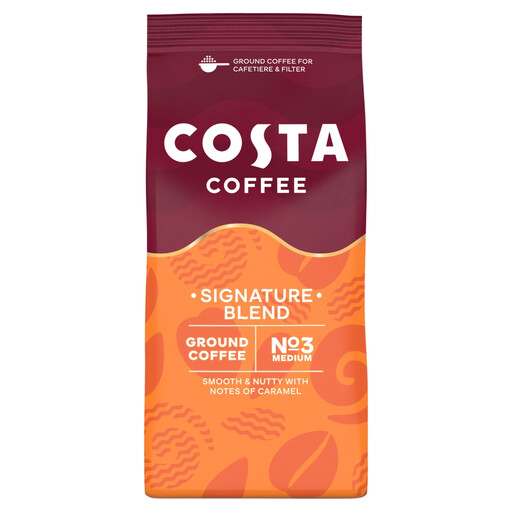
Choose this ground blend if you use a cafetière or filter machine and prefer the smooth, nutty notes stated in its description. The listing identifies No. 3 medium coarseness; check the pack rather than assuming it also suits a moka pot or espresso machine.
 No image available
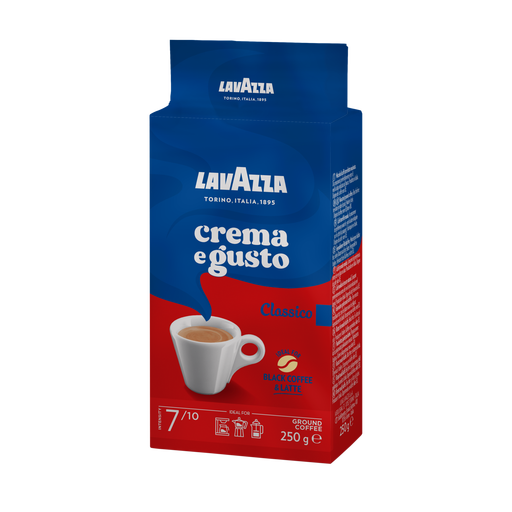
This ground Arabica-and-Robusta blend is described as full-bodied, making it a flavour option if you prefer a more pronounced lunch coffee. Check the current pack for the brewing methods it names before using it with your equipment; follow its airtight-storage direction after opening.
No caffeine conclusion follows from the intensity number alone. Lavazza describes intensity as an indication of aroma and body; if reducing caffeine is your priority, look for a product explicitly labelled half-caffeinated or decaffeinated.
illy advises against using its moka grind for proper espresso extraction because it is too coarse and can produce a weak, watery coffee. Choose grounds labelled for your espresso machine; use moka-specific grounds for a moka pot where the product directs you to.
Start with ground coffee whose pack names cafetière use, then follow that product's directions for the amount, water and brewing time. Check those steps before buying if preparation time matters between lectures.
Follow the current pack's post-opening storage and resealing instructions. Packaging and directions differ, so check them for the blend or one-cup filter format you choose rather than assuming one method suits every product.
Check the ingredients and allergen information on the physical pack. GOV.UK says any of the 14 regulated allergens present as ingredients in UK prepacked food or drink must be clearly labelled within the ingredients list; use the current pack rather than relying only on an online listing.