Cafetière and filter users
Look for grounds labelled for your cafetière, filter machine or filter cone. Once the preparation method fits, compare the pack’s roast and flavour description with the kind of lunch coffee you enjoy.


Choose ground coffee labelled for the brewer you use at lunch: cafetière or filter grounds for those methods, and espresso or moka grounds for those preparations. Then choose the flavour profile and caffeine status you want. Half-caff still contains regular coffee, while intensity numbers from different brands are not a shared measure of caffeine or flavour.
Your brewer and your preference for regular or decaf coffee narrow the choice before flavour descriptions become useful.
Look for grounds labelled for your cafetière, filter machine or filter cone. Once the preparation method fits, compare the pack’s roast and flavour description with the kind of lunch coffee you enjoy.
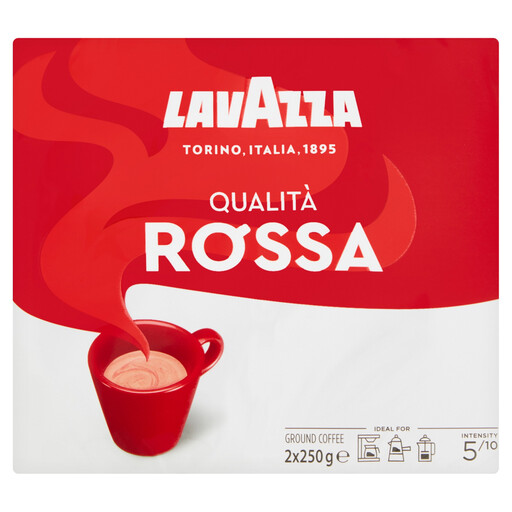
Start with a product intended for moka or espresso rather than assuming any ground coffee will suit the equipment. Lavazza UK, for example, labels Qualità Rossa for both methods.
Check whether a pack contains regular coffee, a mixture of regular and decaffeinated coffee, or decaf. Check its brewing instructions too: caffeine status alone does not establish that the grind suits your brewer.
Match the preparation method first, then compare caffeine status, cup description and pack instructions.
| Priority | What to check | Your needs |
|---|---|---|
| Brewer and grind | Check the labelled preparation method and grind. Read the pack or machine directions for a starting brew. | I use a cafetière or filter brewer, so I want grounds labelled for that method. If I use a moka pot or espresso equipment, I’ll check for those preparations instead. |
| Caffeine status | Read the decaf or half-caff designation and ingredients; check the brewing method separately. Sainsbury’s lists its Half Caff blend as 50% coffee and 50% decaffeinated coffee. | At lunch, I may want a mixture containing regular and decaffeinated coffee, or I may prefer an explicitly labelled decaf. Half-caff is not caffeine-free. |
| Flavour profile | Compare the stated roast, blend composition and tasting notes. Treat each brand’s strength or intensity scale as its own description, not as a cross-brand caffeine measurement. | I can choose between the profiles described on the packs without assuming that one brand’s intensity number means the same thing as another’s. |
| Pack and storage | Check the pack size and its instructions for storage after opening. Follow directions for that product rather than applying another pack’s guidance. | If I make coffee only at lunch, I want a pack size and storage routine that fit how often I use it. |
Lavazza UK describes Qualità Rossa as intensity 5/10, while Sainsbury’s labels its Colombian coffee strength 3. Those numbers do not establish a like-for-like measure of caffeine or flavour.
Use the roast, blend and tasting notes to choose a cup style. If caffeine matters, check for an explicit half-caff or decaf designation.
Lavazza UK labels Qualità Rossa for espresso and moka; Rombouts labels its medium-ground decaf for filter and cafetière preparation. Their stated uses differ.
Check that the exact pack names your brewing method, then use its preparation directions as a starting point.
Sainsbury’s lists its Half Caff ground coffee as 50% coffee and 50% decaffeinated coffee. By contrast, illy UK declares caffeine content no higher than 0.1% for its cited decaffeinated ground espresso.
Choose an explicitly labelled decaf when minimising caffeine is the aim, and check that its ground format suits your brewer.
Storage instructions can differ between products, so another coffee’s directions may not apply to the pack you bought.
Read the exact label when you open it and choose a pack size that fits how often you make coffee.
These ranges illustrate different labelled formats and profiles; a brand name alone does not establish whether a particular pack suits your brewer.
Lavazza UK separates ground coffee by intended brewing method, including moka, espresso and filter.
illy UK lists distinct ground-coffee formats for espresso, moka and filter preparation.
Rombouts UK gives a specific preparation route for its cited medium-ground decaf coffee.
Tesco Groceries lists several 227g ground-coffee variants under Tesco Finest, including Peruvian, Colombian Supremo and Brazilian coffees.
Sainsbury’s lists ground-coffee options with distinct blend and caffeine descriptions.
Taylors of Harrogate has ground-coffee products including Lazy Sunday and Rich Italian listed on Joybuy.
These options cover different ways of making a working-from-home lunch coffee, including labelled cafetière and filter grounds, a one-cup filter format and decaf ground coffee. Check each pack against your own brewer and caffeine preference.
 No image available
For a moka or espresso-style lunch coffee, Lavazza UK labels Qualità Rossa for those preparations. It describes the coffee as a medium-roast Arabica-and-Robusta blend with an intensity of 5/10; use that figure as Lavazza’s product description, not a comparison with another brand’s scale.
 No image available
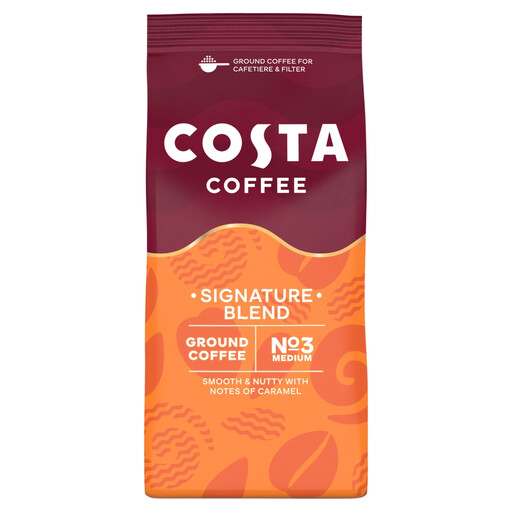
The product name specifies cafetière and filter preparation, No. 3 medium grind and a 200g pack. It is an option to consider if either is your usual lunch brewer; check the pack’s caffeine information if that affects your choice.
 No image available
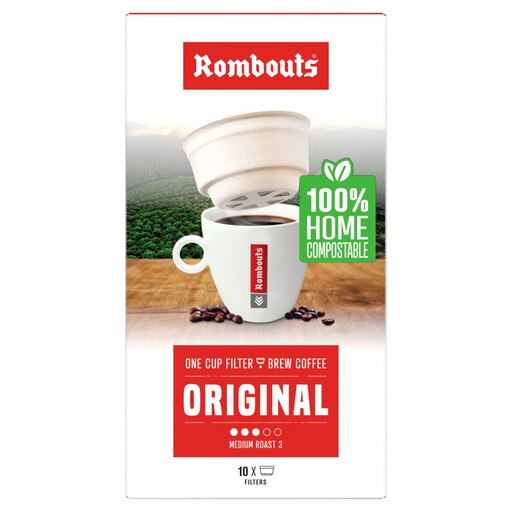
This is a one-cup filter format rather than a pack of loose grounds for measuring into a cafetière. Consider the preparation format as well as the 70g pack size when choosing coffee for a lunch routine.
 No image available
After Dark is a 200g ground-coffee option for shoppers considering a different named blend. Check the pack’s brewing directions and caffeine information before deciding whether it fits your lunch brewer and preferences.
 No image available
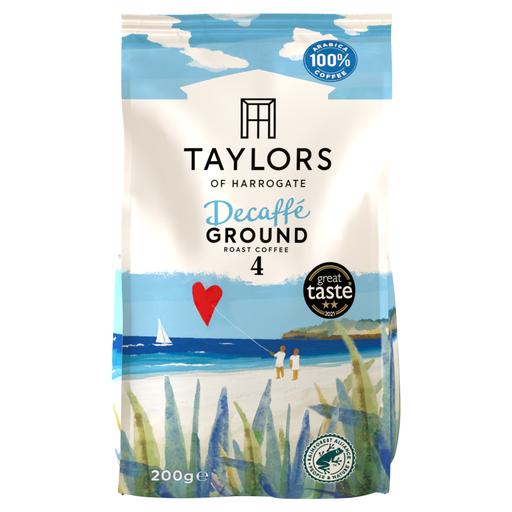
This 200g ground coffee is labelled decaf, making it a different lunchtime choice from a blend containing regular coffee. Check the pack’s grind and brewing directions against your equipment, and its caffeine information if you need a stated figure.
Choose a pack labelled for the method you use rather than assuming the grounds are interchangeable. Rombouts UK labels its cited medium-ground decaf for filter and cafetière preparation, while Lavazza UK labels Qualità Rossa for espresso and moka.
No. Sainsbury’s lists its Half Caff ground coffee as 50% coffee and 50% decaffeinated coffee, so it still contains regular coffee. illy UK declares caffeine content no higher than 0.1% for its cited decaffeinated ground espresso; check the brewing format as well as the caffeine designation.
Start with the directions for your particular coffee. Sainsbury’s directions for its cited ground coffee use one tablespoon per 200ml of off-the-boil water and a wait of three to five minutes before plunging; Rombouts UK suggests starting its cited decaf at 60g per litre. These are product-specific starting points, which you can adjust to taste.
Follow the instructions on the exact pack you buy, as storage guidance differs between products. Check those directions when choosing a pack size, particularly if you make coffee only occasionally.