Office managers stocking an everyday coffee
If the kitchen has a cafetière or filter machine, begin with coffee whose stated preparation methods include that equipment. Compare flavour descriptions once the practical fit is clear.


Choose ground coffee that explicitly names your office brewer before comparing flavour descriptions. For a shared snack break, start with a profile colleagues are willing to try, then consider a separately labelled half-caff or decaffeinated option if people want to reduce caffeine; no roast-strength number or flavour note can settle everyone’s preference.
If the kitchen has a cafetière or filter machine, begin with coffee whose stated preparation methods include that equipment. Compare flavour descriptions once the practical fit is clear.
Some colleagues may favour a lighter stated profile while others want a fuller-tasting cup. Trying a small pack before settling on a regular order leaves room to judge those descriptions as a team.
A clearly labelled half-caff or decaffeinated product can sit alongside the main coffee, so colleagues can choose without treating roast-strength labels as a measure of caffeine.
Check the brewer and the exact ground format first. Then shortlist flavours, decide whether a second caffeine option is useful, and choose a pack the office can store as directed.
| Priority | What to check | Your needs |
|---|---|---|
| Office coffee quality | Choose a stated flavour profile to trial with colleagues; judge the prepared coffee rather than relying on the description alone. | I want the coffee break to feel worth taking, not just to refill the cupboard. In a Nespresso Professional report on a ComRes survey of 2,772 employees across the UK and Republic of Ireland, 27% of UK employees surveyed said high-quality coffee improved their daily work life to a great extent. That measures workplace perception, not blend preference. |
| Brewer fit | Check that the exact pack names the office’s cafetière, filter machine, moka pot or other brewer. Ground formats vary: illy, for example, lists separate moka, filter and espresso products. | If colleagues use more than one brewer, I need the chosen coffee’s instructions to cover each method we plan to use. |
| Flavour profile | Read the maker’s roast and flavour descriptions, then try the coffee with the office equipment. Treat strength numbers as product labels, not a universal taste or caffeine scale. | A smaller trial lets us see whether colleagues prefer a lighter cup or a fuller stated profile with their usual snacks. |
| Caffeine choice | Read the product name and ingredients for an explicitly labelled half-caff or decaffeinated option. Sainsbury’s lists its Half Caff as 50% coffee and 50% decaffeinated coffee. | I would like a separately labelled choice for colleagues who want to reduce caffeine, rather than assuming the regular pot suits everyone. |
| Pack and storage | Match pack size to how quickly the office uses coffee. Follow the exact pack’s after-opening directions; illy advises keeping its Classico moka coffee away from light and heat. | Our coffee needs to be practical to finish and store in the shared kitchen. |
A pack intended for moka preparation should not automatically be treated as suitable for a filter machine. Product ranges can use different ground formats for those methods.
List the office brewers, check the exact pack’s preparation directions and trial a small quantity before ordering more.
A strength number describes a product’s stated profile; it does not establish its caffeine content. Sainsbury’s Half Caff is a reduced-caffeine choice because it blends coffee and decaffeinated coffee, not because of its strength number.
For a caffeine choice, look for an explicitly labelled half-caff or decaffeinated product and check its ingredients.
Colleagues can differ in both flavour preference and whether they want caffeine. A single shared pot does not offer a lower-caffeine choice.
Consider a clearly labelled second product if colleagues want that option, while keeping the main coffee matched to the office brewer.
After-opening directions are product-specific, so a pack should be manageable within the office’s usual consumption and storage routine.
Check the supplied pack’s instructions before choosing a size, and store opened coffee as directed.
These product-line examples help distinguish flavour descriptions and brewing formats; a brand name alone does not establish that a particular pack fits your equipment.
Lavazza describes Qualità Rossa as an Arabica-and-Robusta blend with a full-bodied profile and chocolate and dried-fruit notes.
Illy lists separate ground-coffee products for moka, filter and espresso preparation, alongside decaffeinated options.
Taylors describes its Rich Italian ground coffee as rich and smooth, with chocolate and nut notes.
Rombouts identifies Cachet d’Or as 100% Arabica coffee, medium ground for filter and cafetière use.
Tesco lists its Finest Café Blend as an Arabica-and-Robusta ground coffee with chocolate and nut notes.
Sainsbury’s lists a Half Caff ground coffee alongside other ground-coffee options.
These ground-coffee packs are options to consider for an office snack break. Match each pack’s preparation directions to the brewer before choosing a regular supply; the selection does not itself provide a labelled lower-caffeine option.
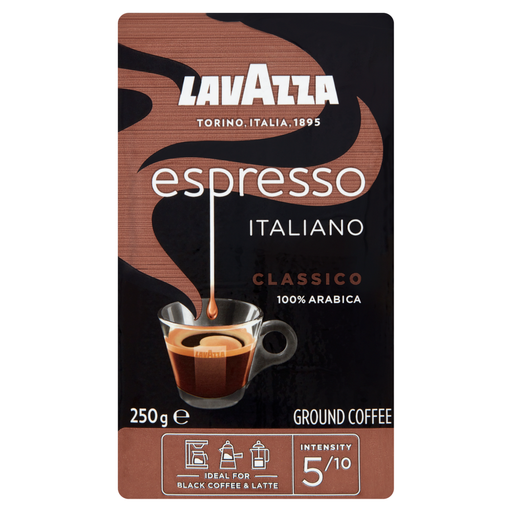 No image available
A 250g ground-coffee pack to consider if colleagues want to try this Lavazza blend. Check its preparation directions against the office brewer. The listing mixes coffee information with dietary-supplement warnings, so confirm the supplied pack’s identity and instructions before serving.
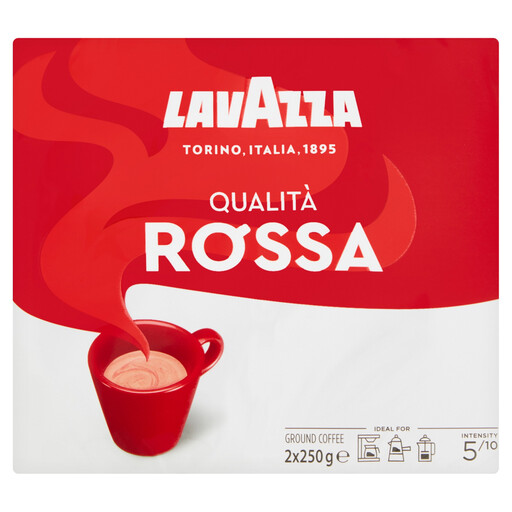 No image available
This 500g ground pack is an option for an office considering Qualità Rossa. Check its own grind and preparation directions against the available brewer rather than applying directions for the whole-bean product.
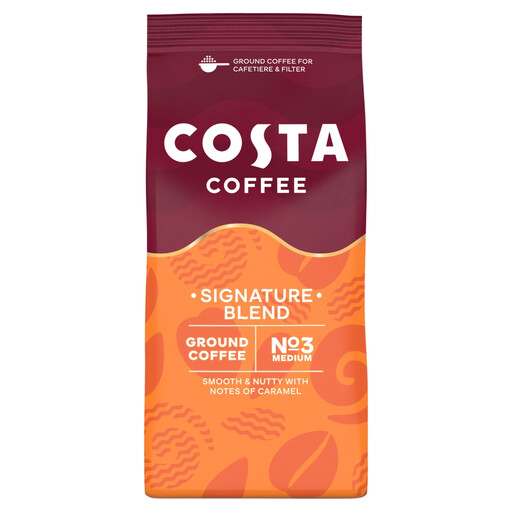 No image available
The pack name specifies ground coffee for cafetière and filter preparation, making those the methods to check against the office equipment. It identifies a No. 3 Medium grind and a 200 g pack; do not assume suitability for other brewers.
 No image available
This 200g ground-coffee pack is a candidate for a team flavour trial; Joybuy identifies its ingredients as 100% Arabica coffee. Check the supplied pack’s grind and brewing directions before choosing it for the office machine.
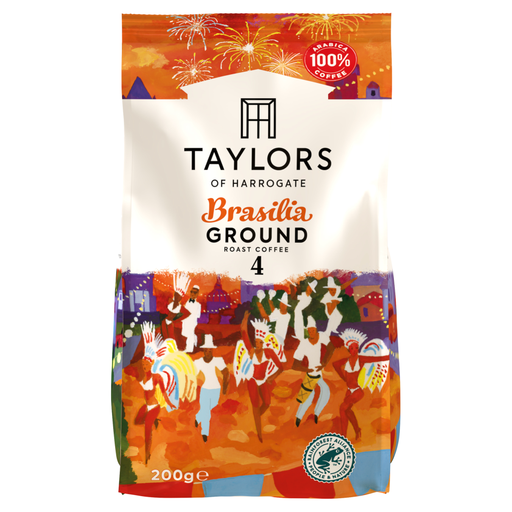 No image available
This 200g ground-coffee pack could be included in a small office trial. Check the pack’s brewer and grind directions before use; the listing also contains conflicting chilled-serving wording, so use the supplied pack for preparation instructions.
Yes, if the exact product names both methods. Tesco lists cafetières and filter machines for its Finest Café Blend, while Rombouts specifies filter and cafetière use for Cachet d’Or. Check the pack you intend to buy rather than assuming the same of all ground coffee.
Choose a cup style to trial rather than treating either blend type as a guaranteed team favourite. Rombouts identifies Cachet d’Or as 100% Arabica with a light, subtly fruity stated profile; Tesco describes its Finest Café Blend as Arabica and Robusta with chocolate and nut notes. Brewer compatibility still comes first.
No. Sainsbury’s lists its Half Caff ground coffee as 50% coffee and 50% decaffeinated coffee. If colleagues want decaffeinated coffee instead, choose a product labelled accordingly.
Follow the directions on the exact pack and choose a size the office can use within those directions. For its Classico moka product, illy advises keeping coffee away from light and heat; another product’s instructions may differ.