Age alone does not call for a particular ground-coffee blend: choose according to caffeine tolerance and the person’s routine. Decaf is a route when reducing caffeine matters; half-caff offers a step between decaf and regular coffee, while regular coffee remains an option for someone who tolerates caffeine. If iron-deficiency advice is relevant, the timing of coffee around meals matters regardless of the blend.
Who is choosing the coffee?
Older coffee drinkers reducing caffeine
Someone who wants to keep making ground coffee but prefers less caffeine, perhaps for later-day drinking or because caffeine aggravates bladder symptoms. NHS Tayside identifies caffeine as a possible contributor to frequency, urgency and incontinence; an individual’s symptoms still matter more than age alone.
People following iron-deficiency advice
For someone advised to pay attention to iron intake, the choice is not a specially nutritious coffee blend. University Hospitals Coventry and Warwickshire NHS Trust advises keeping coffee away from meals because drinking it with food can reduce iron absorption.
Regular-coffee drinkers considering a gradual change
Someone who does not want to move straight from regular coffee to decaf can consider half-caff. Sainsbury’s Taste the Difference Half Caff contains 50% coffee and 50% decaffeinated coffee; that blend description is not a caffeine amount per prepared cup.
What should you check before buying?
Choose a caffeine route for the person’s routine, then check the particular pack and the brewer used at home.
Decaf ground coffee
Consider it when: The person wants ground coffee while reducing caffeine.
Bear in mind: Decaf labels differ in how precisely they declare residual caffeine, and decaf does not remove the meal-timing consideration for iron absorption.
Half-caff ground coffee
Consider it when: The person wants to reduce caffeine without moving straight to decaf.
Bear in mind: Half-caff still contains caffeinated coffee, so the blend ratio alone cannot establish a caffeine amount per cup.
Regular ground coffee
Consider it when: The person enjoys and tolerates caffeine and has no individual reason to restrict it.
Bear in mind: Regular coffee may not fit a caffeine-reduction plan, and drinking coffee with meals remains relevant when following iron-deficiency advice.
| Priority |
What to check |
Your needs |
| Caffeine choice |
Check whether the pack says decaf, half-caff or regular. illy states no higher than 0.1% caffeine for its 125 g decaffeinated ground espresso; Sainsbury’s states that its 227 g Half Caff contains 50% coffee and 50% decaffeinated coffee. Neither figure is a caffeine amount per prepared cup. |
I want to keep ground coffee in the routine while choosing a caffeine level that fits the person drinking it. |
| Individual tolerance |
Consider whether caffeine aggravates the person’s symptoms. NHS Tayside notes that caffeine can worsen bladder and bowel symptoms, including urgency and frequency; a product label cannot predict an individual response. |
If caffeine seems to make bladder symptoms troublesome, I want a coffee choice that fits the person’s own routine and advice. |
| Timing around meals |
If following iron-deficiency dietary advice, check when coffee is served. University Hospitals Coventry and Warwickshire NHS Trust advises avoiding coffee within one hour before or after meals; choosing decaf does not replace this timing advice. |
When iron intake is a concern, I want to fit coffee around meals rather than assume a different blend settles the issue. |
| Brewing method |
Match the particular pack to the household brewer. Lavazza lists moka, filter and French press preparation for its reviewed decaf product; Rombouts describes its reviewed decaf as medium ground for filter and cafetière use. Check the current pack rather than applying one product’s directions to another. |
My ground coffee needs to work with the cafetière, filter machine or other brewer already in use. |
Common buying mistakes
-
Assuming decaf settles the meal-timing question
Caffeine content and iron absorption are separate considerations. University Hospitals Coventry and Warwickshire NHS Trust advises that coffee with a meal can reduce iron absorption.
If following its iron-deficiency dietary advice, plan coffee at least one hour before or after meals, unless individual clinical advice differs.
-
Treating half-caff as decaf
Sainsbury’s Taste the Difference Half Caff contains 50% coffee and 50% decaffeinated coffee. That makes it a different choice from decaf, not a declaration of caffeine per cup.
For a specific caffeine restriction, check a relevant caffeine declaration rather than relying on the words ‘half-caff’.
-
Overlooking the brewer
Ground coffees can state different intended preparation methods. A grind described for filter or cafetière use should not automatically be treated as suitable for every brewer.
Check the current pack’s preparation directions against the equipment used at home.
-
Relying on an old product description
Tesco advises that food products can be reformulated, so details shown for a product may differ from the current pack.
At purchase, read the label for decaf status, ingredients, brewing directions and any caffeine declaration important to the choice.
Ground-coffee brands to consider
These brand examples illustrate different ground-coffee formats and declarations; check the particular product rather than assuming every coffee in a range has the same properties.
Lavazza
Lavazza lists a 250 g decaffeinated ground coffee for moka, filter and French press preparation.
- The stated preparation methods help narrow the choice for those brewers.
- Check the particular pack for any residual-caffeine declaration needed for an individual limit.
illy
illy lists decaffeinated ground espresso alongside other ground-coffee formats.
- illy states that its 125 g decaffeinated ground espresso contains no higher than 0.1% caffeine.
- Check the chosen product’s preparation directions against the household brewer.
Taylors of Harrogate
Sainsbury’s lists Taylors of Harrogate ground coffees, including Rich Italian Roast and Lazy Sunday Roast.
- The named varieties give regular-ground-coffee options to compare by pack details.
- Check the caffeine designation and brewing directions of the particular Taylors product being considered.
Rombouts
Rombouts describes its decaffeinated ground coffee as medium ground for filter and cafetière preparation.
- The stated grind and preparation methods make brewer matching more specific.
- For a precise caffeine restriction, check the current pack for a numerical declaration.
Tesco Finest
Tesco lists a 227 g Finest Decaffeinated Colombian Ground Coffee.
- Tesco lists cafetières, filter machines, moka pots and percolators as suitable preparation methods for that product.
- Tesco advises checking the current label because food products can be reformulated.
Sainsbury’s Taste the Difference
The range includes a 227 g Half Caff ground coffee as well as decaffeinated ground-coffee listings.
- Sainsbury’s specifies that Half Caff contains 50% coffee and 50% decaffeinated coffee.
- The 50:50 blend description does not establish caffeine per prepared cup.
Decaf ground coffee on Joybuy
These two ground-coffee options suit a search for decaf. Check each current pack for brewing directions and any caffeine declaration needed for the person’s routine.
 No image available
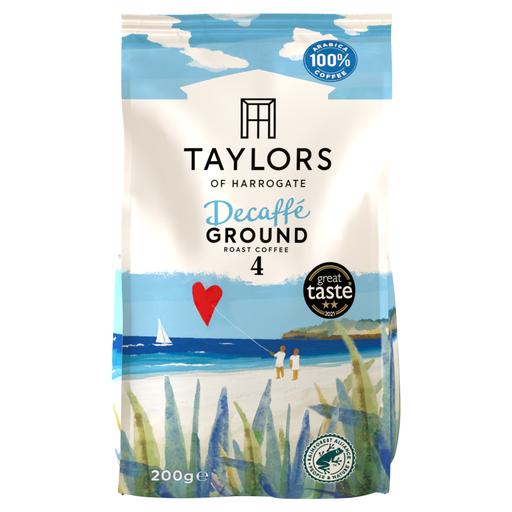
Taylors of Harrogate Decaf Ground Coffee 200g
A decaffeinated ground-coffee option for someone reducing caffeine while keeping a ground-coffee routine.
Check the current pack for a caffeine declaration and directions for the household brewer.
View on Joybuy
 No image available
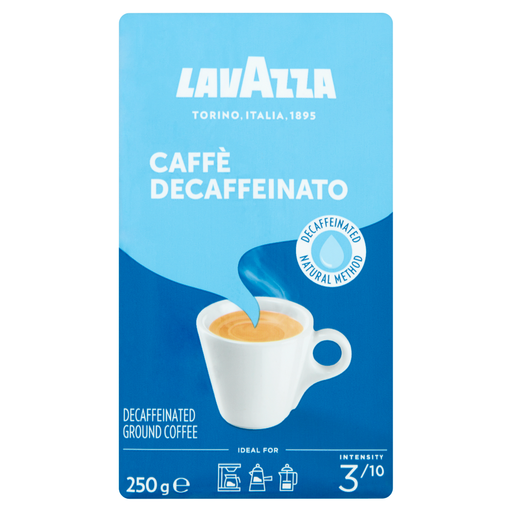
Lavazza Decaf Classico Ground Coffee 250g
A decaffeinated ground-coffee option for a routine in which reducing caffeine matters.
Confirm any required caffeine declaration and brewing directions on this product’s current pack; preparation details for a different Lavazza decaf should not be assumed to apply.
View on Joybuy
Questions about everyday use
Does an older person automatically need decaf?
No. Age alone does not determine the blend; caffeine tolerance, symptoms and individual advice are more useful considerations. The European Food Safety Authority’s 2015 assessment concerns caffeine intake from all sources in adults in the general population, rather than a coffee choice prescribed by age.
Does switching to decaf change when coffee can be served with meals?
Not when following iron-deficiency dietary advice. University Hospitals Coventry and Warwickshire NHS Trust advises avoiding coffee within one hour before or after meals because coffee with food can reduce iron absorption; a decaf label does not replace that timing advice.
Is decaf worth considering if caffeine aggravates bladder urgency?
Decaf is a way to reduce caffeine while keeping ground coffee in the routine. NHS Tayside notes that caffeine can worsen bladder and bowel symptoms, including urgency, but that does not mean every person with those symptoms needs decaf or will respond in the same way.


