Organisers using an existing pod machine
Identify its exact model and accepted coffee format before choosing pods. Check expected demand against that machine’s specification, particularly when many attendees may want coffee during the same break.


Choose the format your venue can brew: ground coffee suits suitable filter, cafetière or espresso equipment, while paper pods and capsules need their specified machine system. For a conference, weigh batch brewing against individual portions and self-service, then check break-time demand, decaf provision and allergen information before ordering.
Identify its exact model and accepted coffee format before choosing pods. Check expected demand against that machine’s specification, particularly when many attendees may want coffee during the same break.
Choose ground coffee labelled for the venue’s filter brewer, cafetière or other suitable equipment. Lavazza and Rombouts distinguish ground coffee by brewing method, so a pod is not a substitute for the right grind.
Keep the decaf option compatible with its serving equipment. For drinks offered to attendees, keep current ingredient and allergen information accessible for coffee and any milk or other additions.
Choose when: The venue has suitable brewing equipment and the caterer plans to prepare multiple servings.
Bear in mind: The grind must match the brewer, and opened packs need appropriate storage.
Choose when: The installed system accepts the chosen capsules and individual portions suit the service setup.
Bear in mind: A retail capsule label does not establish compatibility with a professional machine.
Choose when: The venue’s espresso machine or adaptor explicitly accepts E.S.E. pods.
Bear in mind: E.S.E. pods cannot be treated as interchangeable with capsules or proprietary paper pods.
| Priority | What to check | Your needs |
|---|---|---|
| Machine compatibility | Record the machine model and accepted system; match it to the pack’s format. For loose coffee, check the stated brewing method and grind. | I want to avoid ordering coffee that the venue cannot brew. |
| Break-time service | Estimate servings during the busiest break, serving points and available staff. Compare demand with the exact machine’s guidance; Nespresso Professional’s daily-volume categories apply to its listed machines, not every pod system. | Attendees may arrive at the coffee station together, so the setup needs to suit the expected rush. |
| Decaf choice | Check that a decaf product fits the same brewing route, whether ground coffee for the batch brewer or pods for a compatible machine. | I would like attendees to have a decaf option without requiring an incompatible format. |
| Allergen information | Keep current product information for the drinks and additions being served. GOV.UK and the Food Standards Agency, and Food Standards Scotland, state that food businesses must provide allergen information. | Someone asking about milk or another addition should be able to get accurate information about the drink offered. |
E.S.E. pods, proprietary paper pods and capsules are different formats. Rombouts describes equipment adapted to its 1.2.3 Spresso system; Nespresso Professional describes its own business machines.
Record the venue machine’s brand, model and accepted format, then confirm the proposed pod with the machine supplier before ordering for the event.
Incompatible stock cannot be used at the intended station and may disrupt the planned service.
Ground coffee is labelled for particular brewing methods. Lavazza distinguishes moka, espresso and filter grinds, while Rombouts identifies its decaf ground coffee for filter and cafetière use.
Match the pack’s stated use to the equipment and follow its storage instructions after opening.
A capsule labelled for a consumer system does not, by itself, establish compatibility with a venue’s professional equipment or show whether that equipment suits the event’s demand.
Check the installed model against its supplier’s format and capacity guidance before buying capsules in quantity.
Milk, flavourings, powders and accompaniments can change the allergen information needed at a coffee station. GOV.UK and the Food Standards Agency, and Food Standards Scotland, state that food businesses must provide allergen information.
Keep current labels or product records available and give staff a clear way to answer attendee questions without guessing.
These ranges illustrate why the format on the pack matters more than the brand name alone.
Lavazza UK separates ground coffee for different brewing methods from its business Blue-system capsules.
illy UK lists ground coffee alongside E.S.E. paper pods.
Rombouts lists ground coffee and espresso pods, as well as its separate 1.2.3 Spresso system.
Tesco Groceries lists Finest roast-and-ground coffee and capsule products.
Sainsbury's lists Espresso Pods described as Nespresso-compatible roast-and-ground coffee capsules.
These decaf pod options are relevant if a conference coffee station uses a compatible pod machine. Check the venue’s exact system and expected demand before choosing either pack.
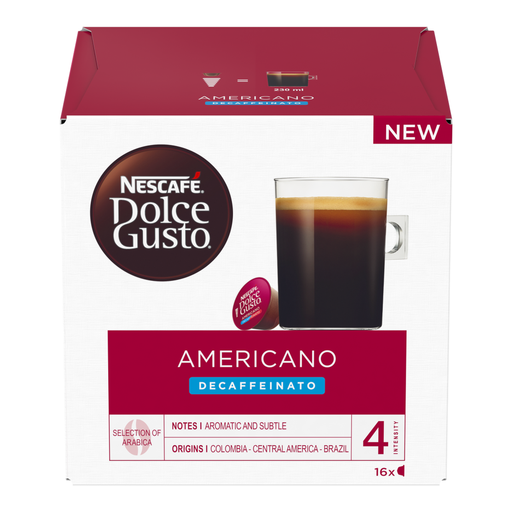 No image available
A decaf portioned option for a station with a compatible Dolce Gusto machine. Check that the venue’s exact machine and serving setup suit the event before ordering in quantity.
 No image available
A decaf pod option for a compatible coffee station. Confirm the accepted machine system and the number of portions on the pack before planning supplies for a conference.
No. Loose ground coffee is chosen for a suitable brewing method; pods and capsules are portioned formats that need compatible equipment. Identify whether the venue takes E.S.E. paper pods, a proprietary pod or a named capsule system before ordering.
Check the exact machine model, number of serving points and expected demand during the busiest break. Nespresso Professional groups its listed machines by daily coffee volumes, but those categories apply to its own specified equipment; compare the venue’s machine guidance with the event plan.
Yes, if you choose decaf in a format the setup accepts. Rombouts identifies a decaf ground coffee for filter and cafetière use, while illy lists decaf E.S.E. pods for compatible equipment; check the product and machine together.
A food business serving conference drinks must be able to provide allergen information, according to GOV.UK and Food Standards Agency guidance and Food Standards Scotland guidance. Check current information for the coffee and everything served with it, including milk, flavourings, powders and accompaniments, and make clear how attendees can ask about their drink.