Offices with a shared brewer
A cafetière, filter machine or filter cone makes ground coffee an option. Choose a pack labelled for the equipment and allow for cleaning and used grounds.


Keep an instant-coffee jar if staff have only a kettle: ground coffee needs a suitable brewer and a way to clear away used grounds. If the office has a cafetière, filter setup or another suitable brewer, choose ground coffee labelled for that method, then consider a separate decaffeinated option if staff want one.
The equipment in the snack area determines whether ground coffee is practical at all.
A cafetière, filter machine or filter cone makes ground coffee an option. Choose a pack labelled for the equipment and allow for cleaning and used grounds.
If staff make coffee with hot water and a spoon, choose instant coffee rather than treating a jar or tin of ground coffee as a direct replacement.
A separate decaffeinated ground coffee can sit alongside the regular option when staff use a suitable brewer. Check the exact product’s preparation instructions and keep the packs clearly identified.
Start with how staff will make the coffee; then compare the variant, pack size and storage instructions.
| Priority | What to check | Your needs |
|---|---|---|
| Preparation format | Check whether the station has only a kettle or also has a brewer. Ground coffee needs brewing equipment; instant coffee is the hot-water-and-spoon option. | Staff need to make a drink at a kettle-only snack point, so I need instant coffee rather than ground coffee. |
| Brewer match | Match the exact product’s stated grind and preparation method to the cafetière, filter machine, filter cone or other brewer in use. Follow its dosing instructions. | We already share a brewer, and I want a ground coffee labelled for that method rather than choosing by roast name alone. |
| Choice of coffee | Compare the stated blend and roast on the exact variant. Check whether a separate decaffeinated product is available for the same brewing method. | A regular and a clearly identified decaffeinated option would let colleagues choose between the two. |
| Pack and storage | Check the pack quantity, opening and storage instructions, and how many varieties will be open at once. | If we use coffee slowly, I would rather plan quantities around likely use than leave several large packs open. |
| Shared upkeep | Account for preparing the brewer, removing used grounds or filters, and cleaning equipment after use. | Someone needs to be able to maintain the shared setup; otherwise the kettle-only route is simpler for our snack area. |
Packaging does not change how the coffee is prepared. Ground coffee cannot serve as the hot-water-and-spoon option at a kettle-only station.
Check the equipment before ordering. Choose instant coffee for a kettle-only area, or provide a suitable brewer and a cleaning routine for ground coffee.
Adding a brewing setup can also mean filters or other supplies, time for preparation and used-ground disposal.
A range may have separate espresso, filter and moka variants; a preferred roast name does not identify which one fits the office brewer.
Check the exact pack’s grind description and preparation instructions before choosing a variant.
When both are offered, similar-looking opened packs can make it difficult for staff to select the one they intended.
Keep the original product identification visible and store the two varieties separately.
Pack sizes and supplier storage instructions vary, particularly when several blends are kept in the same kitchen.
Plan quantities around likely use and follow the purchased pack’s instructions after opening.
These examples show why the preparation label matters more than the brand name alone.
Lavazza describes Qualità Rossa as a medium-roast Arabica-and-Robusta ground-coffee blend.
illy’s UK ground-coffee range includes distinct espresso, filter, moka and decaffeinated products, including 250 g tins.
Taylors lists Rich Italian as a 200 g ground coffee. Its chocolate, nut and citrus descriptions are the brand’s account of its flavour.
Rombouts describes its 250 g Cachet d'Or as medium-ground coffee for cafetières, filter machines and filter cones.
Tesco lists several Tesco Finest ground coffees, including a 227 g Decaffeinated Colombian option.
These ground coffees are options for an office considering a shared brewer, including a separate decaffeinated choice. None replaces an instant-coffee jar at a kettle-only station.
 No image available
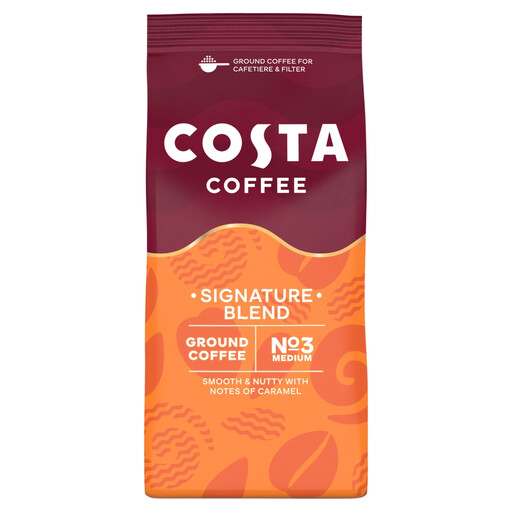
Consider this 200 g ground coffee for a shared cafetière or filter setup, and check the pack’s preparation and storage instructions. It is not instant coffee.
 No image available
The product name specifies cafetière and filter preparation, No. 3 Medium and a 200 g pack. Use it with the stated brewing method and allow for grounds cleanup.
 No image available
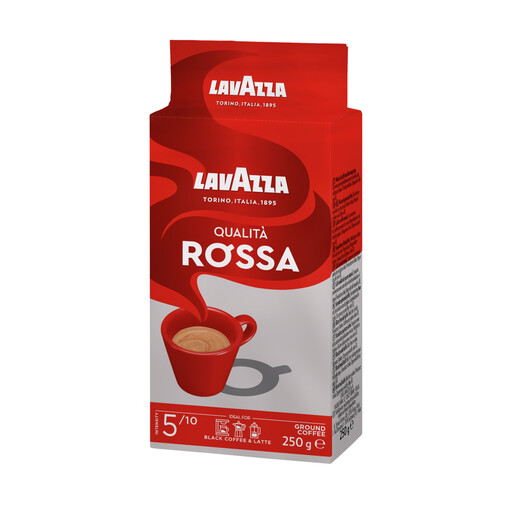
A 250 g option for an office considering Qualità Rossa’s stated brewing methods. Lavazza describes the blend as Arabica and Robusta; check the purchased pack against the office brewer.
 No image available
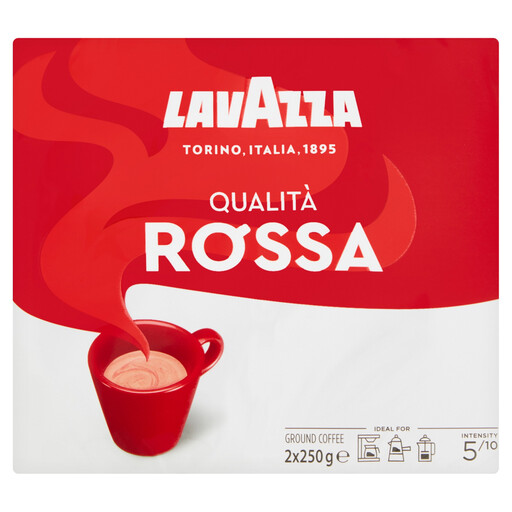
This 500 g pack is another Qualità Rossa option where the office has a matching brewer. Joybuy’s product information describes moka, filter and French-press preparation and advises cool, dry storage after opening; plan for how quickly the pack will be used.
 No image available
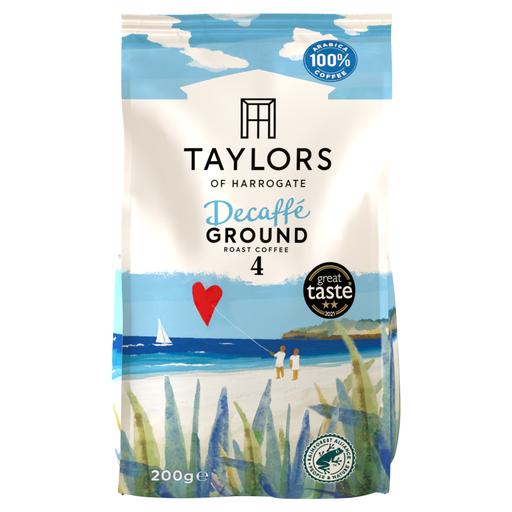
This 200 g decaffeinated ground coffee can provide a separate choice alongside regular coffee. Confirm its grind and brewing instructions against the office equipment before ordering; it is not instant coffee.
Not if staff have only a kettle. Ground coffee requires a suitable brewing method, such as a cafetière or filter setup, plus a way to remove used grounds; choose instant coffee for hot-water-and-spoon preparation.
Follow the instructions for the coffee and brewer. For its Cachet d'Or coffee, Rombouts recommends starting with 60 g per litre of water and adjusting to taste; that figure is not a universal dose for every product.
Consider a clearly identified decaffeinated option if staff want one and the office has suitable brewing equipment. Check the exact decaffeinated product’s preparation instructions rather than assuming it uses the same method as the regular coffee.
Follow the purchased pack’s instructions, which can differ between products. Joybuy’s Lavazza Qualità Rossa 500 g information calls for cool, dry storage after opening; its illy Ground Espresso Coffee information additionally advises refrigeration after opening.