
24/7 Customer Support

Free returns

Same-day & Next-day Delivery

Quality Guaranteed

Unlock Your Welcome Offers: FREE Delivery | Up to 80% OFF | Free 30-day JoyPlus trial
Download the APP
Bleeding, swollen or sensitive gums can make everyday shopping confusing. Shelves are crowded with products promising gum repair, long-lasting freshness, whitening and plaque control, but the most noticeable claim is not always the most useful specification.
The right gum care products should match your main concern, brushing routine and tolerance for ingredients such as alcohol, fluoride or strong flavouring. This guide explains what to check before buying, then matches selected toothpaste and mouthwash options to different UK shopping needs.
Whitening toothpaste generally works by helping remove surface stains. It does not replace a product selected for gum irritation, plaque control or tooth sensitivity. A whitening formula may therefore be unsuitable as your only choice if bleeding gums or sharp sensitivity is the main concern.
Look for wording that clearly identifies the product’s purpose, such as sensitivity care, gum care, enamel protection or stain removal. A product can combine several functions, but you should still prioritise the problem affecting your daily comfort.
Some shoppers search specifically for alcohol-free mouthwash because they dislike a strong burning sensation or mouth dryness. However, “alcohol-free” does not mean that every ingredient will suit every user. Check the full ingredient list and stop using the product if irritation occurs.
Also note that mouthwash is an addition to brushing, not a substitute for it. Use the dosage and rinsing time printed on the packaging rather than assuming all 500ml bottles work in the same way.
Bleeding gums can be associated with plaque build-up, but persistent bleeding, swelling, facial swelling, loose teeth or worsening pain should be discussed with a dentist. A daily gum disease toothpaste or bleeding gums toothpaste may support an oral-care routine, but it should not delay professional advice.
Some formulations contain specific active ingredients and carry usage warnings. Always read the current packaging, particularly if you are pregnant, taking medicines, have allergies or are buying for a child.
For most adults, a fluoride toothpaste around 1,350–1,500 ppm fluoride is a practical benchmark for daily brushing. The product information should state the fluoride content or active fluoride ingredients. For example, the Corsodyl Gum+ Breath & Sensitivity Toothpaste listing specifies 1,450 ppm fluoride, supplied through stannous fluoride and sodium fluoride.
Fluoride supports enamel protection, but more is not automatically more suitable. Follow the label, spit rather than swallow, and seek dental advice for children or anyone with particular oral-health needs.
Choose the formula according to the issue you want to address:
Do not use two products with overlapping specialist ingredients unless the label or a dental professional indicates that this is appropriate.
Most toothpaste options listed here are 75ml tubes, while mouthwash is generally supplied in 500ml bottles. Check whether you are comfortable measuring 10ml or 20ml per rinse and whether the recommended use is once or twice daily.
After brushing, spitting without immediately rinsing with water can help leave fluoride on the teeth. If you use mouthwash, check its instructions and consider using it at a separate time from brushing unless the product directions say otherwise.
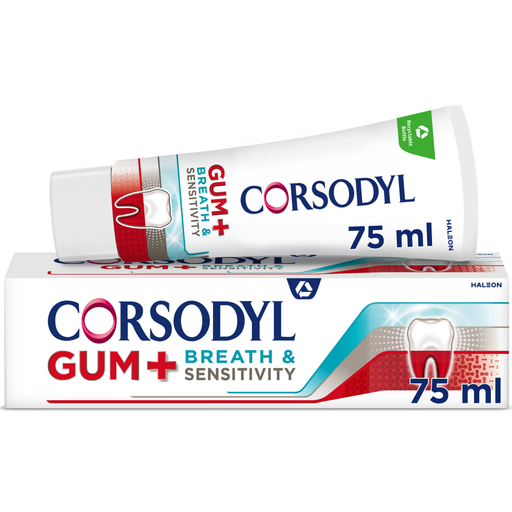
Why This Suits Their Persona: A straightforward daily toothpaste for adults who want to combine gum, breath and sensitivity care in one 75ml tube.
It clearly lists 1,450 ppm fluoride and is intended for twice-daily brushing, rather than relying only on a broad whitening claim.
Peppermint and spearmint flavour; includes stannous fluoride and sodium fluoride.
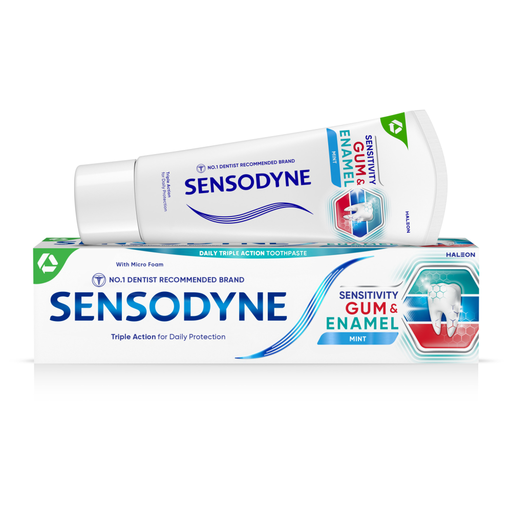
Why This Suits Their Persona: Suits shoppers who want a sensitivity-focused toothpaste with added enamel and gum-care features for a considered daily routine.
The product description separates sensitivity, gumline plaque removal and enamel care, making its intended uses easier to assess.
Contains stannous fluoride and sodium fluoride; includes Micro Foam technology according to the listing.
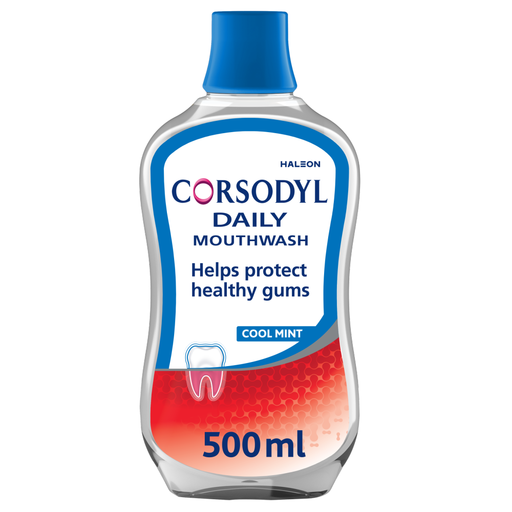
Why This Suits Their Persona: A 500ml option for adults who want a measured twice-daily rinse alongside brushing, particularly when alcohol-free use is a priority.
Its listing identifies an alcohol-free formula and gives a 30-second rinse instruction, so shoppers can assess comfort and routine fit.
Contains 0.06% chlorhexidine and sodium fluoride according to the product details; cool mint flavour.
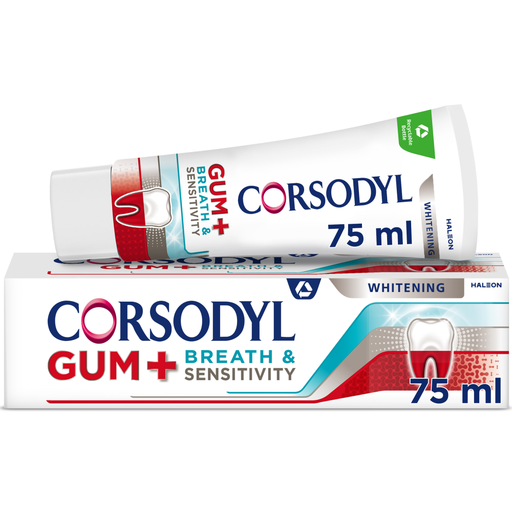
Why This Suits Their Persona: Suitable for shoppers who want surface-stain removal while keeping gum and sensitivity considerations in the same daily toothpaste.
The listing describes whitening as surface-stain removal rather than promising a change to the natural tooth colour.
Designed for twice-daily use; combines fluoride, sensitivity care and peppermint flavour.
We have compiled a complete, real-time list of products that fully satisfy these strict selection criteria and UK safety regulations.
Choose a fluoride toothpaste with clear gum-care or plaque-control positioning, use a soft-bristle toothbrush and clean gently along the gumline. If bleeding continues despite consistent cleaning, arrange a dental appointment rather than repeatedly changing products.
Check the individual label. Many people use mouthwash at a separate time because rinsing immediately after brushing can reduce the fluoride left from toothpaste. Do not swallow mouthwash, and follow the stated dosage and rinse duration.
Usage depends on the recommended dose. At 10ml twice daily, a 500ml bottle provides around 25 days of use. At 20ml twice daily, it provides around 12 days. Measuring the dose helps avoid unnecessary waste and makes the running cost easier to compare.