
24/7 Customer Support

Free returns

Same-day & Next-day Delivery

Quality Guaranteed

Unlock Your Welcome Offers: FREE Delivery | Up to 80% OFF | Free 30-day JoyPlus trial
Download the APP
Bloating, irregular bowel movements and a low-fibre diet can make choosing gut health supplements feel unnecessarily complicated. Shelves are filled with probiotic capsules, fibre powders, gummies, digestive enzymes and herbal formulas, often using impressive-sounding claims that do not explain what the product actually contains.
A sensible choice starts with matching the ingredient to your intended use, then checking the label carefully. Here is how to compare digestive health supplements without paying for features that may not suit your routine.
Probiotics for gut health contain live microorganisms, while prebiotic fibre supplements provide fermentable fibre that can be used by bacteria already present in the gut. They are not interchangeable.
A capsule with a high CFU number may not be the right option if your main priority is increasing fibre intake. Equally, a fibre gummy may not meet your preference if you are specifically comparing probiotic strains.
Probiotic strength is usually shown in CFU, or colony-forming units. A larger number is not automatically more suitable for every adult. Strain names, storage instructions, serving size and the point at which the CFU count is measured also matter.
For fibre products, compare the actual grams of fibre per serving rather than the size of the container. A large pouch can still provide a modest amount per daily serving.
“Plant-based” does not always mean free from every allergen. Some probiotic cultures may be grown on milk-based media, while chocolate formats can contain milk and soya. Capsules may also contain ingredients that do not suit your diet.
Always check the current packaging, ingredients, allergen statement and warnings before purchase, particularly if you have an allergy, take medication or follow a vegan diet.
When comparing probiotic products, look for:
For example, the KIKI Health 30-capsule product lists a minimum of 1 billion live bacteria per capsule at the time of manufacture, while Bioglan BioBiotic Balance lists 20 billion live cultures per capsule and six named strains. These figures help you compare products, but they should be considered alongside dietary suitability and storage convenience.
Fibre supplements for regularity may contain psyllium, apple pectin or inulin. Psyllium is a fibre that absorbs liquid and should be taken with sufficient fluid. Apple pectin is a water-soluble fibre with a gel-forming property. Inulin is a prebiotic fibre commonly derived from chicory root.
If you are not used to concentrated fibre, begin with the product’s lower suggested amount where the label allows and increase gradually. A sudden increase may cause temporary gas or bloating. Drink plenty of water and do not exceed the recommended dose.
Digestive enzymes are different from probiotics and fibre. They are commonly taken immediately before or with a meal, according to the product directions, and may contain enzymes such as lactase, lipase, amylase or protease.
They may appeal to people who want meal-specific digestive support, particularly when eating foods containing dairy, beans, grains or higher-fat ingredients. Check the enzyme list rather than relying only on terms such as “full spectrum”.
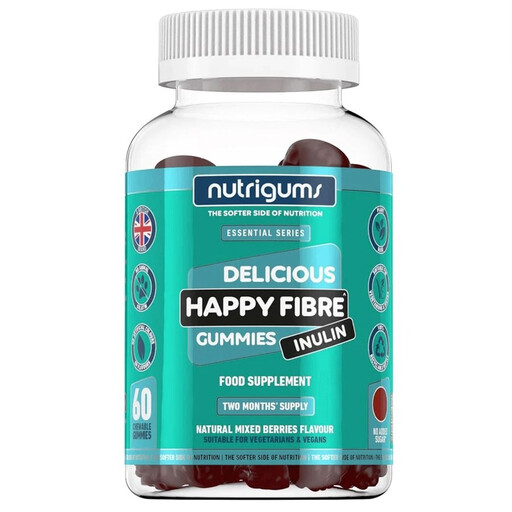
Why This Fits Their Persona: A chewable format can be an accessible starting point for adults who want to add fibre without mixing a powder. The bottle provides 30 two-gummy servings.
The label states the fibre amount clearly: 3.8g of chicory-root inulin per two-gummy serving, rather than relying only on general digestive wording.
Vegan, gluten-free and no added sugar according to the supplied product details; mixed berry flavour and chewable format.

Why This Fits Their Persona: Suitable for adults comparing a higher stated CFU count and a multi-strain capsule in a shelf-stable format.
The product details specify six strains and 20 billion CFU per capsule, making the comparison more transparent than an unspecified “advanced” blend.
One capsule daily; no refrigeration is stated as necessary. Contains milk-derived culture substrate, so it is not suitable for people avoiding milk allergens.

Why This Fits Their Persona: Designed for adults who want meal-time enzyme support across varied foods rather than a daily probiotic or fibre product.
The ingredient list identifies enzymes for proteins, carbohydrates, fats, dairy and fibres, rather than presenting an unnamed enzyme blend.
Vegan capsules and one capsule directed with each meal; the label states it is not manufactured with wheat, gluten, soya, milk, egg, fish or shellfish ingredients.

Why This Fits Their Persona: A practical option for adults seeking vegan probiotics in a capsule that does not require refrigeration.
The product specifies an eight-organism blend and a stated minimum of 1 billion live bacteria per capsule at manufacture.
Vegan and vegetarian suitability; shelf-stable storage. Follow the gradual introductory dosage on the product label.
We have compiled a complete, real-time list of products that fully satisfy these strict selection criteria and UK safety regulations.
It depends on the product, your diet and your individual response. Fibre supplements may affect bowel habits as intake changes, while probiotics are generally taken consistently according to the label. Allow time to assess tolerance and stop if you experience persistent discomfort.
Some products combine probiotics with prebiotic fibre, while others contain only one of these ingredients. Combining separate products may increase total fibre or cause unnecessary duplication. Check the labels and introduce one change at a time where possible.
No. Food supplements are not a substitute for a varied, balanced diet and healthy lifestyle. Speak to a GP or pharmacist before use if you are pregnant, breastfeeding, taking prescribed medication, have a medical condition or have persistent symptoms. Seek medical advice for ongoing pain, blood in the stool, unexplained weight loss or continuing changes in bowel habits. Always follow the current product label, including dosage, allergens and storage instructions.