
24/7 Customer Support

Free returns

Same-day & Next-day Delivery

Quality Guaranteed

Unlock Your Welcome Offers: FREE Delivery | Up to 80% OFF | Free 30-day JoyPlus trial
Download the APP
Upgrading your car's dim, yellow halogen bulbs to crisp, bright H1 LED headlight bulbs seems like a straightforward decision. It promises better visibility, enhanced safety and a modern look. However, the market is flooded with options, and many UK drivers find themselves disappointed by bulbs that fail prematurely, create dangerous glare, or trigger baffling dashboard errors.
As the Joybuy Product Recommendation Officer, my role is to help you navigate past the marketing hype. Before you spend your money, let's look at the common traps that catch out even savvy buyers and what to look for instead.
To ensure you get a reliable and effective car headlight bulb upgrade, focus on these three technical aspects.
The single most important factor for a safe and road-legal upgrade is the beam pattern. The best bright H1 LED bulbs are those with a 1:1 mini size design, where the LED chips are positioned to precisely mimic the filament of a standard H1 halogen bulb. This ensures the light is correctly focused by your vehicle's headlight housing, creating a sharp cut-off line for the dipped beam and preventing glare that can dazzle other drivers. An unfocused beam is not only dangerous but can also be a reason for an MOT failure.
An LED's performance and longevity are directly tied to how well it stays cool.
Controller Area Network (CANbus) is the system modern vehicles use to monitor their components, including headlights. Installing a standard LED bulb, which draws less power than a halogen, can make the system think a bulb has failed. This triggers a dashboard warning light or causes the lights to flicker. An H1 CANbus LED bulb has integrated circuitry to prevent this. While many bulbs are "CANbus ready" and work with most vehicles, some sensitive European models may still require an additional external decoder.
Based on these critical criteria, we've matched some standout options to different types of UK drivers.
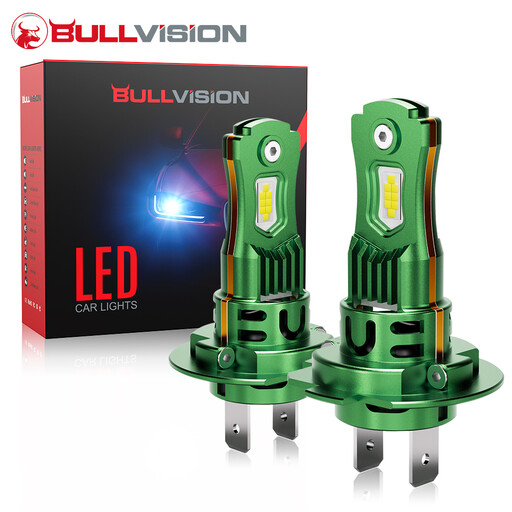
Why This Fits Their Persona: This is for the driver who wants a significant and immediate improvement over stock halogens without a hefty price tag. The focus on a true plug and play H1 headlight installation makes it ideal for a quick weekend project on the driveway.
Its 1:1 mini size design directly counters the "plug and play myth" by ensuring it fits into the original housing without modification, just like a standard halogen bulb.
Features a 10,000 RPM fan for active cooling, providing better longevity than fanless affordable options. The 6000K H1 bulbs provide a modern, cool white light.
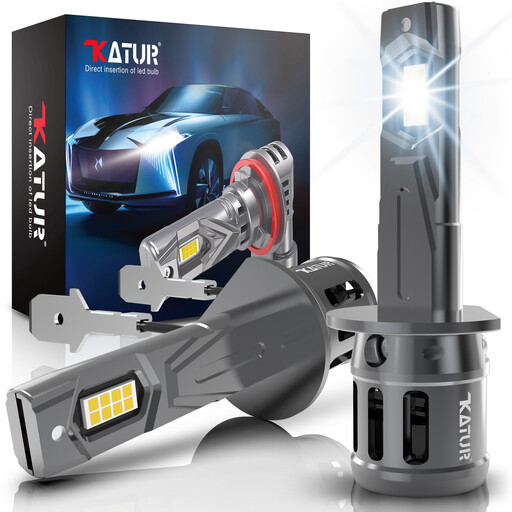
Why This Fits Their Persona: For the enthusiast who drives frequently on unlit B-roads and motorways at night. They prioritise maximum safe illumination and long-term reliability and understand that a powerful cooling system is non-negotiable.
It tackles the lifespan trap head-on with a high-performance 16,000 RPM turbo fan and a hollow-carved heat sink, an advanced cooling solution designed to sustain high output.
The ultra-thin chip spacing ensures a focused beam pattern despite the high lumen output, avoiding the glare trap. It also features an external driver, which helps with heat management and CANbus compatibility.
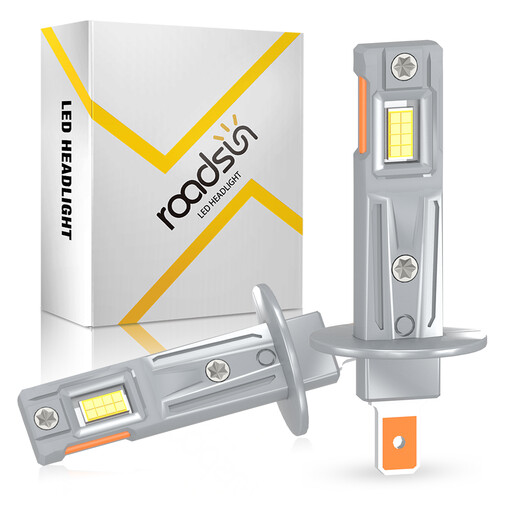
Why This Fits Their Persona: This is for the driver whose commute often involves rain, fog or spray on the motorway. They need reliable H1 fog light bulbs that offer strong penetration and durability against the elements, prioritising safety in poor visibility over all else.
This bulb is specifically designed for fog lights, focusing on "strong penetration" rather than just raw brightness, which can reflect off fog and worsen visibility—a common issue with generic high-lumen bulbs.
An IP67 waterproof rating and a claimed 70,000+ hour lifespan suggest a build quality focused on durability in harsh, wet conditions. It also functions as a turn signal, adding versatility.
We have compiled a complete, real-time list of products that fully satisfy these strict selection criteria and UK safety regulations.
The situation is complex. As of 2021, regulations state that converting a halogen headlight unit to an LED bulb is not strictly legal for road use unless the entire headlight unit is replaced with one that is type-approved for LED. This is because the original reflector is designed for a halogen filament. For an MOT, a tester will fail a vehicle if the beam pattern is incorrect, causes glare or is the wrong colour. Many high-quality 1:1 design LED bulbs can produce a correct beam pattern, but legality remains a grey area. For now, they are officially designated for off-road use.
If you drive a car built in the last 10-15 years, especially from a German or other European brand (like VW, Audi, BMW, Vauxhall and Ford), there is a high chance you will. While many bulbs are advertised as "CANbus ready" and work for up to 99% of vehicles, some highly sensitive systems may still detect the lower power draw and show an error. It is often a case of trial and error, but choosing a bulb with a good built-in CANbus system minimises the risk.
The advertised 50,000-hour figure is an ideal maximum. A realistic lifespan for a quality LED bulb with an effective cooling system (like a high-speed fan and aluminium body) is typically between 20,000 and 30,000 hours. This is still many times longer than a halogen bulb, which lasts around 1,000 hours. The key takeaway is that the quality of the cooling system is a far better indicator of longevity than the number on the box.