
24/7 Customer Support

Free returns

Same-day & Next-day Delivery

Quality Guaranteed

Unlock Your Welcome Offers: FREE Delivery | Up to 80% OFF | Free 30-day JoyPlus trial
Download the APP
Replacing standard halogen lighting sounds straightforward, but choosing the wrong H1 LED headlight bulbs can lead to poor beam control, dashboard warnings or a bulb that does not fit beneath the original dust cover. UK drivers also need to consider whether the replacement is suitable for the vehicle’s lighting system and road-use requirements.
This guide explains the practical checks to make before buying, followed by our top recommendations for different driving needs.
Listings often promote very high lumen figures or claims such as “300% brighter”. These numbers may describe the pair, the theoretical LED output or a comparison with an unspecified halogen bulb. They do not automatically confirm useful illumination on the road.
A better indicator is whether the H1 LED bulbs reproduce the original filament position and create a controlled beam. A badly positioned LED chip can produce scattered light, dark patches or glare for oncoming drivers, even when the advertised output looks impressive.
Plug-and-play LED bulbs usually connect to the existing H1 socket without an external driver or wiring modification. However, compatibility still depends on:
Always check the owner’s manual or remove the existing bulb and confirm the marking before ordering H1 car bulbs.
LEDs produce heat at the rear of the bulb and require adequate dissipation. A compact bulb may fit neatly, but its fan, heat sink or aluminium body must still have enough room to operate.
Long-life LED bulbs should therefore be assessed by their cooling design, not just the advertised operating-hour figure. Fans may improve heat removal but can produce noise or eventually require replacement. Fanless designs avoid moving parts but may use a different heat-management approach.
H1 headlight replacement bulbs are designed for vehicles with an H1 fitting. They may be used for dipped beam, main beam or fog light applications depending on the vehicle specification.
A 1:1 mini-size design follows the approximate dimensions of a standard halogen bulb. This can make installation easier in compact housings and reduce the chance of interference with the dust cap. Nevertheless, compare the product dimensions with your existing bulb and allow room for any built-in fan.
The LED chip position should imitate the original halogen filament as closely as possible. This helps the reflector or projector direct light in the intended shape. Look for descriptions referring to a focused beam, reduced dark spots or original bulb positioning, but treat marketing claims as product information rather than a guarantee for every headlight design.
A 6000K LED headlight bulb generally produces a cool white appearance. Around 6500K can look slightly cooler or bluer. Bright white car headlights may appear modern, but colour temperature alone does not determine usable visibility. Very blue-looking light may also be less comfortable in rain, mist or spray.
A CANbus-compatible LED bulb includes circuitry intended to work with vehicle bulb monitoring systems. It may reduce the likelihood of flickering or error messages, but no universal compatibility claim covers every model.
Some vehicles, including certain Volkswagen, Mercedes-Benz and BMW models, may require a separate CANbus decoder. Check the individual listing and be prepared to retain the original bulbs until the new pair has been tested.
Before fitting:
For UK road use, confirm that the lighting upgrade is suitable for your vehicle and complies with applicable roadworthiness requirements. A bulb that physically fits may still create an unsuitable beam pattern or fail an inspection if the lamp is poorly aligned.
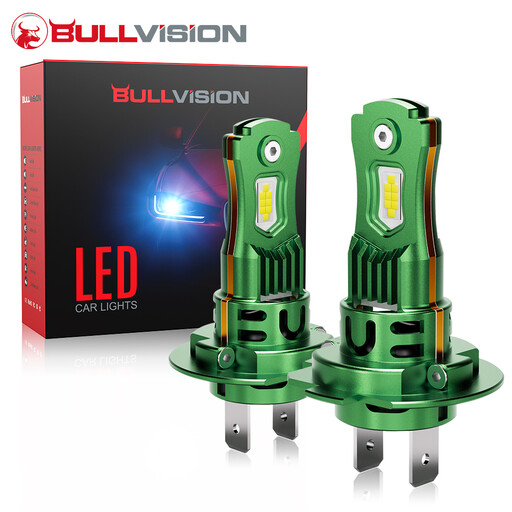
Why This Fits Their Persona: A compact option for drivers seeking a straightforward replacement for standard H1 halogen bulbs, particularly where space behind the headlamp is limited.
Its 1:1 mini-size format is intended to match the original bulb footprint, while the listing identifies CANbus-ready circuitry. Some specified European vehicles still require an additional decoder.
6000K cool white output, IP68 waterproof construction, built-in fan and a stated 50,000-hour operating life.
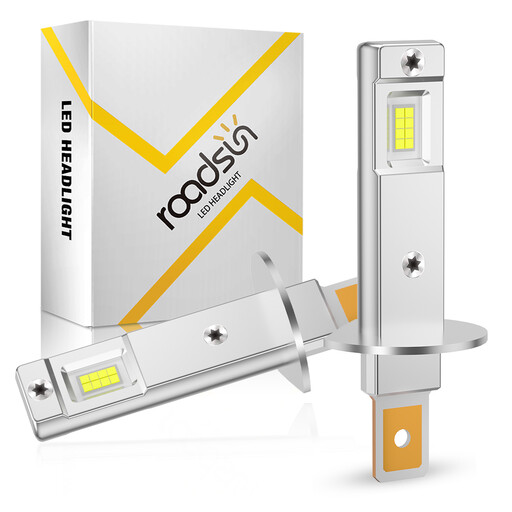
Why This Fits Their Persona: Suitable for drivers who want a compact, cool-white H1 upgrade for regular evening commuting and who are prepared to verify fitment carefully.
The listing specifies a 1:1 mini design and no external driver. It also notes that some European vehicles may need a separate CANbus decoder.
6500K white colour temperature, aluminium housing, integrated heat dissipation and a stated 50,000-plus-hour lifespan.
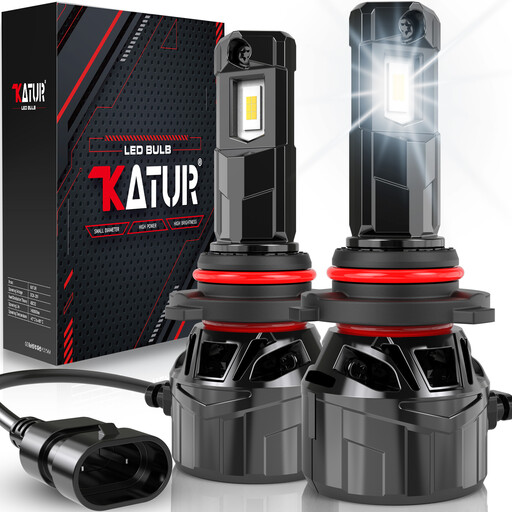
Why This Fits Their Persona: This is for high-use drivers whose vehicle specifically takes HB3 or 9005 bulbs, not H1 fittings. It is included to prevent an incorrect purchase when comparing similar-looking car bulbs.
The clearly stated HB3/9005 fitting helps distinguish it from H1 headlight replacement bulbs. Confirm the socket marking before purchase.
120W per pair, stated 30,000-lumen output per pair, 6000K colour temperature and a built-in 16,000RPM cooling fan.
We have compiled a complete, real-time list of products that fully meet these strict selection criteria and UK safety regulations.
It depends on the vehicle, lamp unit and replacement bulb. Check the product documentation, vehicle manual and current UK road-use requirements. The beam must be correctly aimed and must not cause excessive dazzle. A physical fit does not by itself confirm suitability.
LEDs can have a different wattage and electrical load from halogen bulbs, but the actual saving depends on the product and vehicle. Bulb-monitoring systems may detect the lower load and trigger a warning, so CANbus compatibility should be checked before buying.
Many listings state operating lives of 50,000 hours or more, but real service life depends on heat, vibration, weather exposure and how often the lights are used. Keep the cooling system clear, install the bulb securely and retain the original bulbs until the replacement has proved reliable.