
24/7 Customer Support

Free returns

Same-day & Next-day Delivery

Quality Guaranteed

Unlock Your Welcome Offers: FREE Delivery | Up to 80% OFF | Free 30-day JoyPlus trial
Download the APP
Replacing tired halogen lighting can make night driving feel more comfortable, particularly on unlit UK roads. However, shopping for H1 LED headlight bulbs is not simply a case of choosing the largest lumen figure. Fitment, beam control, heat management and vehicle electronics all affect whether an upgrade works properly.
This guide from the Joybuy Product Recommendation Officer explains the key checks to make before buying H1 LED bulbs, along with practical recommendations for different driving needs.
Listings may advertise figures such as 20,000 lumen headlight bulbs or 30,000 lumens per pair. These numbers can be useful for comparing listed output, but they do not show how effectively the light is directed onto the road. A poorly positioned LED chip can create scattered light, dark patches or glare, even when the headline number looks impressive.
Look for a design that places the LED chips in a position similar to the original halogen filament. A 1:1 mini-size LED bulb is often easier to position correctly inside the existing reflector or projector housing.
A standard H1 socket does not guarantee that every bulb will fit every vehicle. The rear of the bulb may be too long for the dust cover, while the cooling fan or driver may have insufficient space. Some vehicles also monitor bulb resistance and can display a warning or cause flickering after an LED conversion.
CANbus-ready LED bulbs can reduce the likelihood of these issues, but no compatibility claim should replace checking your owner’s manual, existing bulb marking and available housing space. Some sensitive vehicles may still need an additional decoder.
LED chips produce heat at the rear of the bulb. Without suitable cooling, brightness and service life may be affected. Fan-cooled designs can move heat away quickly, although the fan introduces a moving component and may produce a small operating noise. Fanless bulbs avoid that component but need effective passive heat dissipation.
For exposed headlight and fog light applications, also check the stated ingress rating. IP68 waterproof car bulbs offer a higher level of sealing than IP65 or IP67 products, but the rating applies to the product under specified test conditions. The bulb must still be fitted correctly, with the original housing and dust cover securely replaced.
H1 headlight bulbs can be used for high beam, low beam or fog light applications, depending on the vehicle. Confirm that your car uses an H1 halogen bulb rather than H7, H11, 9005 or another fitting. A bulb that looks similar may not lock into the socket or align with the reflector.
Also check whether the LED is suitable for the available depth. Integrated, 1:1 designs are useful where the original housing has limited room.
Many replacement bulbs use 6000K LED bulbs or 6500K cool-white output. This creates a noticeably whiter appearance than conventional warm halogen light. A cooler colour may suit drivers seeking modern-looking cool white car bulbs, but colour temperature alone does not determine road illumination.
For fog lights, consider the vehicle’s original optical design and local conditions. A very cool white beam may not be suitable for every driver or housing, so beam control and correct aiming remain more important than appearance.
Check whether the product uses:
Lifespan figures such as 50,000 or 60,000 hours are manufacturer-listed specifications rather than a guarantee of actual service life in every vehicle. Heat, vibration, voltage variation and installation quality can all affect performance.
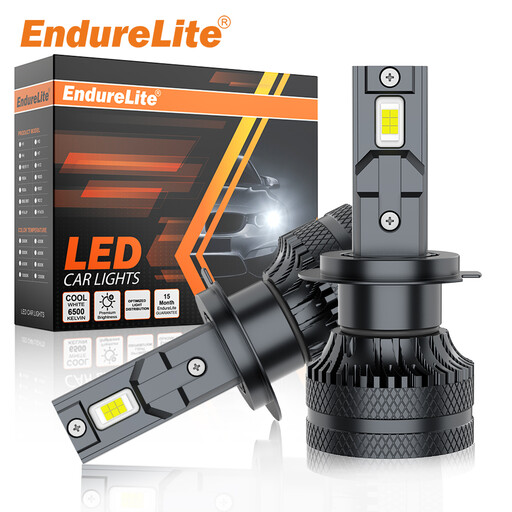
Why This Fits Their Persona: A straightforward pair for drivers making their first halogen replacement, with a listed 6000K colour, integrated driver and plug-and-play installation.
The listing identifies the H1 fitting, pack quantity and CANbus-ready design, making key checks clearer than relying on a brightness figure alone.
CSP chips, IP68 waterproof rating, built-in fan and a stated 50,000-hour operating life.
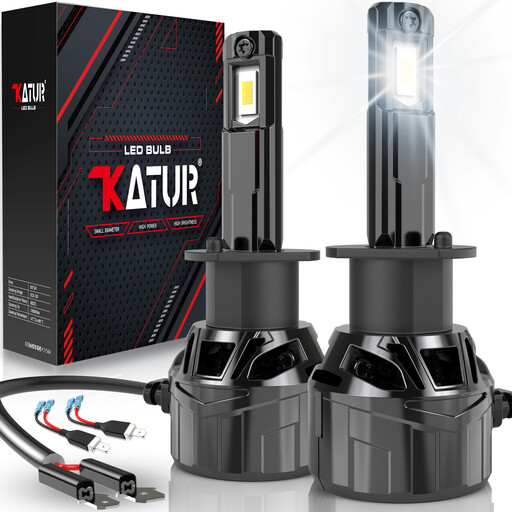
Why This Fits Their Persona: Suits drivers who prioritise a compact installation and high listed output for regular night driving, provided the vehicle housing has enough clearance for the cooling system.
Its listed 1:1 design addresses the common problem of an oversized rear section, while the manufacturer notes that sensitive vehicles may still show warnings.
Listed 30,000-lumen-per-pair output, 6000K colour, 16,000 RPM fan and stated 60,000-hour lifespan.
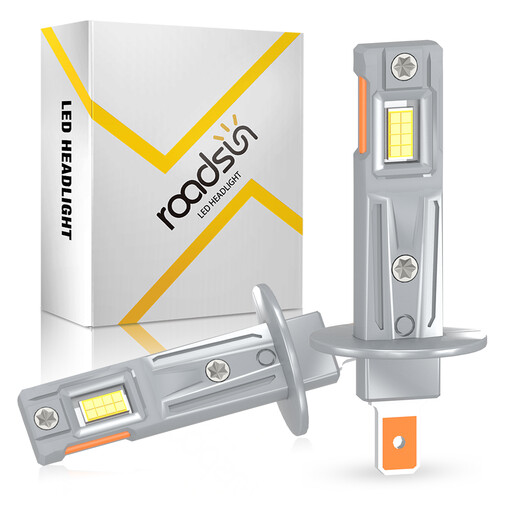
Why This Fits Their Persona: A practical option for drivers specifically upgrading H1 fog lights or dual-function lighting on a car, truck or SUV used in wet and variable weather.
The listing specifies the fog-light and turn-signal application, 1:1 format and IP67 protection instead of presenting the bulb only as a generic headlight upgrade.
Listed 6000K output, 1:1 mini-size construction, IP67 rating and a stated 70,000-hour service life.
Before fitting, switch off the ignition and allow the original bulb to cool completely. Wear gloves, avoid touching the LED chip and ensure the bulb is fully seated in the original holder. Test both sides before refitting the dust cover.
After installation, check the beam pattern on a level surface. If there are dark areas, scattered light or glare, remove and realign the bulb rather than assuming a higher lumen rating will solve the issue. Headlamp aim should be checked whenever the light source is changed.
LED retrofit legality and MOT suitability can depend on the vehicle, lamp housing and product approval status. Check the relevant UK requirements, your vehicle handbook and any marking or documentation supplied with the bulb. A product described as plug-and-play is not automatically suitable for every road-use application.
We have compiled a complete, real-time list of products that fully satisfy these strict selection criteria and UK safety regulations.
Many are designed as plug-and-play LED bulbs, using the original H1 connector and retaining method. Actual installation time varies by vehicle because access may require removing a cover or reaching behind the lamp. Always confirm the bulb is locked securely and test it before final assembly.
Not always. CANbus-ready LED bulbs may reduce dashboard warnings and flickering, but compatibility varies between vehicles. Some European cars and models with sensitive bulb monitoring systems may still require an external decoder.
LEDs can have a lower stated wattage for a comparable lighting application, but electricity and fuel savings depend on the specific bulb, vehicle circuit and usage. The purchase price, cooling system and replacement availability should also be considered rather than relying on lifespan claims alone.