
24/7 Customer Support

Free returns

Same-day & Next-day Delivery

Quality Guaranteed

Unlock Your Welcome Offers: FREE Delivery | Up to 80% OFF | Free 30-day JoyPlus trial
Download the APP
Replacing tired halogen lamps with H1 LED headlight bulbs can change the colour and appearance of your car’s lighting, but buying by lumen figures alone is a common way to waste money. The right choice depends on socket compatibility, beam control, housing space, heat management and how your vehicle’s electronics respond.
This guide explains what to check before choosing H1 LED bulbs for headlights or fog lights, followed by recommendations matched to different types of UK driver.
Listings may quote very high output figures, but lumen claims do not tell the whole story. The reflector or projector housing, LED chip position and beam pattern determine how light is distributed. A poorly positioned light source can create dark patches or glare, even when the advertised output looks impressive.
Look for 1:1 mini-size LED bulbs, ultra-thin chip spacing and a design intended to imitate the original halogen filament position. After fitting, check the beam pattern and have the headlights correctly aimed.
An H1 designation refers to the bulb base and connector type, not guaranteed compatibility with every vehicle. Some cars have limited space behind the headlight, dust covers that cannot accommodate a fan or control box, or monitoring systems that detect a lower electrical load.
Before purchasing, confirm your owner’s manual or existing bulb marking. These products are intended for 12V car headlight bulbs and H1 sockets, but a sensitive vehicle may still need an additional decoder if flickering or dashboard warnings occur.
LEDs use less power than many halogen bulbs, but they still create heat at the chip and driver. A fan-cooled bulb needs room to operate, while fanless designs require effective passive heat dissipation. Waterproof ratings such as IP65, IP67 or IP68 describe resistance to dust and water under specified test conditions; they do not correct an incorrectly sealed headlamp housing.
Do not touch the LED chip, fit a bulb into a damp housing or force the rear cover closed against a fan or driver.
Confirm that your car uses an H1 headlight bulb replacement rather than H4, H7, H11 or another fitting. A genuine 1:1 design can be useful where the headlight housing is compact. Check the bulb’s overall length, fan diameter and whether an external driver is included.
A plug-and-play H1 bulb should connect to the existing wiring without cutting wires or adding a custom harness. However, the exact installation method varies by vehicle: some housings use a retaining clip, while others use a twist-lock arrangement.
Many current H1 LED headlight bulbs use 6000K LED headlight bulbs or similar cool-white colour temperatures. This produces a noticeably whiter appearance than conventional warm halogen light. Colour temperature is not the same as brightness, and a cooler colour can appear less comfortable in certain weather conditions.
For dipped beam or high beam use, prioritise a controlled beam with clearly defined light placement. For H1 LED fog light bulbs, check whether the product is intended for fog-light housings and avoid assuming that a higher output automatically improves performance in fog, rain or snow.
Look for an aluminium housing, heat sink, fan or other cooling arrangement. A listing may state an expected operating life of 50,000 or 60,000 hours, but actual service life depends on temperature, voltage, usage and installation conditions.
CANbus-ready LED bulbs include circuitry intended to reduce error messages, flicker or radio interference. This is not a guarantee for every UK vehicle, particularly cars with more sensitive lighting monitoring. Keep the original bulbs until the new pair has been installed and checked.
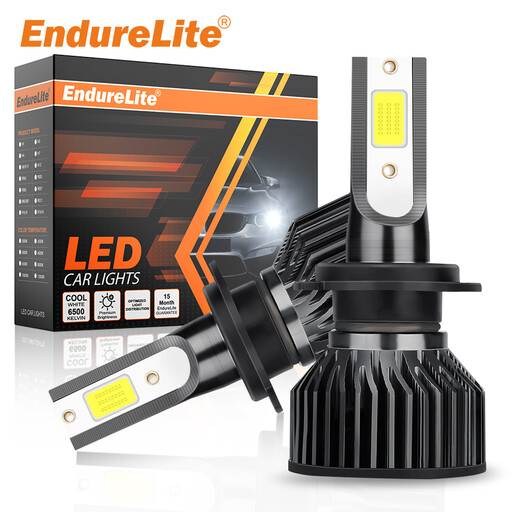
Why This Fits Their Persona: A straightforward pack of 2 for drivers replacing both original H1 halogen replacement bulbs at once. Its stated plug-and-play format suits routine DIY maintenance on compatible UK cars.
The listing specifies a 1:1 stock-bulb size, an H1 fit and CANbus-ready design, helping buyers check the main compatibility points before ordering.
6000K cool-white light, aluminium construction, IP68 waterproof rating and a stated 50,000-hour operating life.
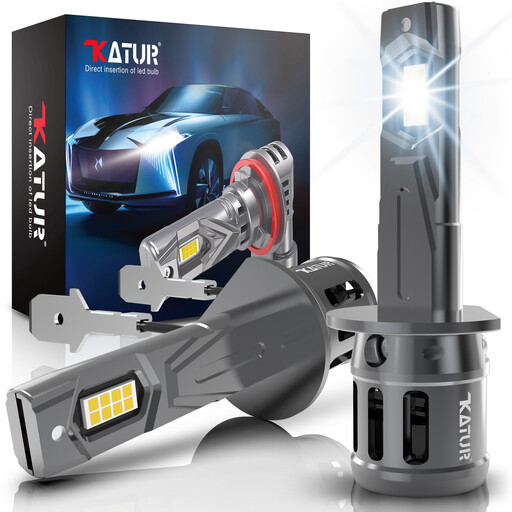
Why This Fits Their Persona: Suitable for motorists who want a compact bulb with an integrated driver and active cooling, particularly where space behind the headlamp is limited.
Its stated 1:1 mini format avoids the assumption that a powerful bulb must have a bulky external box. Buyers should still measure the available rear clearance.
The product listing states 6000K colour temperature, a 16,000 RPM fan, IP65 protection and 98% CANbus readiness.
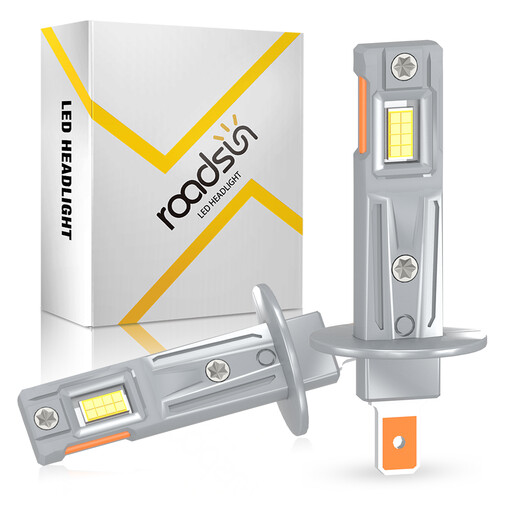
Why This Fits Their Persona: A practical option for drivers focusing on H1 fog light bulbs for wet-weather commuting, rural roads or vehicles used frequently outdoors.
The listing gives a specific IP67 rating and identifies fog-light use, rather than relying only on broad “all-weather” wording.
1:1 mini-size construction, 6000K light, aluminium housing and a stated service life exceeding 70,000 hours.
We have compiled a complete, real-time list of products that fully satisfy these strict selection criteria and UK safety regulations.
LED retrofits may not be suitable for every headlamp design or road-use situation. Check your vehicle documentation and current UK requirements, and arrange a beam check if the light pattern has changed. A bulb that fits physically is not automatically suitable for unrestricted road use.
Some are designed as plug-and-play H1 halogen replacement bulbs, but installation still depends on the vehicle’s retaining clip, connector and rear clearance. Confirm the socket and dimensions before ordering.
They can on some vehicles. CANbus-ready LED bulbs are designed to reduce error warnings and flickering, but compatibility is not universal. Sensitive cars may require an additional decoder, so retain the original bulbs until testing is complete.
Many LED products list lower electrical power than halogen equivalents, which may reduce the load on the vehicle’s lighting circuit. Actual running cost depends on the bulb’s measured power, driving time and vehicle electrical system, so compare the stated wattage rather than relying on general LED claims.