
24/7 Customer Support

Free returns

Same-day & Next-day Delivery

Quality Guaranteed

Unlock Your Welcome Offers: FREE Delivery | Up to 80% OFF | Free 30-day JoyPlus trial
Download the APP
Replacing tired halogen lighting can make a noticeable difference to the appearance of a car, van, truck or SUV. However, choosing H1 LED headlight bulbs is not simply a matter of selecting the highest lumen figure. Fit, beam control, cooling, electrical compatibility and UK road-use requirements all matter.
This guide explains what to check before buying, highlights common marketing pitfalls and matches several H1 LED bulbs to different driving needs.
Listings may advertise 20,000LM LED bulbs, 30,000 lumens or claims such as “300% brighter”. These figures can refer to a pair rather than one bulb, and measurement methods may differ between manufacturers. A larger number does not automatically mean a better beam on the road.
Look for supporting details such as CSP chip LED bulbs, the number and position of LED chips, beam design and whether the bulbs are intended to replicate the original halogen filament position.
A plug-and-play LED bulb may use the standard H1 connector, but the rear of the bulb still needs to fit inside the headlamp housing. Cooling fans, heat sinks and external drivers can be too large for some dust covers or compact lamp assemblies.
Before ordering an H1 headlight bulb replacement, confirm:
CANbus-ready LED bulbs are designed to reduce dashboard warnings, flickering or radio interference in vehicles with bulb monitoring systems. Nevertheless, vehicle electronics vary. Some cars, particularly sensitive European models, may still require an additional decoder or resistor.
Treat “99% compatibility” as a manufacturer or listing statement rather than a guarantee for every vehicle. Keep the original bulbs until the new pair has been installed and checked.
A good 1:1 halogen replacement bulb aims to position its LED chips similarly to the filament in the original bulb. This can help the reflector or projector produce a more controlled beam. Look for descriptions referring to ultra-thin chip spacing, focused illumination or an original-style beam pattern.
After installation, check for dark patches, excessive scatter or glare. Headlights should be correctly aimed, and a brighter bulb should not be used as a reason to dazzle oncoming drivers.
Most products in this category use 6000K LED headlight bulbs, producing a cool white appearance. This can look cleaner than warm halogen light, but colour temperature is not the same as brightness. Very cool light may also appear harsher in wet conditions than a warmer beam.
For fog lamps, check whether the selected bulb is designed for the fog-light housing. An H1 fog light bulb must still provide a suitable beam for that specific lamp assembly.
LEDs convert less electrical energy into light than halogen bulbs, but they still generate heat around the chip and driver. Fans, aluminium housings and heat sinks are used to manage this.
Useful specifications include:
A fan-cooled design may offer active heat removal, while fanless bulbs can be useful where noise, space or moving parts are concerns.
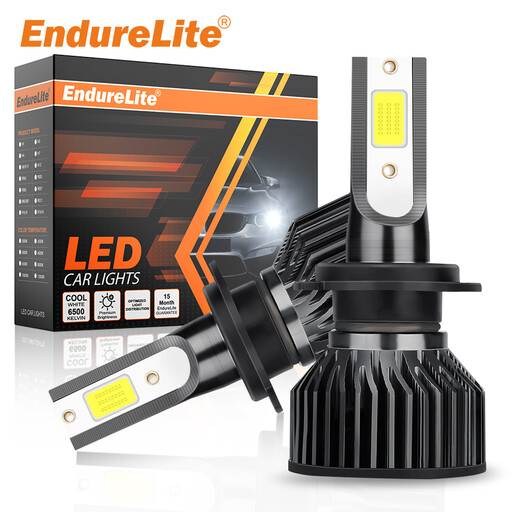
Why This Fits Their Persona: A straightforward option for drivers seeking a cool-white H1 upgrade for regular commuting, provided the vehicle has enough space for its cooling system.
The listing identifies a 1:1-style design, plug-and-play fitting, CANbus-ready electronics and IP68 waterproof construction rather than relying only on a brightness slogan.
6000K cool white output, a stated 13,000-lumen pair rating, aluminium housing and an integrated fan.
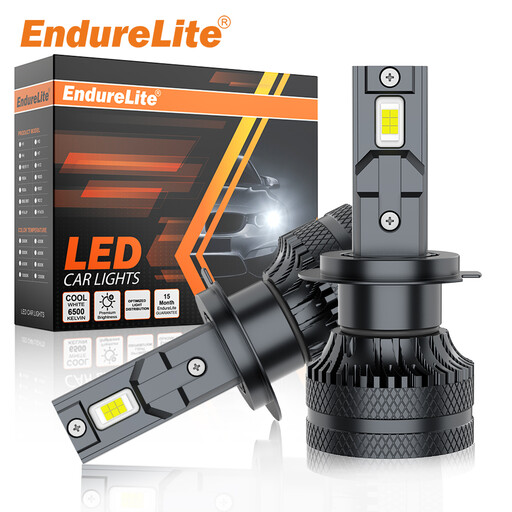
Why This Fits Their Persona: Suitable for drivers who prioritise chip layout, cooling and electronic compatibility when upgrading headlights or compatible fog-light assemblies.
Its product information specifies CSP chips, 1:1 beam-pattern design, CANbus-ready operation and IP68 protection, giving more useful detail than a lumen figure alone.
20,000-lumen pair rating, 6000K colour temperature, stated 50,000-hour operating life and integrated fan cooling.
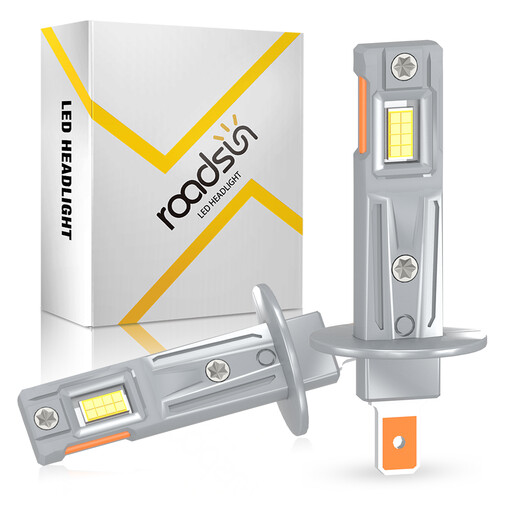
Why This Fits Their Persona: A practical match for drivers of cars, trucks and SUVs who specifically need an H1 fog-light or dual-use replacement for frequent all-weather driving.
The listing states the application, H1 socket, 1:1 mini size, IP67 rating and built-in decoding chip, while noting that some vehicles may still need an external decoder.
6000K white light, 1:1 mini construction, stated 70,000-hour life and compatibility with H1 fog-light applications.
We have compiled a complete, real-time list of products that fully satisfy these strict selection criteria and UK safety regulations.
Switch off the engine and lights, allow the original bulb to cool and wear protective gloves. Avoid touching the LED chip or lens with bare fingers. Fit the bulb securely, reconnect the original plug and check that the dust cover can be refitted without pressing against the fan or heat sink.
Test both sides for flickering, dashboard warnings and correct beam shape. Have the headlights aligned if the beam has changed. In the UK, aftermarket LED retrofits may not be suitable or permitted for every headlamp housing or vehicle configuration. Check the vehicle handbook, MOT requirements and current road-use rules before driving on public roads.
Legality depends on the vehicle, lamp housing, bulb approval and how the retrofit affects the beam. A bulb being advertised as plug and play does not automatically confirm road legality. Check current DVSA guidance, your vehicle documentation and MOT requirements before fitting.
Several products listed here state operating lives of 50,000 hours, while some advertise longer figures. These are manufacturer-provided ratings and can be affected by heat, vibration, voltage, installation quality and use. Effective cooling and a correctly sealed housing are important for long-term performance.
LEDs can provide a comparable lighting function at a different power rating, but consumption varies by model. Check the stated wattage and vehicle compatibility rather than assuming every LED replacement reduces electrical load. A correct fit and stable operation should take priority over headline power figures.