
24/7 Customer Support

Free returns

Same-day & Next-day Delivery

Quality Guaranteed

Unlock Your Welcome Offers: FREE Delivery | Up to 80% OFF | Free 30-day JoyPlus trial
Download the APP
Replacing standard halogen lighting can make a noticeable difference to the appearance and perceived brightness of a car, SUV, lorry or motorbike. However, choosing H11 H8 H9 LED headlamp bulbs is not simply a case of selecting the largest lumen figure.
Socket fit, beam control, heat management and vehicle electronics all affect whether an LED headlamp bulb replacement performs properly. The right choice should provide a clean installation without creating glare, dashboard warnings or clearance problems behind the dust cover.
Listings may quote figures such as 13,000, 20,000 or 30,000 lumens, alongside claims of being several hundred per cent brighter than halogen. These figures can be useful for comparing products within a listing, but they do not always describe measured on-road output in the vehicle’s headlamp housing.
A bulb with a well-positioned LED chip can produce a more usable beam than a higher-rated bulb with poor optical alignment. Check the design, chip placement and beam-pattern information rather than relying on the headline number alone.
H8, H9 and H11 bulbs share a similar base format, but the original specification, wattage and intended application can differ between vehicles. Some cars use one size for fog lamps and another for dipped or main-beam functions.
Confirm the original bulb code in the vehicle handbook, on the removed bulb or through the manufacturer’s parts information. A universal-fit description is not a substitute for checking your specific vehicle.
Many plug-and-play LED headlamps connect directly to the factory socket, but sensitive vehicle systems may still detect a different electrical load. Symptoms can include flickering, bulb-out warnings or radio interference.
A built-in driver or CANbus LED bulb can reduce these issues, but compatibility is not guaranteed for every model. Some vehicles, including certain European models, may need an additional CANbus decoder. Always retain the original bulbs until the new units have been tested.
The bulb must match the required H8, H9 or H11 fitting and sit securely in the factory housing. A 1:1 halogen replacement bulb is usually easier to install because its base and positioning are designed to resemble the original.
Also measure the available space behind the headlamp or fog-lamp housing. Fan-cooled bulbs may need clearance for the fan and heatsink, while compact fanless designs can be more suitable where a dust cover sits close to the bulb.
The position of the LED chips should replicate the original halogen filament as closely as possible. This helps the reflector or projector create a controlled beam rather than scattered light.
For dipped headlamps, poor alignment can produce dark patches or glare for oncoming drivers. After installation, check the beam against a wall and arrange a proper headlamp alignment check if the pattern appears uneven. A brighter bulb is not automatically a safer bulb if the housing cannot control its output.
Most products in this category use 6000K cool white LED bulbs, while some list 6500K. Cool white light can give a modern appearance, but colour temperature alone does not determine useful road illumination. In mist, rain and spray, excessive blue content may not always provide the clearest contrast.
LED chips produce heat at the rear of the bulb. Aluminium housings, cooling fans and heatsinks help manage this. Look for clearly stated IP67 or IP68 waterproof protection if the bulbs are being used as LED fog-light bulbs or in exposed locations. These ratings concern dust and water resistance under specified test conditions; they do not remove the need for correct sealing.
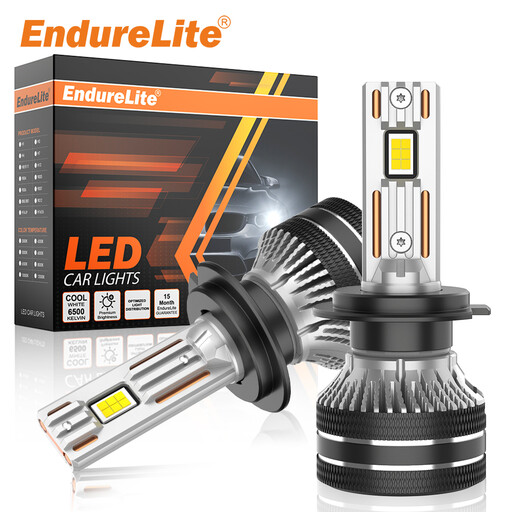
Why This Fits Their Persona: A practical option for UK motorists moving from standard halogen bulbs to a cool-white LED setup without external drivers or complicated wiring.
The listing specifies a stock-bulb-sized design and plug-and-play fitting, while also identifying possible flicker or warning-light considerations for sensitive vehicles.
6000K colour temperature, IP68 protection, built-in cooling fan and a stated 50,000-hour operating life.
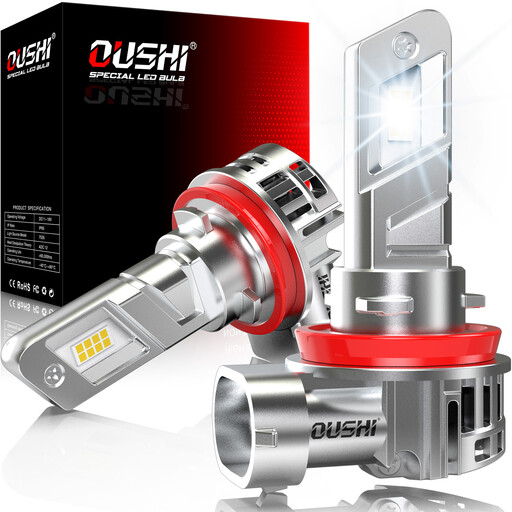
Why This Fits Their Persona: Suited to drivers who prioritise compact installation, active cooling and compatibility features for frequent night-time commuting or long-distance driving.
The product information identifies a 1:1 mini size, integrated CANbus system and a warning that some sensitive vehicles may still need a decoder.
High-speed fan cooling, 6500K colour temperature, no external driver and direct H8/H9/H11 compatibility.
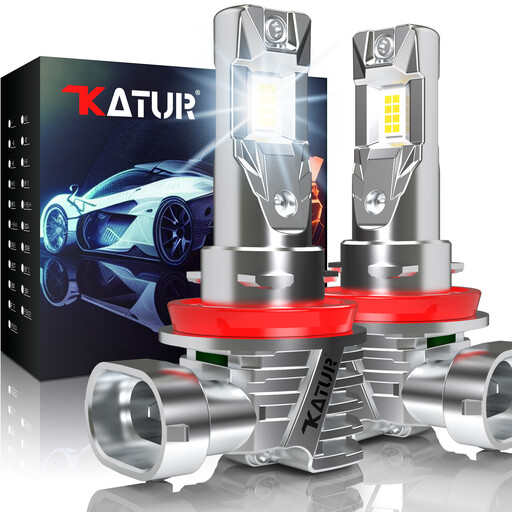
Why This Fits Their Persona: A useful format for drivers or DIY owners working with tight headlamp housings where a fanless body and direct dust-cover fit are important.
Its fanless design avoids relying on a moving cooling component, while the listing clearly notes that enclosed housings and high-power modifications may not be suitable.
Integrated 1:1 mini design, 6000K light, 6063 aluminium construction and no external driver.
We have compiled a complete, real-time list of products that fully satisfy these strict selection criteria and UK safety regulations.
Before fitting 12V car LED bulbs, switch off the lights, remove the key and allow the original halogen bulb to cool. Wear gloves and avoid touching the LED chips or glass surfaces. Insert the bulb firmly, align the chips as recommended and make sure the sealing ring and dust cover are correctly seated.
Test for stable illumination, flickering and dashboard warnings. Then inspect the beam pattern from a level surface. UK motorists should also check that any retrofit complies with applicable vehicle lighting requirements and does not dazzle other road users. A bulb that fits the socket may not automatically be approved for every headlamp housing or road-use application.
They use closely related fittings, but they are not automatically identical for every vehicle. Confirm the original bulb code and check the vehicle’s electrical and physical requirements before ordering.
Many LED products are designed to consume less electrical power than the halogen bulbs they replace, but the actual consumption depends on the bulb’s wattage and driver. Check the listed wattage rather than assuming every LED uses the same amount.
Product listings commonly state operating lives of 50,000 hours or more. This is a rated or advertised figure rather than a guarantee of real-world service life. Heat, vibration, moisture, operating hours and the condition of the vehicle’s wiring can all affect longevity.