
24/7 Customer Support

Free returns

Same-day & Next-day Delivery

Quality Guaranteed

Unlock Your Welcome Offers: FREE Delivery | Up to 80% OFF | Free 30-day JoyPlus trial
Download the APP
Replacing dim or ageing halogen bulbs can improve the appearance and illumination of your car, SUV, truck or motorcycle. However, choosing H11 H9 H8 LED bulbs is not simply a matter of selecting the highest lumen number on a product page. Socket compatibility, beam control, heat management and vehicle electronics all affect whether an upgrade works properly.
This guide from the Joybuy Product Recommendation Officer explains what to check before buying, how to avoid common marketing traps and which options may suit different UK driving needs.
H8, H9 and H11 bulbs can look similar, but the correct fit depends on your vehicle’s original bulb specification, connector and lamp housing. Some vehicles use one type for fog lights and another for dipped or main beam applications.
Before ordering, check:
A vehicle registration search tool can be useful, but it should not be treated as conclusive. Confirm the original bulb size manually where possible.
Listings may advertise figures such as 20,000LM or 30,000LM per pair. These figures are product specifications supplied by the seller, rather than a guarantee of useful light on the road. A poorly positioned LED chip can create glare, dark patches or an unfocused beam even when the headline number appears impressive.
A 1:1 halogen replacement bulb aims to position its LED chips similarly to the original filament. This can help preserve the intended beam shape, but the result still depends on the vehicle’s reflector or projector design.
CANbus LED bulbs include an integrated driver intended to reduce flickering, dashboard warnings and radio interference. Nevertheless, some vehicles have especially sensitive lighting systems. Certain Volkswagen, Mercedes-Benz and BMW models may require an additional decoder, as stated in the relevant product information.
If a newly fitted bulb flashes, displays a warning or switches off, do not assume the bulb is faulty. Check whether your vehicle requires a separate CANbus decoder and confirm the connection.
H11 LED headlight bulbs are commonly used for dipped beam or fog-light applications, while H8 and H9 bulbs may be used in related front-light positions. This varies by vehicle, so avoid choosing solely by the intended use suggested in a listing.
Some products are described as high and low beam LED bulbs, but a bulb cannot change the design of a vehicle’s lighting system. Check whether your car’s housing is designed for high beam, low beam or fog light use before installation.
6000K cool white LED bulbs produce a crisp white appearance that many drivers prefer over the warmer colour of halogen. A higher colour temperature is not automatically more effective in rain, mist or snow, however. Beam focus and correct alignment matter more than colour alone.
Look for features such as:
After fitting, inspect the beam against a wall on level ground. If the pattern is irregular or appears too high, the bulbs may need repositioning or the vehicle may require professional adjustment.
LED chips create heat at the rear of the bulb, even though the front light source may feel cooler than a halogen filament. LED bulbs with cooling fans can actively move heat away from the chip, but the fan needs enough clearance and may produce a small operating noise.
Fanless designs avoid a moving component and can suit compact housings, but their heat sink must have room to work. Aluminium housings, heat sinks and copper components are commonly used for thermal management.
For UK weather, look for waterproof automotive LED bulbs with a stated IP rating. IP65, IP67 and IP68 indicate resistance to dust and water under defined test conditions, but they do not guarantee that every vehicle housing will remain sealed after installation.
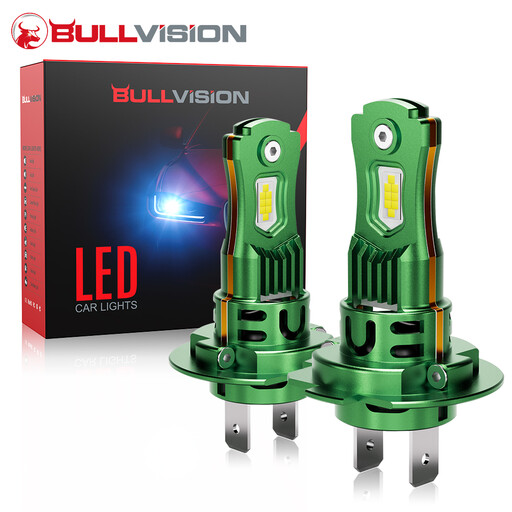
Why This Fits Their Persona: A straightforward pack of two for drivers replacing front fog or headlight bulbs without adding external wiring. The listed 1:1 size and plug-and-play format may suit a first DIY installation.
The listing specifies a 1:1 body, built-in driver and IP68 construction rather than relying only on a brightness headline. Note the stated requirement for an additional CANbus decoder on some German vehicles.
6000K cool white output, built-in cooling fan, CANbus-ready driver and plug-and-play installation are listed features.
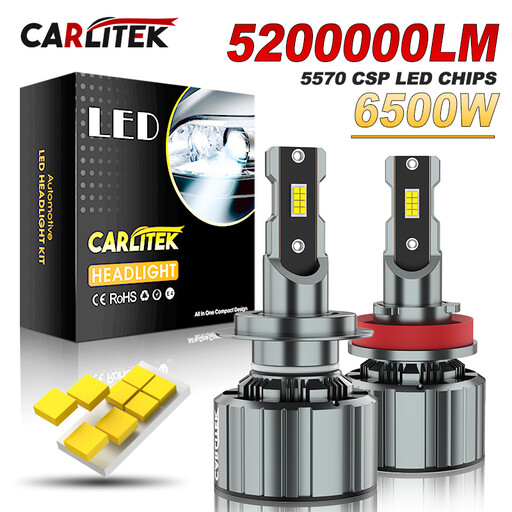
Why This Fits Their Persona: Suited to drivers prioritising a compact, integrated installation and a defined beam design for regular commuting, motorway journeys and mixed UK weather.
The supplied specification includes 1:1 filament positioning, 0.0074-inch chip spacing, IP68 water resistance and a built-in CANbus system. These details are more useful to compare than a standalone lumen claim.
The product information lists a 50,000-hour operating life, 12V operation, 6000K colour and a built-in 10,000RPM fan.
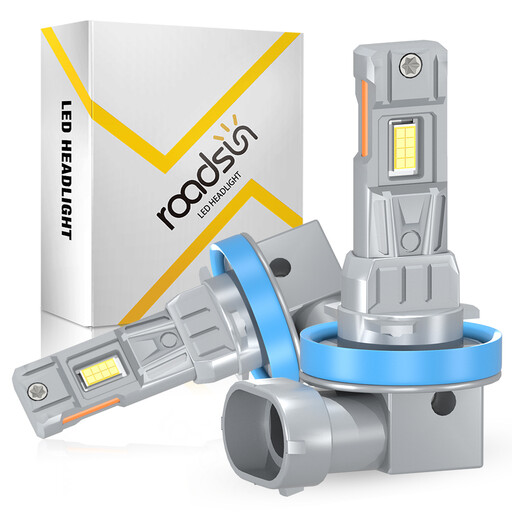
Why This Fits Their Persona: A practical match for frequent night drivers, pick-up owners and SUV users seeking a direct replacement for compatible headlight or fog-light housings.
The listing gives specific information about 1:1 sizing, IP67 protection and aluminium construction. Check the claimed fit against your original bulb and allow for the vehicle’s own beam adjustment.
The product description lists a cooling system, 6000K light, three-minute installation and an operating life of over 70,000 hours.
Before fitting any plug-and-play LED bulbs:
A replacement LED bulb may fit physically but still not be permitted for every road-lighting application. Check current UK road-use requirements, the vehicle handbook and MOT implications before replacing bulbs used for dipped or main beam. Avoid creating glare for oncoming traffic.
We have compiled a complete, real-time list of products that fully satisfy these strict selection criteria and UK safety regulations.
Not automatically. Some products are designed for all three sockets, but your vehicle’s connector, housing and original bulb specification must match. Confirm the part number before purchase.
Some vehicles work with built-in CANbus drivers, while sensitive systems may still show flickering or dashboard warnings. If this happens, a compatible external decoder may be required.
LED products may use less electrical power for a comparable lighting application, but actual consumption varies by model. Compare the listed wattage, confirm compatibility and do not choose solely on claimed brightness or running-cost figures.