
24/7 Customer Support

Free returns

Same-day & Next-day Delivery

Quality Guaranteed

Unlock Your Welcome Offers: FREE Delivery | Up to 80% OFF | Free 30-day JoyPlus trial
Download the APP
Driving on a dark, wet British road with standard halogen headlights can often feel like you're navigating by candlelight. The dim, yellowish glow does little to inspire confidence, especially when faced with unlit country lanes or poor weather conditions. A car headlight upgrade is a popular and effective way to improve visibility, safety and give your vehicle a more modern appearance.
However, the market is flooded with options, making it difficult to choose the right H11 LED headlight bulb. This guide is designed to cut through the clutter. As the Joybuy Product Recommendation Officer, my role is to provide clear, practical advice to help you find a suitable and reliable lighting solution for your car. We will explore key features to look for and highlight a few recommended products that balance performance with ease of use.
Before choosing a bulb, it's helpful to understand a few key technical aspects. This ensures you get a product that not only performs well but is also appropriate for your vehicle and UK roads.
While high brightness is a major selling point, it's the beam pattern that truly determines effectiveness and safety. A well-designed LED bulb should replicate the precise beam pattern of the original halogen bulb it replaces. This is achieved through a 1:1 design, where the LED chips are positioned exactly where the halogen filament would be. This focuses the light correctly onto the road, illuminating your path without creating glare that can dazzle oncoming drivers. An unfocused beam is not only dangerous but could also be a point of concern during an MOT inspection.
Colour temperature is measured in Kelvin (K) and describes the colour of the light. Standard halogen bulbs are typically around 3200K, producing a warm, yellowish light. Many LED upgrades, such as those with a 6500K cool white rating, emit a crisp, white light that is much closer to natural daylight. This can improve contrast and make it easier to spot hazards, road signs and markings at night. It also provides a distinctly modern look for your vehicle.
For many car owners, the appeal of an LED upgrade lies in a straightforward installation. Look for models described as plug and play headlight bulb or easy install LED headlights. These are designed to fit directly into your existing headlight housing without needing extra adapters, wiring or modifications.
Additionally, many modern vehicles use a CANbus (Controller Area Network bus) system to monitor the vehicle's electrics. Because LEDs use less power than halogens, the system can sometimes mistakenly register a fault and display a warning light on your dashboard. A CANbus ready LED bulb has integrated circuitry to prevent these errors, ensuring seamless compatibility with your vehicle's electronics.
Based on features that prioritise performance, reliability and user-friendliness, here are our recommendations. These bulbs are also designed to be compatible replacements for H8 LED bulb and H9 LED bulb fittings.
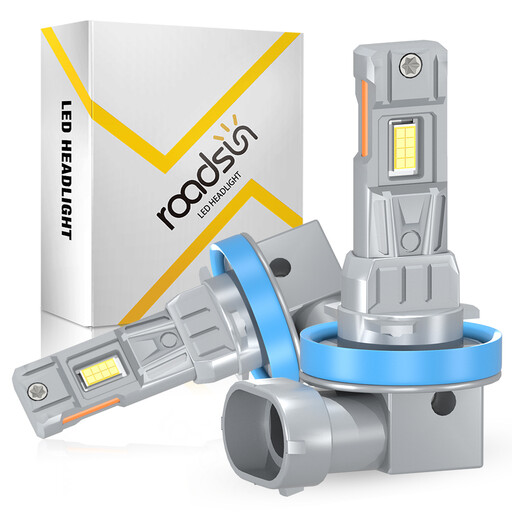
Why It Stands Out: This Roadsun model is built for those seeking a significant increase in illumination. According to the manufacturer, its top-tier LED chips deliver a substantial brightness increase over standard halogens. This enhanced output is designed to expand your field of vision and improve light penetration, making it a strong candidate for both headlights and as an H11 fog light upgrade. The 1:1 replacement design ensures it fits directly into factory housings, preserving the original beam pattern to avoid dazzling other road users.
Pros:
Who is it for? Drivers who frequently travel on poorly lit rural roads or motorways at night and prioritise maximum brightness to enhance their safety and reduce eye fatigue.
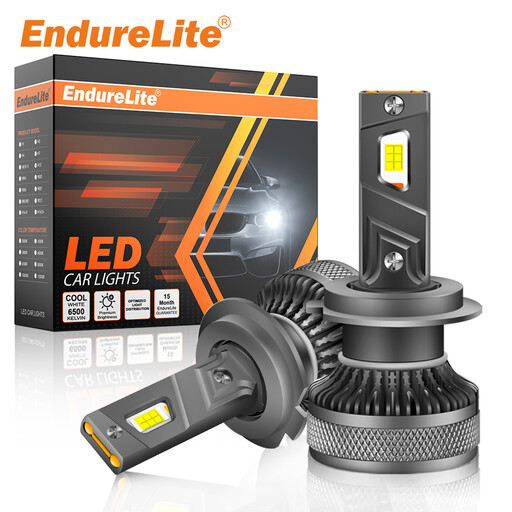
Why It Stands Out: The ENdureLite bulb offers a balanced package of brightness, longevity and modern vehicle compatibility. Its 1:1 design ensures it matches the stock bulb's beam pattern for focused light distribution. The manufacturer states a 300% brightness increase over stock bulbs, providing a noticeable improvement in visibility. A key feature is its CANbus ready design, which aims for compatibility with 99.9% of vehicle systems to reduce the risk of error warnings or flickering.
Pros:
Who is it for? The everyday driver looking for a reliable, all-around upgrade that offers a clear improvement in brightness and modern compatibility without being overly complex.
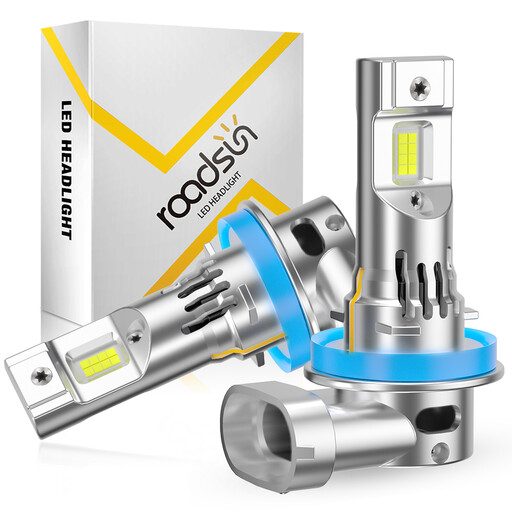
Why It Stands Out: This model from Roadsun focuses on efficient engineering and ease of use. It uses advanced CSP LED chips to deliver a bright, 6500K cool white light, which the brand claims is five times brighter than halogen. Its standout features are the high-speed 16,000 RPM cooling fan for longevity and a non-polarity design, which means you can't plug it in the wrong way—a small but welcome detail for DIY installers. The compact, all-in-one design ensures it fits easily into tight headlight housings.
Pros:
Who is it for? DIY enthusiasts and drivers who appreciate thoughtful design features that make installation as simple and quick as possible, while still delivering a significant performance boost.
While these three models represent excellent choices for many drivers, the world of vehicle lighting is vast. If you're looking for different specifications or bulb types, you can explore a wider selection.
? Discover more options in our full range of bright light bulbs.
Yes, in many cases they are. H11, H8 and H9 bulbs share the same physical connector but differ in their wattage and some minor aspects of their base. The H11 is the most common, often used for low beams. The H8 is lower wattage and typically used for fog lights, while the H9 is higher wattage and used for high beams. Many aftermarket LED bulbs, like the ones recommended above, are designed with a versatile power draw and fitment that allows them to safely replace any of these three halogen bulbs.
This is an important consideration. According to current DVSA guidelines for the MOT test, headlight bulbs must be a suitable match for the headlamp unit they are fitted in. This means that installing aftermarket LED bulbs into a headlight unit originally designed for halogen bulbs may result in an MOT failure. The rules are intended to ensure that the beam pattern remains correct and does not cause glare. Before making a permanent modification, it is highly recommended to check the latest government regulations or consult with a trusted MOT testing centre.
It depends on your vehicle. Most cars built after the mid-2000s use a CANbus system to monitor for burnt-out bulbs. Since LEDs draw significantly less power than halogens, the system might interpret this as a fault and trigger a dashboard warning light. Bulbs that are advertised as CANbus ready have built-in resistors or drivers to prevent this. For most modern cars, choosing a CANbus-ready bulb is the simplest way to ensure a smooth, error-free upgrade.