
24/7 Customer Support

Free returns

Same-day & Next-day Delivery

Quality Guaranteed

Unlock Your Welcome Offers: FREE Delivery | Up to 80% OFF | Free 30-day JoyPlus trial
Download the APP
Driving on poorly lit UK roads, especially during the darker months, can be a challenge with standard halogen headlights. The dim, yellowish glow often provides limited visibility, making it harder to spot hazards in time. If you're looking for a significant improvement in brightness, safety and a more modern look for your vehicle, a car headlight upgrade to an H11 LED headlight bulb is a practical solution.
This guide is designed to help you navigate the options. We'll cover the key features to look for when choosing a bulb and present a few carefully selected recommendations that prioritise performance, reliability and ease of installation.
Upgrading your headlights isn't just about finding the brightest bulb. To ensure safety and compliance, consider these factors.
While a bright H11 LED bulb is the goal, the way it projects light is just as important. A well-designed bulb will mimic the beam pattern of your original halogen bulb, illuminating the road ahead without creating glare that can dazzle oncoming drivers. Look for bulbs with a focused beam pattern to ensure light is directed where you need it most. This is crucial for both safety and passing your annual MOT inspection.
Colour temperature is measured in Kelvin (K). Standard halogen bulbs typically sit around 3200K, producing a warm, yellow light. Many LED upgrades, such as a 6500K H11 bulb, produce a crisp, cool white light that is much closer to natural daylight. This cleaner light can improve contrast and make it easier to see road markings, signs and potential obstacles, especially in rain or fog. Many drivers find this reduces eye strain on long journeys.
For many car owners, simplicity is key. The ideal upgrade is a set of plug and play headlight bulbs that require no wiring modifications or special tools. Look for bulbs with a "1:1 mini design," which means they are the same size as the original halogen bulb and will fit directly into the housing and accept the factory dust cover.
Furthermore, modern vehicles often use a CANBUS (Controller Area Network Bus) system to monitor the vehicle's electrics. Because LED bulbs draw less power than halogens, this can sometimes trigger a "bulb out" warning on the dashboard. An H11 LED bulb CANBUS compatible model has built-in circuitry to prevent these errors, ensuring a seamless integration with your car's system. It's also worth noting that the H11 fitment is often interchangeable with H8 LED bulb and H9 LED bulb sockets, making it a versatile option for both headlights and H11 LED fog lights.
Here are a few H11 LED bulb options that stand out for their design, features and user-friendly installation.
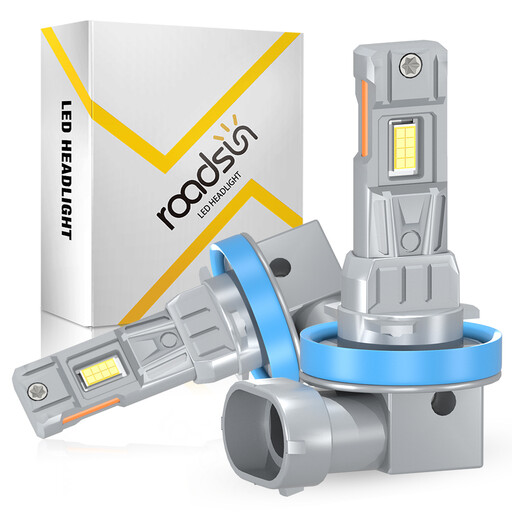
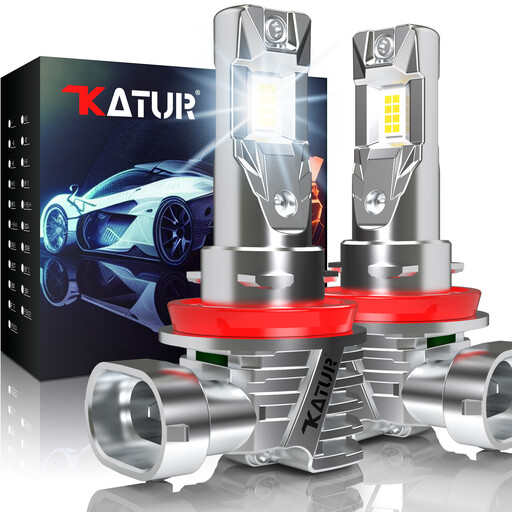
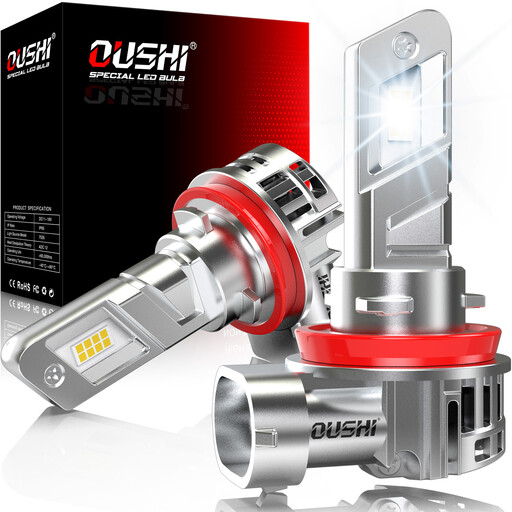
While the H11 is a very common bulb, your vehicle may require a different type. If you're specifically searching for an H9 headlight bulb or another fitment, you can explore a wider selection of options to find the perfect match for your car.
[Explore More Headlight Bulbs on Joybuy UK](https://www.joybuy.co.uk/explore/h9-headlight-bulb/TG2dUbVR)
Yes, in most cases. The H11, H8 and H9 bulbs share the same physical connector and base, but they originally had different wattage ratings and light outputs in their halogen form (H9 being the brightest, H8 the dimmest). When upgrading to LED, many manufacturers design a single bulb that can safely replace all three, as seen in the recommendations above. Always check the product description to confirm compatibility.
The key factor for an MOT pass is the beam pattern, not the bulb technology itself. A high-quality LED bulb that is correctly installed in the headlight housing should produce a clean, focused beam with a clear cut-off, just like the original halogen. This prevents glare that could fail the test and endanger other road users. Low-quality bulbs with poor beam focus are likely to cause a failure.
It depends on your vehicle. Many modern cars, especially those from European brands like Audi, BMW and Volkswagen, use a CANBUS system to detect burnt-out bulbs. Since LEDs use less power, the system may mistakenly report an error. Bulbs advertised as "CANBUS-ready" or "CANBUS compatible" have built-in resistors to prevent this. If you install a standard LED bulb and get a dashboard warning, a separate CANBUS decoder may be required.