
24/7 Customer Support

Free returns

Same-day & Next-day Delivery

Quality Guaranteed

Unlock Your Welcome Offers: FREE Delivery | Up to 80% OFF | Free 30-day JoyPlus trial
Download the APP
Straining to see the road ahead on a dark, rainy night is a common frustration for many UK drivers. Standard halogen bulbs often cast a dim, yellowish light that can make it difficult to spot hazards in time. If you're looking for a straightforward bright car headlight upgrade, switching to an H11 LED headlight bulb can make a significant difference to your visibility and driving confidence.
However, the market is filled with options, each with different specifications and features. This guide is designed to help you understand the key factors to consider and to highlight some solid choices that offer a noticeable improvement over stock bulbs.
Before making a purchase, it's useful to understand a few key terms. This will help you select a bulb that not only fits your car but also meets your performance expectations.
The H11 fitting is one of the most common types used for low beams and fog lights. You'll often see it grouped with H8 and H9 fittings. While they share the same physical connector, they traditionally differ in wattage and pin configuration. Fortunately, many modern LED replacement bulbs are designed as a universal fit for all three.
A crucial factor for modern vehicles is Canbus compatibility. Many cars use a Canbus system to monitor the vehicle's electronics. Because LEDs use less power than halogens, the system can mistakenly think a bulb has failed, triggering a dashboard warning light. To avoid this, look for Canbus ready LED headlights that have integrated circuitry to communicate correctly with your car's computer.
Two numbers define the performance of a headlight bulb:
One of the biggest advantages of modern LED kits is their ease of installation. Many are designed as plug and play headlight bulbs, meaning they have a 1:1 design that matches the size and shape of the original halogen bulb. This allows you to install them directly into the headlight housing without any modifications.
Because LEDs generate heat, an effective cooling system is essential for longevity and consistent performance. There are two main types:
Here are a few H11 LED bulb options that offer a compelling combination of performance, features and value.
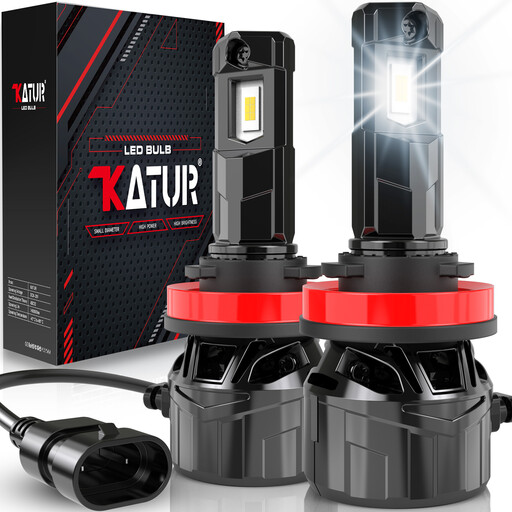
Why It Stands Out: This bulb is built for high performance, offering a powerful 120W and 30000LM output per pair. The light is delivered in a crisp 6000K xenon white colour. To manage the heat from this high output, it features a high-speed 16,000RPM turbo fan and a copper tube core, ensuring the LED chips remain cool and stable. Its 1:1 mini size makes it a direct plug and play replacement for H11, H8 and H9 halogen bulbs.
Pros:
Who is it for? Drivers who prioritise maximum brightness and want a powerful, immediate upgrade for their night-time visibility.
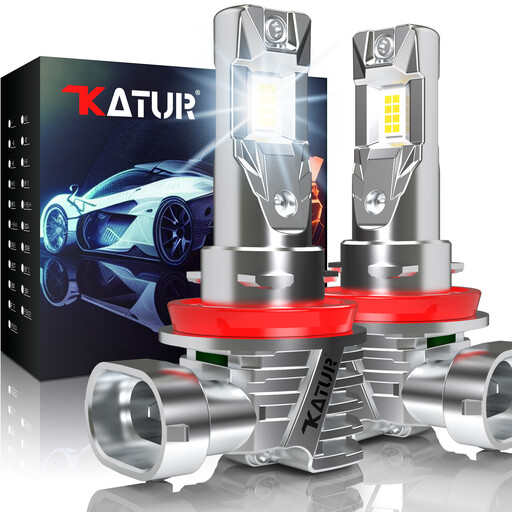
Why It Stands Out: The key feature of this model is its completely fanless design. It relies on a 6063 aircraft-grade aluminium body for passive heat dissipation, resulting in silent operation and eliminating the risk of fan failure. Despite being fanless, it still delivers an impressive 26000LM per pair. The 1:1 mini halogen design ensures it fits easily into tight headlight housings where a bulkier, fan-cooled bulb might not.
Pros:
Who is it for? Car owners looking for a reliable, silent and easy-to-install upgrade, particularly those with vehicles that have tight dust caps or limited clearance behind the headlight assembly.
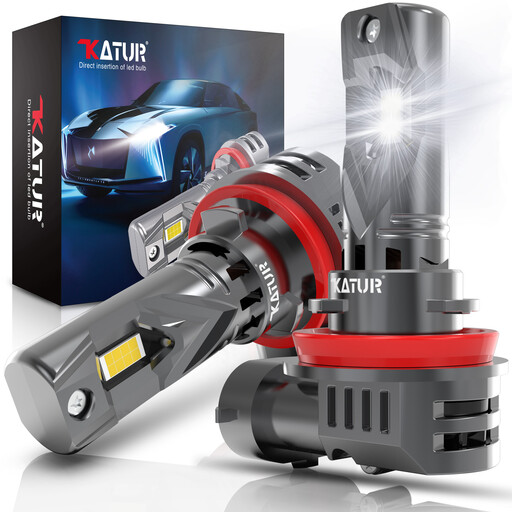
Why It Stands Out: This option combines high power with enhanced compatibility. It delivers a strong 100W and 30000LM output and uses a 16,000RPM fan for cooling. What sets it apart is the smart external driver. This component helps regulate power and contains advanced decoding functions, making it a highly effective Canbus ready solution for the majority of vehicles, even those with sensitive computer systems.
Pros:
Who is it for? Drivers of modern European cars or other vehicles known for being sensitive to electrical changes, who need a powerful bulb with a high chance of error-free, plug-and-play operation.
While these three models cover a range of common needs, every car and driver is different. If you're looking for a different bulb fitting, power level or feature set, there are many other choices available.
Explore our full collection to find the perfect match for your vehicle. [Browse our complete range of car headlight bulbs here.](https://www.joybuy.co.uk/explore/car-headlight-bulbs/NClgXcXl)
In many cases, yes. They all use the same PGJ19 base connector. Most aftermarket H11 LED bulbs are designed to be a universal replacement for H8 and H9 sockets as well. However, it is always best practice to confirm the recommended bulb type in your vehicle's owner's manual before purchasing.
Modern cars use a Controller Area Network (Canbus) to monitor functions like lighting. Since LEDs draw significantly less power than halogen bulbs, the car's computer might interpret this as a burnt-out bulb and display an error message on your dashboard. Canbus ready LED headlights include built-in resistors or decoders to mimic the power draw of a halogen bulb, preventing these errors.
Yes, a 6000K light source is road legal in the UK as it falls within the white light spectrum. The critical factor for legality is not the colour itself, but the beam pattern. The bulbs must be installed correctly in the headlight housing to create a focused beam with a clear cut-off line, ensuring you can see the road clearly without dazzling oncoming drivers.