
24/7 Customer Support

Free returns

Same-day & Next-day Delivery

Quality Guaranteed

Unlock Your Welcome Offers: FREE Delivery | Up to 80% OFF | Free 30-day JoyPlus trial
Download the APP
Driving on poorly lit British roads at night with standard halogen headlights can feel like navigating by candlelight. That dim, yellowish glow often struggles to cut through rain and fog, reducing your visibility and reaction time. A bright headlight upgrade to modern LED technology is a popular solution, promising a safer, clearer view of the road ahead.
However, the market for H11 LED headlight bulbs is flooded with confusing claims and technical specifications. Many drivers, eager for a quick fix, fall into common traps that lead to wasted money, poor performance and even potential MOT issues. Before you buy, it's crucial to understand what really matters.
As a Joybuy Product Recommendation Officer, my role is to help you see through the marketing clutter. Here are the key pitfalls to avoid:
To make a smart purchase, focus on the technical details that directly impact performance and safety on UK roads.
The single most important factor for a halogen replacement H11 is its ability to replicate the original beam pattern. A good LED bulb will have its chips placed to mimic the filament of a halogen bulb, ensuring the light is directed correctly by your car's headlight housing. This creates a sharp cut-off line for the dipped beam, illuminating the road and verge without blinding other road users.
Look for a colour temperature of around 6000K. This produces a crisp, modern, cool white light that is much closer to daylight than the yellow hue of halogens. This colour improves contrast, making it easier to spot hazards, road signs and pedestrians from a distance.
How a bulb manages heat is critical for its longevity. There are two main approaches:
The H11, H8 and H9 bulb types share a similar connector, which is why many LED kits are advertised as compatible with all three. While they fit the same socket, it's vital to check the physical size of the LED bulb. For a true plug and play H11 bulb installation, look for a "1:1 mini design" that matches the dimensions of the original halogen bulb. This ensures it will fit inside the housing and allow the dust cap to be properly sealed.
Furthermore, modern vehicles often use a CANbus system to monitor for failed bulbs. Because LEDs use less power, they can trigger a "bulb out" error on the dashboard. To avoid this, choose bulbs that are advertised as "CANbus ready" or "error-free".
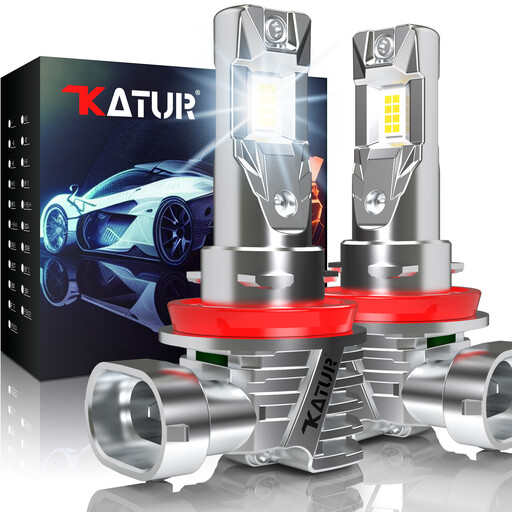
Why This Fits Their Persona: This driver wants a straightforward, reliable upgrade with minimal fuss. They prioritise an easy installation in a vehicle that may have a compact headlight housing with little spare room.
Its fanless LED headlights design and 1:1 mini size directly counter the "Universal Fit" fallacy. It fits into tight spaces without an external driver or bulky fan, ensuring the dust cap can be reinstalled to maintain the headlight's seal.
Silent operation with no moving parts to fail. The all-in-one design makes for a genuine plug and play H11 bulb installation.
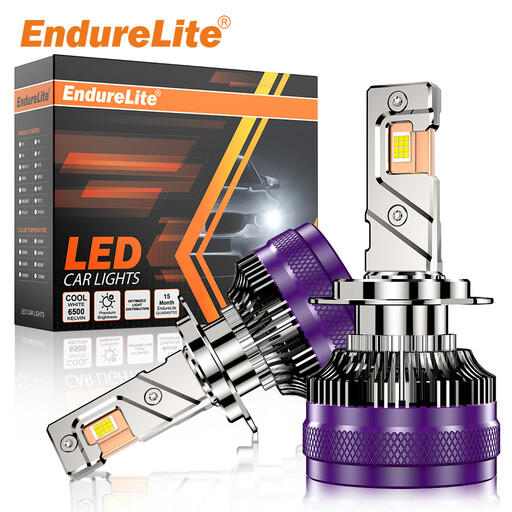
Why This Fits Their Persona: This driver frequently travels on unlit country lanes and motorways. They need sustained, high-intensity light for maximum forward visibility and are willing to accept a fanned design for better thermal management.
It tackles the "Ignoring the Cooling System" pitfall head-on. The combination of an aerospace aluminium body and a 12,000 RPM fan provides active cooling, designed to maintain brightness and prolong bulb life during long periods of use.
Features a high IP68 waterproof rating and a robust cooling system for performance in demanding conditions. The design aims for a precise, halogen-like beam to avoid glare.
We have compiled a complete, real-time list of products that fully satisfy these strict selection criteria and UK safety regulations.
For a headlight conversion to be compliant for road use and pass an MOT, it must meet specific criteria. The beam pattern must be correct, with a clear cut-off that doesn't cause glare for other drivers. The colour must be predominantly white or yellow. While many aftermarket LED kits are sold for "off-road use only," high-quality models that accurately replicate the original halogen beam pattern are designed to pass the MOT beam test. It is always advisable to have your headlight alignment checked by a professional after installation.
This depends on your vehicle. Many cars built from the mid-2000s onwards use a CANbus (Controller Area Network) system to monitor the vehicle's electronics. Since LEDs draw significantly less power than halogens, the system can misinterpret this as a blown bulb, resulting in a dashboard warning light or flickering. To prevent this, look for bulbs advertised as CANbus ready. For some sensitive vehicles, particularly from German brands, a separate CANbus decoder or resistor may still be necessary.
Physically, the H8 LED bulb, H9 and H11 bulbs use a very similar base and connector, which is why many LED replacement kits are marketed as a universal fit for all three. In their original halogen form, they have different standard wattages and light outputs. When upgrading to LED, the key is that the base fits your car's socket. The performance (brightness and beam) of the new bulb will be determined by its own LED chip and driver design, not the wattage of the old halogen it is replacing.