
24/7 Customer Support

Free returns

Same-day & Next-day Delivery

Quality Guaranteed

Unlock Your Welcome Offers: FREE Delivery | Up to 80% OFF | Free 30-day JoyPlus trial
Download the APP
Driving at night or in poor weather with standard halogen headlights can often feel like a compromise. The dim, yellowish light can strain your eyes and reduce your visibility of road signs and potential hazards. For many UK drivers, a straightforward LED headlight bulb upgrade is the answer, offering a significant improvement in brightness and clarity.
However, the market is filled with technical jargon and ambitious claims. This guide is designed to help you navigate the options for H11 LED headlight bulbs. We will focus on the key features that matter for performance and ease of installation, helping you make an informed choice for your vehicle.
Choosing the right bulbs involves more than just picking the brightest option. Here are a few practical points to consider to ensure you get a compatible and effective upgrade.
You will often see H11 LED headlight bulbs advertised as being compatible with H8 and H9 fittings. While they share the same plug design, there are subtle differences in their original halogen specifications.
Most modern LED replacements are engineered to fit all three sockets, making them a versatile choice. However, it is always wise to confirm your vehicle's required fitment by checking your owner's manual before purchasing.
The main reason for upgrading is to get bright car headlights. This is measured in lumens, but more is not always better. The crucial factor is the beam pattern. A well-designed LED bulb will mimic the filament position of a halogen bulb, casting a clean, focused beam that illuminates the road without dazzling oncoming traffic.
Look for a colour temperature around 6000K. A 6000K H11 bulb produces a crisp, modern white light that is excellent for visibility and is generally accepted for road use in the UK, provided the beam is correctly aligned.
Many drivers seek a simple, DIY-friendly solution. Plug and play headlights are designed for this, featuring a 1:1 size match with original halogen bulbs and requiring no extra wiring.
Cooling is also vital for the longevity of an LED bulb. There are two main types:
As a Joybuy Product Recommendation Officer, I have filtered through numerous options to highlight a few standout products based on their features, design and user-centric benefits.
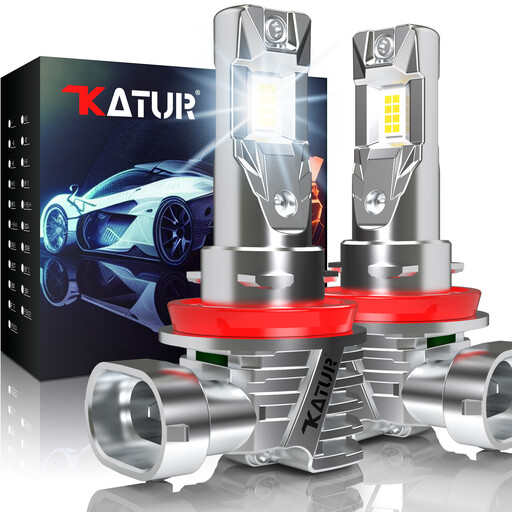
Why It Stands Out: This KATUR model is built around a fanless, mini-size design. Its 1:1 profile compared to a standard halogen bulb makes it an excellent choice for vehicles with tight headlight housings or restrictive dust caps, where larger, fan-cooled bulbs might not fit. The silent operation is an added bonus.
Pros:
Who is it for? This is an ideal option for drivers who prioritise a simple, silent and reliable LED headlight bulb upgrade, especially if the space behind their headlight assembly is limited.
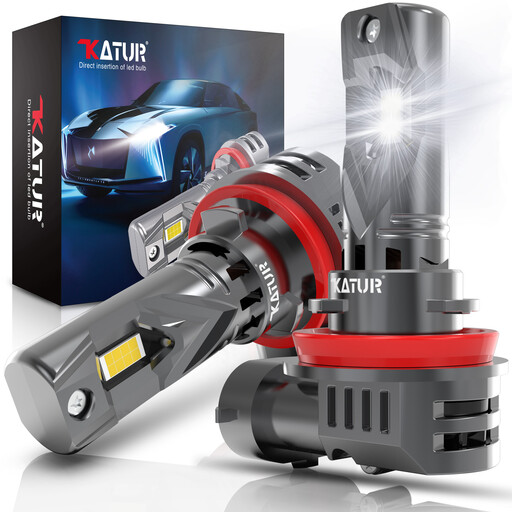
Why It Stands Out: For those seeking a higher level of brightness, this 100W KATUR model delivers impressive light output. It achieves this through the use of a powerful 16,000 RPM turbo fan, which actively dissipates heat to maintain performance and longevity. The external driver also helps with Canbus compatibility for a wider range of vehicles.
Pros:
Who is it for? This bulb is suited for vehicle owners who want a significant increase in light output and have sufficient space to accommodate a bulb with an active cooling fan.
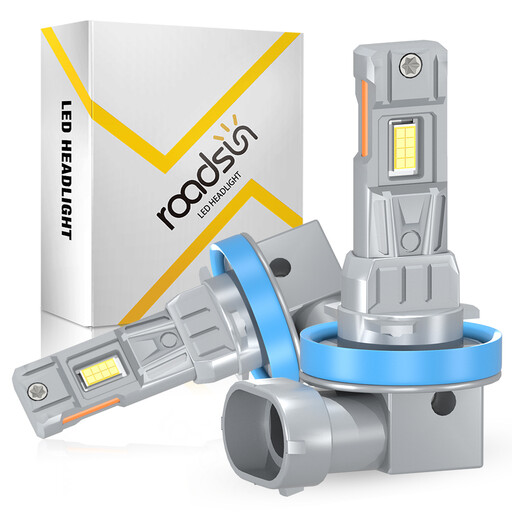
Why It Stands Out: The Roadsun H11 bulb is all about simplicity and direct replacement. It features a 1:1 design that perfectly matches the dimensions of an original halogen bulb, ensuring it fits into factory housings without any modification. The manufacturer highlights a quick, 3-minute installation, making it one of the most accessible plug and play headlights available.
Pros:
Who is it for? This is an excellent choice for DIY beginners or any driver who wants the most straightforward and hassle-free installation experience possible.
If these recommendations do not quite match what you are looking for, or if you need bulbs for other fittings, there are many more options to explore.
Browse our full collection of LED car spot lamps to find the right fit for your vehicle.
In most cases, yes. They use the same L-shaped plug, and modern LED replacement bulbs are typically designed with a universal base to fit all three sockets. The main difference in their halogen counterparts was wattage and minor tab variations. Always double-check the product description and your vehicle's manual to ensure compatibility.
This depends on your vehicle's make and model. Many modern European and American cars use a Canbus (Controller Area Network) system to monitor for burnt-out bulbs. Because LEDs draw less power than halogens, the system may mistakenly report an error. To avoid this, look for bulbs advertised as "Canbus Ready" or "Error-Free," as they have integrated components to communicate correctly with the vehicle's computer.
Yes, a colour temperature of around 6000K is generally considered road legal in the UK as it produces a pure white light. Legality is less about the colour and more about the beam pattern. An MOT failure can occur if the upgraded bulbs produce excessive glare that could dazzle other drivers. It is essential to ensure the bulbs are installed correctly and the headlights are properly aligned after installation.