
24/7 Customer Support

Free returns

Same-day & Next-day Delivery

Quality Guaranteed

Unlock Your Welcome Offers: FREE Delivery | Up to 80% OFF | Free 30-day JoyPlus trial
Download the APP
Upgrading your car's standard halogen bulbs to modern LEDs is one of the most effective ways to improve night-time visibility and driving safety. However, the market for H11 LED headlight bulbs is filled with confusing specifications and bold marketing claims. Many UK drivers find themselves with bulbs that are difficult to install, cause dashboard errors or produce a dangerous and illegal beam pattern.
As the Joybuy Product Recommendation Officer, my role is to help you navigate this market. This guide cuts through the clutter, focusing on the critical factors that ensure you get a reliable and effective H11 bulb upgrade. We will look at the common pitfalls to avoid and the key features that truly matter.
Before you add any bulbs to your basket, be aware of these frequent issues that can lead to wasted money and frustration:
To ensure you make a worthwhile purchase, focus on these three non-negotiable technical specifications.
The single most important factor for a safe and legal upgrade is the beam pattern. The goal is to replicate the focused output of your original halogen bulbs, just with the improved brightness and colour of an LED.
Look for bulbs that specify a 1:1 halogen design. This means the LED chips are positioned to mimic the exact location and size of the halogen filament. Combined with an ultra-thin chip spacing, this design ensures the light is correctly projected by your vehicle's headlight reflector or projector housing, creating a sharp cut-off line that illuminates the road ahead without blinding other road users.
For a hassle-free experience, you need CANbus ready LED headlights with an intelligent, built-in driver. A quality driver manages power consumption to communicate effectively with your car's computer, preventing errors. While many bulbs claim 99% compatibility, it is wise to be cautious if you own a VW, BMW, Audi or Mercedes-Benz, as these systems can be particularly sensitive. In some cases, an additional external CANbus decoder may still be required for these models.
LED chips generate significant heat and managing this heat is vital for both performance and longevity. If a bulb overheats, its brightness will drop and its lifespan will be drastically shortened. There are two main types of cooling:
A bulb with a well-engineered cooling system, whether active or passive, is a sign of a quality product designed to deliver consistent brightness over its entire operational life.
Based on these critical criteria, we have selected a few options from our catalogue that are well-suited to different types of UK drivers.
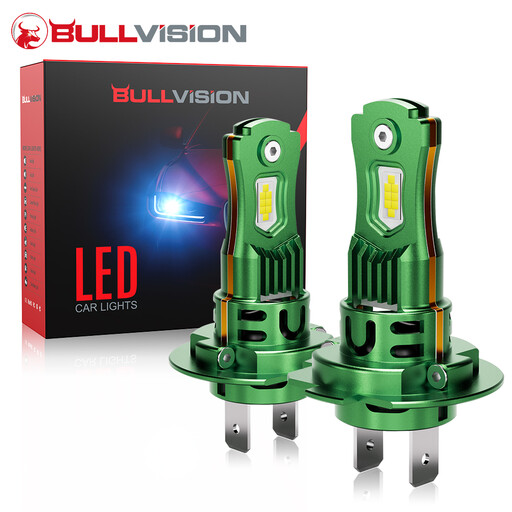
Why This Fits Their Persona: This is for the car owner who wants a straightforward, noticeable improvement over stock halogens without a complex installation. The focus is on simplicity and value for money, making it a great first step into LED upgrades.
Its 1:1 mini size directly counters the 'fake plug and play' trap. With no external driver or adapter needed, it fits directly into the factory housing, ensuring a genuine 5-minute installation.
The main advantage is its simplicity and direct-fit design. It provides a clear 6000K cool white light and a focused beam pattern that improves visibility without a premium price tag.
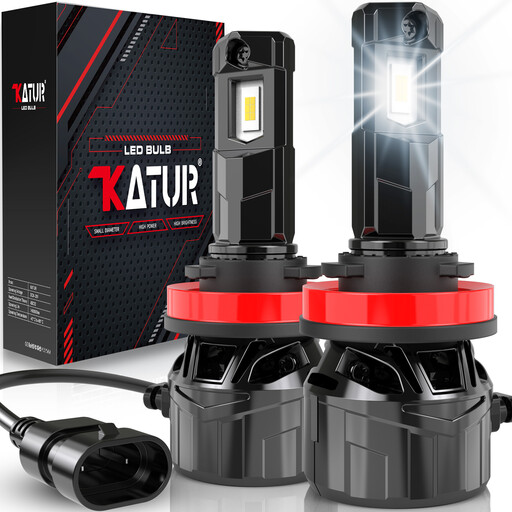
Why This Fits Their Persona: For someone who drives frequently at night on unlit A-roads or motorways, reliability and sustained performance are key. They need a bulb that won't dim or fail prematurely, ensuring consistent safety for their daily journeys.
It tackles the longevity problem head-on. The combination of a 16,000 RPM turbo fan and a hollow-carved heat sink provides a robust cooling system, preventing the brightness decay that plagues lesser bulbs.
The primary advantage is its focus on thermal management, which supports a long operational life. It also features an upgraded driver for high compatibility, reducing the risk of CANbus errors.
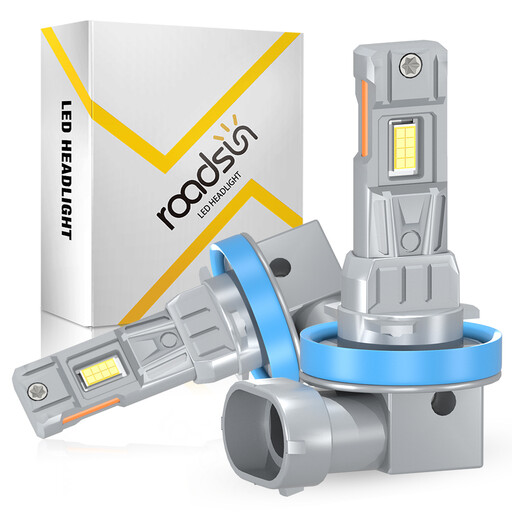
Why This Fits Their Persona: This driver wants the maximum safe illumination and a sharp, modern look for their vehicle. They are looking for a significant performance jump over halogen for both headlights and fog lights, valuing both safety and style.
While it makes a bold brightness claim, it avoids the 'lumen myth' by pairing it with a 1:1 perfect replacement design. This ensures the powerful output is channelled into a correct beam pattern, preventing glare.
It offers a substantial increase in brightness and a crisp white light, transforming night-driving visibility. The IP67 rating and wide operating temperature range also ensure it performs reliably in all British weather conditions.
We have compiled a complete, real-time list of products that fully satisfy these strict selection criteria and UK safety regulations.
The legality of aftermarket LED headlight bulbs in the UK depends on their use. As of recent updates, fitting LED bulbs into a headlight unit that was originally designed for halogen bulbs is not strictly legal for road use and may cause an MOT failure. However, the key practical test during an MOT is whether the headlamp beam is "correct and not dazzling". A high-quality H11 LED bulb with a 1:1 design is engineered to produce the correct beam pattern. It is always advisable to check the latest DVSA guidelines and retain your original halogen bulbs to refit if necessary.
These three bulb types share the same physical L-shaped plug and base, making them interchangeable in some housings. However, they are designed for different purposes:
Because many LED replacements are designed to be compatible across this range, you will often see them listed as "H11/H8/H9".
Not necessarily. Most modern LED bulbs are advertised as CANbus ready and have built-in systems to prevent errors in the majority of vehicles. For most Japanese and Korean cars and many Fords or Vauxhalls, a good quality bulb will work without issue. However, premium German brands (like BMW, Audi, Mercedes) and some other European marques have more sensitive monitoring systems that may still require an additional decoder to prevent flickering or dashboard warnings.