
24/7 Customer Support

Free returns

Same-day & Next-day Delivery

Quality Guaranteed

Unlock Your Welcome Offers: FREE Delivery | Up to 80% OFF | Free 30-day JoyPlus trial
Download the APP
Replacing tired halogen bulbs with H11 LED headlight bulbs can improve the appearance and perceived brightness of your vehicle’s lighting. However, choosing by lumen figures alone can lead to poor beam control, dashboard warnings or an installation that does not fit behind the dust cover.
This guide explains the specifications that matter, the common marketing traps to avoid and which products may suit different UK driving needs.
Listings may advertise figures such as 20,000 lumen LED bulbs or 30,000 lumens per pair. These numbers describe stated light output, but they do not automatically confirm useful illumination on the road. Beam position, reflector design, chip placement and headlamp alignment are equally important.
An LED bulb with a 1:1 design may be more suitable for a halogen housing because its light-emitting points are positioned to resemble the original filament. Even then, the result varies between vehicles.
H8, H9 and H11 bulbs use closely related fittings, but the original bulb specification, wattage, connector and intended function can differ. An H11 fog light bulb is not automatically the right choice for a high or low beam application.
Check the vehicle handbook, the marking on the removed bulb or a reliable vehicle-fitment guide before ordering. Also confirm whether your lamp is designed for a replaceable bulb and whether an LED retrofit is suitable for road use in your vehicle. Headlamp aim and glare remain the driver’s responsibility.
A built-in CANbus driver can reduce the possibility of flickering, radio interference or bulb-out warnings, but it cannot guarantee compatibility with every vehicle. Some cars monitor current draw very closely and may still need a separate decoder.
This is particularly relevant to vehicles with sensitive electronic systems, including some European models. Check the seller’s vehicle notes and retain the original bulbs in case the retrofit needs to be reversed.
Start with the bulb base: H8, H9 or H11. Then check the overall length, locking tabs and rear clearance. A fan-equipped bulb may fit the socket but prevent the factory dust cap from closing.
A 1:1 halogen replacement bulb is generally easier to install in a standard housing because it is designed around the original bulb’s form. Compact, fanless designs can be useful where space is limited, while fan-cooled bulbs may offer active heat removal but require clearance for the fan and airflow.
6000K cool white LED bulbs produce a crisp white appearance. Some products use 6500K, which may look slightly cooler or more bluish. Colour temperature is not the same as brightness, and a higher Kelvin figure does not necessarily improve visibility in rain or mist.
Look for stated features such as thin chip spacing, correct chip alignment and a 1:1 beam pattern. After installation, check the beam against a wall on level ground and have the headlamps professionally aligned if necessary.
LED chips generate heat at the rear of the bulb, so inspect the cooling design. Options include:
A pair is normally required for balanced output, so an LED bulbs pack of 2 is practical when replacing both sides together.
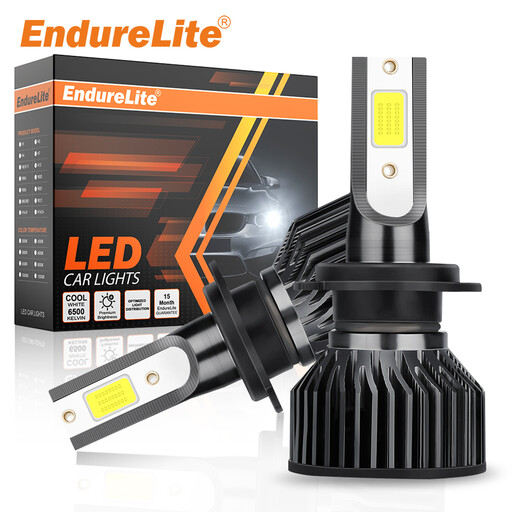
Why This Fits Their Persona: A straightforward option for a driver replacing both front bulbs and looking for a compact 6000K plug-and-play format without selecting an unusually high stated output.
The listing specifies H8/H9/H11 fitment, a 1:1-style body, cooling fan and CANbus-ready design, giving you more to check than the headline brightness figure alone.
6000K colour temperature; pack of two; integrated cooling and stated IP68 waterproof construction.
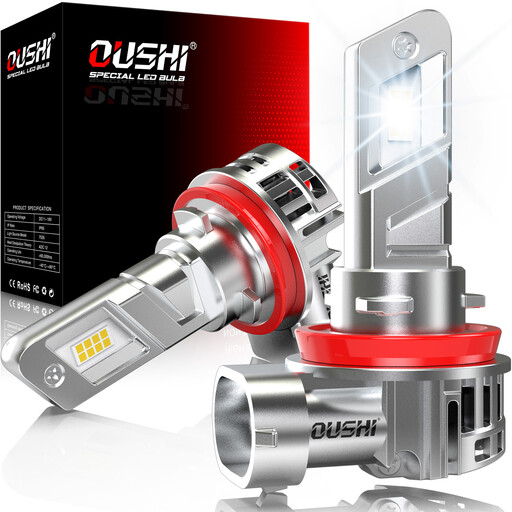
Why This Fits Their Persona: Suitable for motorists prioritising a compact format, integrated electronics and a cool-white appearance for regular night driving.
Its listing identifies 1:1 mini sizing, no external driver and CANbus technology, while noting that some sensitive vehicles may still need an additional decoder.
1:1 mini construction; stated 6500K colour; built-in high-speed fan and pack-of-two format.
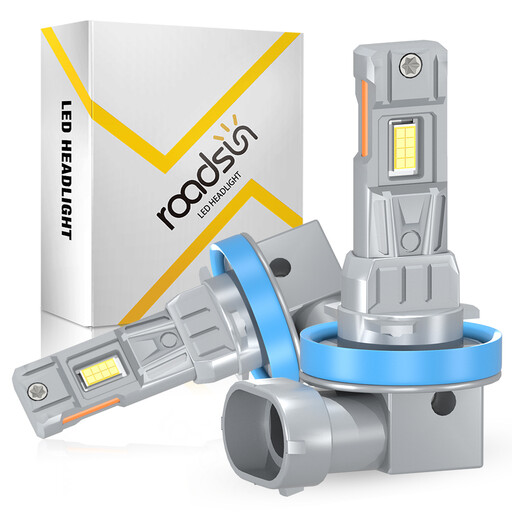
Why This Fits Their Persona: A practical match for frequent commuters and drivers who regularly use headlights or H11 fog light bulbs in changing UK weather.
The listing specifies 1:1 sizing, aluminium construction, IP67 protection and an H8/H9/H11 application rather than relying only on an output claim.
Stated lifespan of over 70,000 hours; IP67-rated construction; 1:1 plug-and-play format for cars, trucks and SUVs.
We have compiled a complete, real-time list of products that fully satisfy these strict selection criteria and UK safety regulations.
Before fitting any car LED headlight bulbs:
Do not assume that “plug and play” confirms legal suitability. Check the vehicle handbook, product documentation and current UK requirements before using an LED retrofit on public roads. A poorly aligned or incompatible conversion can cause glare and may create an MOT issue.
Some products are designed for all three formats, but compatibility still depends on the vehicle housing, wiring and available rear clearance. Confirm the original bulb designation before ordering.
LEDs can use a different amount of electrical power, depending on their wattage and driver design. Compare the stated wattage rather than assuming every LED conversion consumes less energy. Purchase cost, cooling components and service life also affect overall value.
Listings commonly state lifespans from 50,000 to 70,000 hours. These are product specifications under stated conditions, not a guarantee of actual service life in every vehicle. Heat, vibration, moisture, electrical faults and restricted airflow can affect performance.