
24/7 Customer Support

Free returns

Same-day & Next-day Delivery

Quality Guaranteed

Unlock Your Welcome Offers: FREE Delivery | Up to 80% OFF | Free 30-day JoyPlus trial
Download the APP
Replacing tired halogen lamps can improve the appearance and perceived brightness of your vehicle, but choosing H4 LED headlamp bulbs is not simply a matter of selecting the highest lumen figure. Compatibility, beam control, heat management and road suitability all matter.
H4 bulbs are also sold as H4 9003 LED bulbs or HB2 LED headlamp bulbs. These designations generally refer to the same three-pin bulb format, combining dipped and main beam in one unit. However, similar naming does not guarantee that every bulb will fit every headlamp housing.
Listings may advertise very high lumen outputs, but figures can be quoted per pair, under laboratory conditions or without explaining how they were measured. A high number does not automatically mean a useful beam on the road. Poorly positioned LED chips can create dark patches, scattered light or glare for approaching drivers.
Look for a 1:1 halogen replacement bulb design, accurate chip positioning and a housing that suits the original reflector or projector. After installation, the headlamp aim should be checked rather than assuming that a plug-in fit guarantees a correct beam.
H4 plug and play bulbs can connect directly to the original socket, but the available space behind the headlamp varies considerably. A fan, heat sink or external driver may interfere with the dust cover.
Some vehicles may also show flickering, warning messages or bulb-out errors. CANbus compatible H4 bulbs can reduce this risk, but “compatible” is not a universal guarantee. Sensitive electrical systems may still require an additional decoder.
LEDs produce less wasted heat at the light-emitting surface than halogen bulbs, but their electronics still need thermal management. Fan-cooled designs can dissipate heat effectively, while fanless models avoid moving-part failure and noise. Neither approach is automatically suitable for every vehicle.
Check the stated IP rating, construction and available space. IP65, IP67 and IP68 indicate different levels of protection against dust and water; they do not mean a bulb should be submerged or installed with a damaged sealing ring.
Confirm the original bulb marking in the owner’s manual, on the removed bulb or through a reliable vehicle parts catalogue. H4, 9003 and HB2 references are useful, but the headlamp housing and connector should also match.
An H4 bulb provides both dipped and main beam, making it suitable for many cars, vans, motorcycles and off-road vehicles. It may also be marketed as an H4 high and low beam bulb or H4 fog light bulb, but check that the lamp assembly is designed for that function before changing it.
Many buyers prefer 6000K cool white headlights because the light looks whiter than traditional halogen. Colour temperature describes appearance, not brightness or beam quality. A 6500K bulb may look cooler or slightly bluer, while a 6000K option is often a more neutral white.
Prioritise a controlled cutoff, correctly aligned chips and suitable optics. After installation, test both dipped and main beam, then check for glare and beam misalignment. UK road users should also confirm that their vehicle’s lighting arrangement and replacement bulb are suitable for road use and remain compliant with applicable lighting and MOT requirements. Products intended for off-road use should not automatically be treated as road-approved.
Fanless H4 LED bulbs use passive cooling through an aluminium body or heat sink. They are useful where the dust-cover clearance is limited and remove the possibility of fan noise or fan failure. Fan-cooled bulbs can offer active heat removal but need room for the fan and must be kept free from obstruction.
A stated lifespan of 50,000 or 60,000 hours is a product specification rather than a guarantee of service in every vehicle. Heat, vibration, voltage variation and installation conditions can affect actual performance.
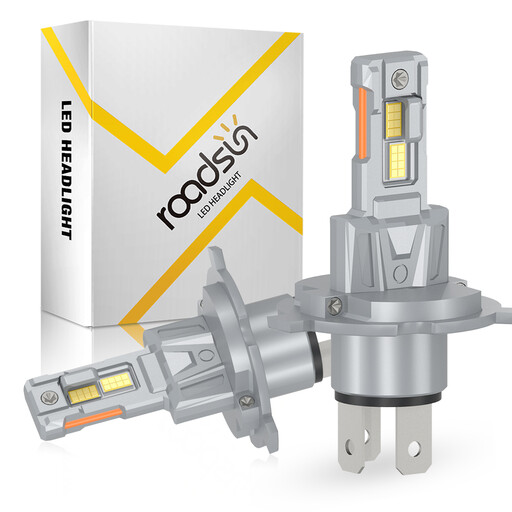
Why This Fits Their Persona: A straightforward option for drivers replacing standard H4 bulbs at home, including cars, trucks, SUVs and selected motorcycles.
Its fanless inline design avoids fan failure and can suit housings with limited rear clearance. Built-in decoding is stated, although some sensitive vehicles may still need an external decoder.
6000K cool white output, integrated high and low beam function, fanless aluminium cooling and IP67-rated construction.
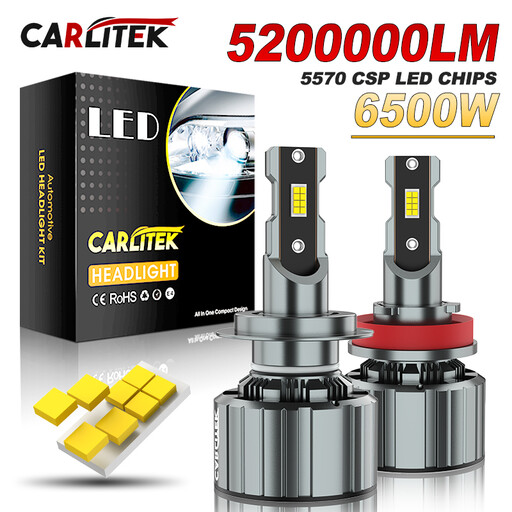
Why This Fits Their Persona: Suitable for motorists looking for a matched pair with a compact 1:1 format and built-in CANbus hardware.
The listed 1:1 filament-position design addresses beam-placement concerns, while the built-in CANbus system is intended to reduce flickering and dashboard errors.
Pack of two, IP68 water resistance, integrated fan cooling and 12V vehicle compatibility.
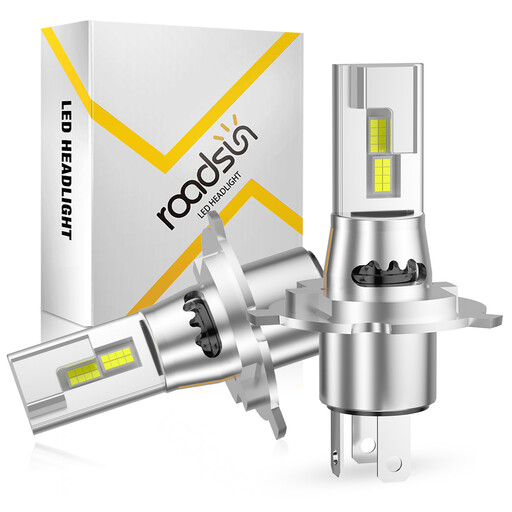
Why This Fits Their Persona: A practical match for drivers covering rural lanes, poorly lit routes or off-road environments where weather sealing and active cooling are priorities.
The 1:1 halogen-size format helps with installation, while its IP68 rating and CANbus-ready design address common weather and electrical concerns.
16000RPM fan cooling, 6500K cool white appearance, high/low beam operation and stated support for H4, 9003 and HB2 sockets.
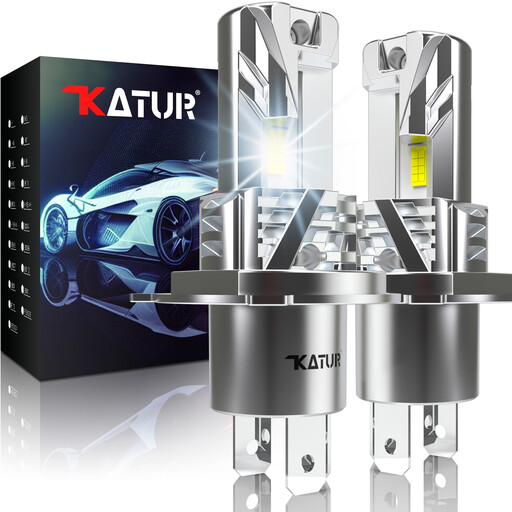
Why This Fits Their Persona: Designed for DIY motorists whose headlamp housings have restricted dust-cover clearance and who prefer a fanless installation.
The compact fanless body avoids fan clearance problems. Buyers should note that sensitive German vehicles may require CANbus decoding.
Fanless 6063 aluminium construction, IP65 protection, 1:1 mini-size format and integrated high/low beam operation.
We have compiled a complete, real-time list of products that fully satisfy these strict selection criteria and UK safety regulations.
They commonly identify the same three-pin high/low beam format, but always confirm the original bulb marking and vehicle fit. Socket naming alone does not confirm adequate housing clearance or electrical compatibility.
Many listings specify 50,000 to 70,000 hours, depending on the model. These are stated product-life figures, not a guaranteed ownership period. Cooling, vibration, voltage and moisture exposure can affect real-world service life.
LED products may have a lower stated wattage than the halogen bulbs they replace, but actual consumption varies by model. Check the manufacturer’s voltage and wattage information, and do not assume that a lower figure guarantees lower running costs or compatibility with every vehicle system.