
24/7 Customer Support

Free returns

Same-day & Next-day Delivery

Quality Guaranteed

Unlock Your Welcome Offers: FREE Delivery | Up to 80% OFF | Free 30-day JoyPlus trial
Download the APP
Upgrading your car's standard halogen headlights to LED can feel like a night-and-day difference. A modern H4 LED headlight bulb promises not just a sharper look, but a significant improvement in night-time visibility and safety. However, the market is flooded with options, and it's easy to fall into common traps that lead to wasted money, poor performance and even potential MOT issues.
As the Joybuy Product Recommendation Officer, my role is to help you see through the marketing clutter. Before you buy, let's look at the key pitfalls to avoid and the essential features that truly matter for UK drivers.
To ensure you get a reliable and effective H4 halogen replacement, focus on these non-negotiable technical specifications.
The H4 bulb is a dual-filament design, handling both high and low beams. For an LED replacement to be effective and legal, it must precisely replicate the light source position of the original halogen bulb.
Colour temperature is measured in Kelvin (K). While some bulbs offer very high Kelvin ratings for a "blue" look, this is not ideal for visibility.
This is where technical specifications directly translate to long-term performance.
Based on these practical criteria, here are a few options matched to different types of UK drivers.
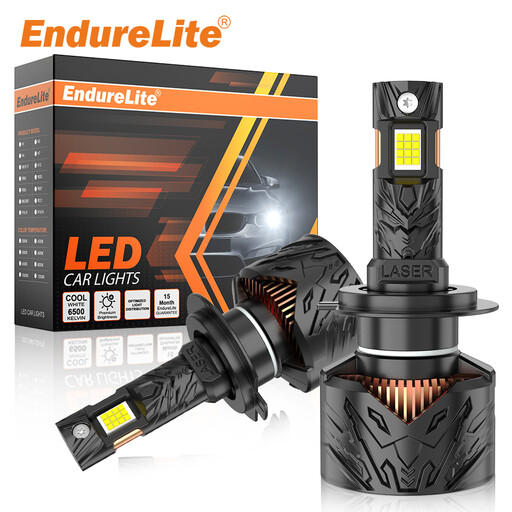
Why This Fits Their Persona: This is for the car owner who wants a no-fuss, effective upgrade. The emphasis on a 1:1 beam pattern and simple plug-and-play installation makes it an ideal first step away from dim halogens without requiring complex modifications.
It directly addresses the "plug and play" pitfall with a built-in intelligent driver and CANbus-ready design to ensure compatibility with most vehicles. The focus on a "perfect beam pattern" avoids the glare issue of overly bright, unfocused bulbs.
A balanced, all-in-one solution. It combines a **bright H4 LED bulb** output with an efficient cooling system and an **IP68 waterproof** rating, offering a significant and reliable upgrade over stock bulbs.
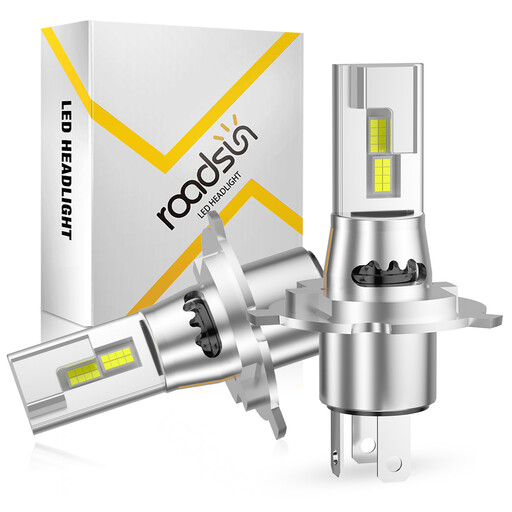
Why This Fits Their Persona: For the enthusiast who wants a noticeable jump in illumination and a crisp, modern look. This bulb is geared towards high output, making it ideal for those who frequently drive on unlit B-roads and motorways and demand maximum visibility.
It counters the durability trap with a high-speed 16,000 RPM cooling fan and aviation aluminium body. Crucially, it also features a 1:1 halogen size, ensuring its high output is channelled into a safe, focused beam rather than causing glare.
High-intensity light output with a sharp 6500K cool white colour. The advanced cooling system is designed to maintain that brightness over a long lifespan, ensuring sustained performance.
We have compiled a complete, real-time list of products that fully satisfy these strict selection criteria and UK safety regulations.
The regulations around aftermarket LED headlight bulbs have been updated. For a bulb to be compliant for an MOT, it must be E-marked, suitable for the vehicle and installed correctly to maintain a safe and legal beam pattern that does not cause glare. It is essential to purchase from a reputable source and always have your headlight alignment checked professionally after installation to ensure safety and compliance.
H4 is a specific fitment type that combines high and low beams in a single bulb. If your vehicle's owner's manual specifies "H4" or "9003/HB2" bulbs, then an H4 LED bulb is the correct physical fitment. To guarantee an easy installation without modifying the headlight housing, choose a model that advertises a 1:1 halogen size design.
If your car was manufactured after the early 2000s, it likely uses a CANbus system to monitor for failed bulbs. Because LEDs use less power than halogens, the system can mistakenly report a fault. A CANbus ready H4 bulb includes built-in electronics to prevent this. While this works for the vast majority of vehicles, a small number of highly sensitive models may still require an additional external decoder to resolve flickering or dashboard warnings.