
24/7 Customer Support

Free returns

Same-day & Next-day Delivery

Quality Guaranteed

Unlock Your Welcome Offers: FREE Delivery | Up to 80% OFF | Free 30-day JoyPlus trial
Download the APP
Straining to see the road ahead with dim, yellow halogen headlights is a common frustration for many UK drivers. Not only does poor visibility make night-time driving more tiring, but it can also be a significant safety concern. Upgrading to a modern set of H4 LED headlight bulbs is a straightforward way to improve clarity, enhance your vehicle's appearance and increase your confidence on the road, especially during those dark, rainy commutes.
However, the market is filled with technical jargon and ambitious claims, making it difficult to choose the right option. This guide is designed to cut through the jargon. As a Joybuy Product Recommendation Officer, my role is to provide clear, practical advice to help you find a reliable H4 LED bulb conversion kit that fits your vehicle and your needs. We will look at key features to consider and highlight a few recommended products to get you started.
Before diving into specific products, let's cover a few essential points to keep in mind during your search.
While many shoppers look for the "brightest H4 LED bulbs" based on lumen count, the most critical factor for safety and performance is the beam pattern. A well-designed bulb will mimic the precise light pattern of a halogen bulb, casting a sharp cut-off line on the low beam. This illuminates the road effectively without scattering light upwards and dazzling oncoming drivers. A poor beam pattern creates dark spots and glare, regardless of how bright the bulb is. Look for bulbs that specify a "perfect beam pattern" or "1:1 halogen design" for better on-road performance.
LED chips generate heat, and managing it is crucial for their lifespan and consistent performance. H4 LED bulbs typically use one of two cooling methods:
The H4 bulb fitting is also commonly referred to as a 9003 LED headlight or HB2 LED bulb. These are generally interchangeable. The most convenient options are "plug and play" designs that require no wiring modifications. However, some modern vehicles, particularly from European manufacturers, use a CANbus system to monitor the electrical system. Because LEDs draw less power than halogens, the system might mistakenly register a "bulb out" error. While many LED bulbs now come with "CANbus-ready" drivers, some sensitive vehicles may still require an additional decoder to prevent flickering or dashboard warnings.
Here are a few H4 LED bulb options that offer a compelling combination of performance, features and value.
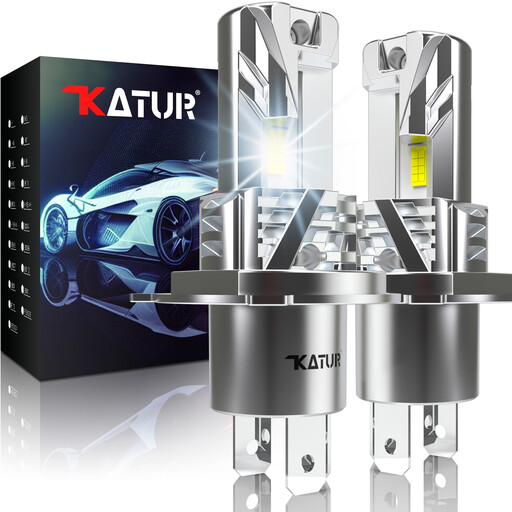
Why It Stands Out: The KATUR H4 bulb is an excellent choice for those seeking a silent, reliable and incredibly compact upgrade. Its fanless design eliminates noise and potential mechanical failure, while the 1:1 mini size ensures it fits into almost any H4 housing without modification, even those with tight-fitting dust caps.
Pros:
Who is it for? This bulb is ideal for vehicle owners who prioritise reliability and a straightforward, tool-free installation, especially those with motorcycles or cars where space behind the headlight assembly is limited.
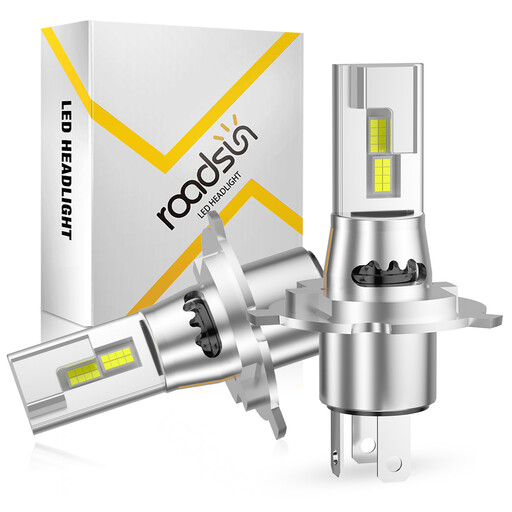
Why It Stands Out: For drivers focused on achieving a significant jump in brightness, the Roadsun H4 bulb is a strong contender. It pairs high-intensity LED chips with a powerful active cooling system to maintain peak performance. According to the brand, it delivers up to 500% more brightness than stock halogens.
Pros:
Who is it for? This is a great fit for drivers who frequently travel on unlit rural roads and prioritise maximum light output. Ensure your vehicle's headlight housing has sufficient clearance for a fan-cooled unit.
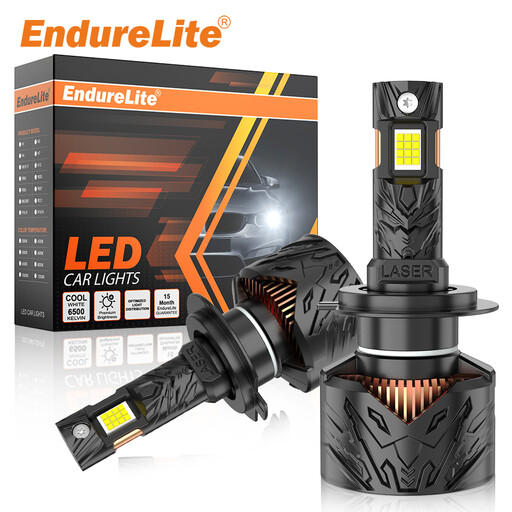
Why It Stands Out: The ENdureLite H4 bulb strikes a great balance between enhanced brightness, easy installation and broad vehicle compatibility. Its built-in intelligent driver and CANbus-ready design aim to provide a flicker-free experience for the vast majority of vehicles without needing extra components.
Pros:
Who is it for? A solid all-round choice for the everyday driver or DIY upgrader who wants a noticeable improvement in visibility and a hassle-free installation process with high electronic compatibility.
While these recommendations cover some of the most popular needs, every vehicle and driver is different. If you are looking for bulbs with specific attributes for extreme weather or simply want to browse a larger selection, our complete collection offers more choice.
Explore our full range of durable lighting solutions in the WaterProof LED category.
1. Are H4 LED bulbs a direct replacement for halogen? Yes, in most cases. H4 LED bulbs are designed to be a plug and play replacement for their halogen counterparts. The H4 fitting is standardised and also known as 9003 or HB2. You can typically remove the old bulb and install the new LED one without any modifications. Always consult your vehicle's owner manual to confirm the correct bulb type.
2. What is an H4 hi/lo beam LED bulb? An H4 hi/lo beam LED is a single bulb that performs both high-beam and low-beam functions. It contains two separate sets of LED chips. One set illuminates for the standard low beam, creating a wide pattern for normal driving. When you activate your high beams, the second set of chips turns on (or the first set brightens and refocuses via a shield), projecting a more intense, long-range beam of light for maximum visibility on empty roads.
3. Will I need a CANbus decoder for my H4 LED upgrade? It depends on your vehicle's age and make. Many modern cars use a Controller Area Network (CANbus) to monitor for burnt-out bulbs. Since LEDs use significantly less power, the system can sometimes misinterpret this as a fault and display a dashboard warning. Many LED bulbs are now "CANbus-ready" with built-in resistors to prevent this. However, for some particularly sensitive vehicles (often German brands), a separate, external CANbus decoder may still be required to ensure error-free operation.