
24/7 Customer Support

Free returns

Same-day & Next-day Delivery

Quality Guaranteed

Unlock Your Welcome Offers: FREE Delivery | Up to 80% OFF | Free 30-day JoyPlus trial
Download the APP
Replacing tired halogen lamps with H4 LED headlight bulbs can improve perceived brightness and give your car, SUV, lorry or motorcycle a fresher 6000K cool white appearance. However, a higher lumen figure alone does not guarantee a useful or road-friendly beam.
The right choice needs to match your socket, preserve high and low beam functions and manage heat effectively. It should also avoid common problems such as flickering, dashboard warnings, poor beam focus and difficult installation.
Product listings may advertise figures such as 10,000LM, 20,000LM or more per pair. These numbers can be difficult to compare because sellers may use different measurement methods. In practice, beam shape, chip positioning and optical alignment have a greater effect on usable illumination than a headline lumen claim.
A bulb with poorly positioned LED chips may create dark patches or scatter light into the eyes of oncoming drivers. Look for a 1:1 halogen replacement design and clear information about high and low beam alignment.
H4, 9003 and HB2 generally describe closely related bulb fittings, but the available space behind the headlamp can vary considerably between vehicles. A cooling fan, heat sink or rear cover may not fit every housing.
Always confirm the original bulb code in the vehicle handbook or on the removed bulb. Also check whether your car uses a sensitive lighting-control system. CANbus LED headlights can reduce flickering and error messages, but “compatible with most vehicles” does not mean guaranteed compatibility with every model.
LED retrofits can be unsuitable for some headlamp housings, even when the physical connection fits. The beam must remain correctly aimed, with a defined cut-off where applicable. After installation, check the high and low beam pattern against a wall and arrange professional adjustment if necessary.
For UK road use, confirm that the bulb and headlamp arrangement are appropriate for your vehicle. A poorly aligned upgrade can cause glare, and a failed beam or lamp condition may create problems during an MOT.
An H4 bulb combines high and low beam functions in one unit, making it different from single-function H7 or H11 bulbs. H4 9003 HB2 LED bulbs are commonly listed for the same three-terminal fitting, but the vehicle’s original part number remains the most reliable confirmation.
Check:
Look for LED chips positioned similarly to the original halogen filament. This helps the reflector or projector produce a more controlled beam. Descriptions such as ultra-thin chip spacing, “1:1 design” and “focused beam pattern” are useful indicators, although the finished result still depends on the vehicle headlamp.
6000K cool white headlights provide a clean, white appearance. Colour temperature is not the same as brightness: a cooler colour may look whiter without necessarily producing more road illumination. For fog lamps or poor-weather driving, avoid choosing solely by colour.
LED chips produce heat even though they use electricity differently from halogen bulbs. A fan-cooled LED headlight can move heat away quickly, but it may create noise and needs enough room to operate. Fanless designs are quieter and can suit narrow housings, though their heat-sink design deserves close attention.
An IP67 or IP68 waterproof headlight bulb offers a stated level of protection against dust and water under defined test conditions. It does not remove the need to fit the sealing ring correctly. Product listings may also state a 50,000-hour LED bulb operating life; treat this as the listed specification rather than a guarantee of real-world service life.
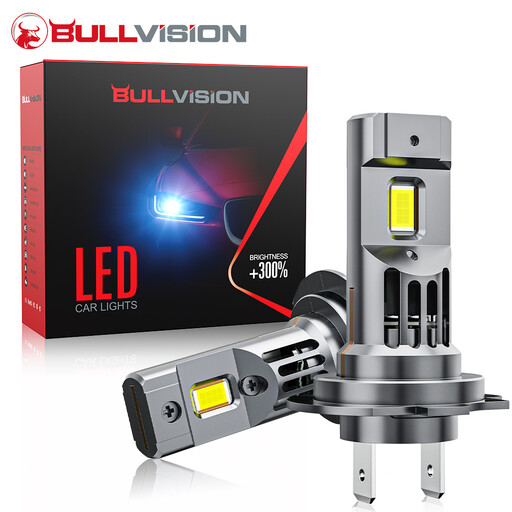
Why This Fits Their Persona: A straightforward option for drivers wanting a pair of 6000K H4 bulbs for regular commuting without adding external wiring.
The listing identifies a 1:1 size, high/low beam function and CANbus-ready design. Check the vehicle warning system carefully, as some sensitive models may require a decoder.
6000K cool white output, plug-and-play installation and a listed 50,000-hour operating life.
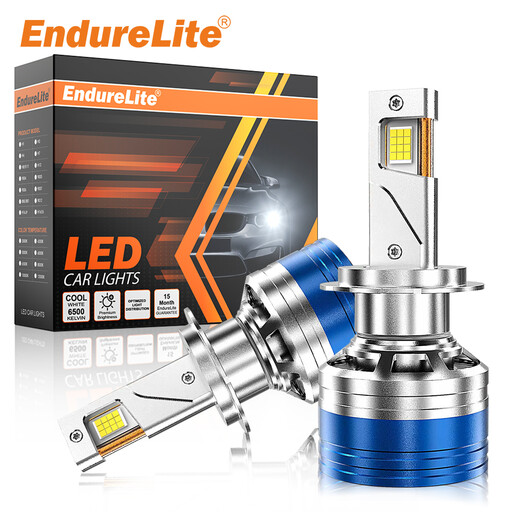
Why This Fits Their Persona: Suitable for drivers prioritising beam consistency, cooling and compatibility features in a daily-use car or SUV.
Its description specifies 1:1 beam technology, built-in intelligent driving electronics and IP68 protection rather than relying only on a brightness headline.
Fan cooling, 6000K colour temperature, high and low beam operation and a pack of two.
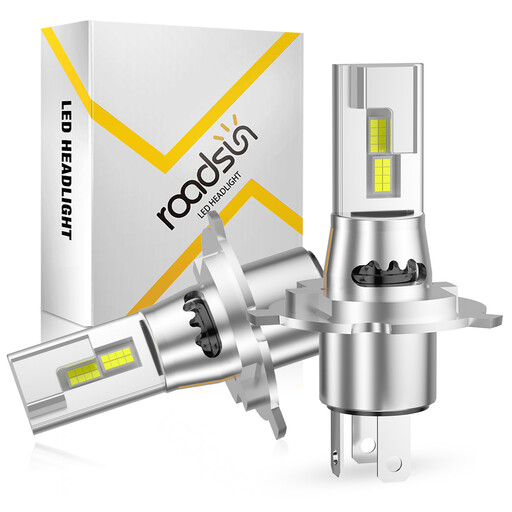
Why This Fits Their Persona: A practical match for frequent night drivers, larger vehicles and motorcycles needing H4, 9003 or HB2 compatibility.
The listing states a 1:1 halogen size, 16,000RPM cooling fan and IP68 protection. Confirm rear clearance before ordering and inspect the final beam after fitting.
Integrated high and low beam, 6500K colour temperature, plug-and-play fitting and a stated 50,000-hour service-life figure.
Road legality depends on the bulb, headlamp housing, vehicle and approval requirements. A physical fit does not automatically make an LED retrofit suitable for public roads. Check the product documentation and vehicle requirements, then verify beam alignment. Do not use a bulb that creates glare or an uncontrolled beam.
LEDs commonly have a lower stated wattage than equivalent halogen lamps, but actual consumption varies by product. Lower electrical demand may reduce load on the vehicle circuit, yet it does not guarantee fewer dashboard errors. CANbus-ready electronics can help, although some vehicles still require an additional decoder.
Many listings specify around 50,000 hours, but this is a product-rated or advertised operating-life figure. Heat, vibration, moisture, voltage fluctuations and installation quality can affect real-world durability. Keeping the housing sealed and ensuring adequate fan or heat-sink clearance can help the bulb operate as intended.