
24/7 Customer Support

Free returns

Same-day & Next-day Delivery

Quality Guaranteed

Unlock Your Welcome Offers: FREE Delivery | Up to 80% OFF | Free 30-day JoyPlus trial
Download the APP
Driving at night on unlit B-roads or navigating through a downpour can be a stressful experience with standard halogen headlights. That familiar, dim yellow glow often feels inadequate, reducing your visibility and reaction time. If you're looking for a significant improvement in nighttime driving safety and clarity, an H4 bulb upgrade to modern LED technology is one of the most effective changes you can make.
This guide is designed to help you understand the key features to look for in H4 LED headlight bulbs. We'll cut through the technical jargon and provide clear, practical advice to help you choose a reliable product that fits your vehicle and enhances your driving experience.
Upgrading your headlights isn't just about finding the brightest bulbs. To ensure safety, compliance and longevity, consider these crucial factors.
The single most important factor for any headlight upgrade is the beam pattern. H4 bulbs are dual-filament units, providing both H4 high and low beam functions. A well-designed LED bulb will have its light-emitting chips positioned to precisely mimic the location of the original halogen filaments.
This ensures a sharp, clean cut-off line on the low beam, illuminating the road ahead without dazzling oncoming drivers. A poor beam pattern not only creates dangerous glare but can also be a reason for an MOT failure. Look for bulbs that specify a "1:1 beam pattern" or "perfect beam pattern" technology, as this indicates a focus on safety and proper light distribution.
Many modern vehicles use a Controller Area Network (CANbus) system to monitor the vehicle's electrical components. Because LED bulbs draw significantly less power than halogens, the CANbus system can mistakenly interpret this as a fault, leading to a "bulb out" warning on your dashboard, flickering lights or radio interference.
To avoid these issues, it is wise to select a CANbus H4 LED bulb. These kits come with a built-in driver or resistor that communicates correctly with the vehicle's computer, ensuring a smooth, error-free performance on the vast majority of cars on UK roads.
While searching for the "brightest H4 LED bulbs" is common, the focus should be on usable light. Brightness is measured in lumens (LM), but how that light is focused is more important than the raw number.
Colour temperature, measured in Kelvin (K), determines the colour of the light. Halogen bulbs are typically around 3200K, producing a warm, yellowish light. Most 6000K H4 bulbs produce a crisp, cool white light that is closer to natural daylight. This colour improves contrast and makes it easier to spot hazards, road signs and markings from a distance.
Based on key features like installation ease, beam quality and system compatibility, here are our recommendations for your next headlight upgrade.
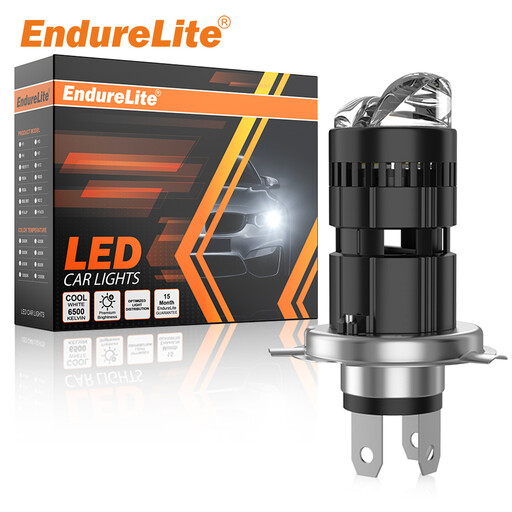
Why It Stands Out: This bulb is an excellent entry point into the world of LED upgrades. Its main advantage is the true plug and play headlights design, with a 1:1 size ratio compared to a standard halogen H4. This means no modifications are needed to fit it into the housing, making installation incredibly straightforward.
Pros:
Who is it for? This is a great option for drivers who need to replace a single burnt-out bulb and want to test the benefits of LED lighting without committing to a full pair. It's also ideal for those who prioritise a quick and simple DIY installation.
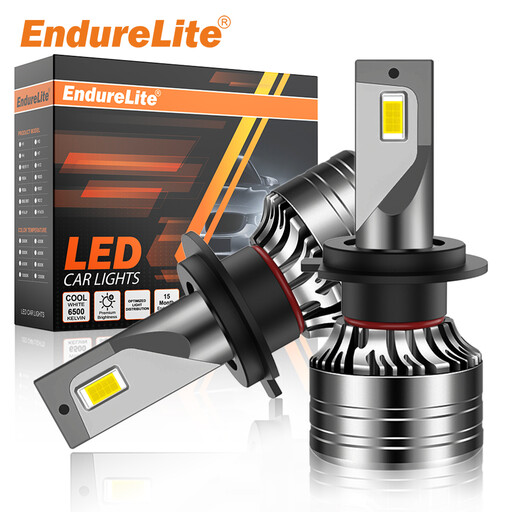
Why It Stands Out: This pack of two offers a complete and consistent upgrade for your vehicle's front end. By replacing both bulbs at once, you ensure a perfectly matched colour temperature and brightness level. The manufacturer states a combined brightness of 20,000LM and a 6000K Cool White colour for exceptional road illumination.
Pros:
Who is it for? This is the ideal choice for any driver looking to perform a full H4 bulb upgrade. It provides everything needed for a balanced, high-performance lighting system in one convenient package.

Why It Stands Out: The Bullvision H4 bulb incorporates a mini projector lens directly into its design. This is a standout feature, as the lens helps to shape the light into an exceptionally sharp and focused beam, providing a distinct cut-off line that is especially beneficial for vehicles with older reflector-style headlight housings.
Pros:
Who is it for? This bulb is particularly suited for car enthusiasts and owners of vehicles with reflector headlights who are seeking the sharpest possible cut-off and the most controlled beam pattern from an H4 LED conversion kit UK.
Every vehicle has unique requirements, and your ideal lighting solution might be different. If you haven't found the perfect match here or wish to explore other automotive lighting technologies, we invite you to browse our complete collection.
Explore Our Full LED Lighting System Range
The legality of aftermarket LED headlight bulbs in the UK depends on whether they can produce a safe and compliant beam pattern. For a vehicle to pass its MOT, the headlights must have a correctly aimed beam with a sharp cut-off to avoid dazzling other road users. While many high-quality kits are designed to meet these standards, it is always recommended to check the latest DVSA guidelines. After installation, have your headlight aim checked by a professional to ensure it is correct.
It depends on your vehicle. Many modern cars, particularly from European manufacturers like VW, Audi, BMW and Mercedes-Benz, have sensitive CANbus systems. While the products recommended above are "CANbus-ready" and work without issue on most vehicles, some may still require an additional decoder. If you are unsure, checking forums specific to your car model can often provide clarity.
For most DIYers, the installation is straightforward. The majority of modern kits are designed as plug and play headlights. The process typically involves unplugging the wiring, removing the old halogen bulb, inserting the new LED bulb and reconnecting the plug. For safety, always ensure the vehicle's lights are off and the old bulbs have had time to cool down before you begin. Wearing gloves is also a good practice to keep the new bulbs clean.