
24/7 Customer Support

Free returns

Same-day & Next-day Delivery

Quality Guaranteed

Unlock Your Welcome Offers: FREE Delivery | Up to 80% OFF | Free 30-day JoyPlus trial
Download the APP
Struggling to see clearly on unlit roads? If your car's factory-fitted halogen headlights cast a dim, yellowish glow, you're not alone. This is a common issue for many UK drivers, impacting both confidence and safety during night-time driving. An effective H4 halogen upgrade can transform your visibility, providing a brighter, clearer view of the road ahead.
As the Joybuy Product Recommendation Officer, my role is to help you navigate the options for car headlight replacement bulbs. This guide cuts through the technical jargon to provide practical advice, helping you choose the right H4 LED headlight bulbs for your vehicle without the marketing hype. We will look at key features to consider and highlight a few recommendations to get you started.
Upgrading your headlights is a straightforward process, but a few key details can make all the difference. Keep these points in mind to ensure you get a reliable and effective result.
The most critical factor is the beam pattern. A well-designed LED bulb should replicate the precise filament position of a halogen H4 bulb. This ensures the light is focused correctly onto the road, illuminating your path without creating glare that can dazzle oncoming drivers. Look for bulbs described as having a "1:1 halogen design" or a "super-focused beam pattern". This is essential for safe and considerate driving on UK roads.
Many modern vehicles use a Controller Area Network (CANbus) system to monitor the car's functions, including the headlights. Because LED bulbs draw less power than halogens, the CANbus system can mistakenly think a bulb has failed, resulting in a dashboard warning light or flickering. To prevent this, it is wise to choose an H4 LED canbus error free bulb with a built-in decoder. This ensures seamless integration with your vehicle's electronics.
While it's tempting to go for the brightest bulbs available, the focus of the beam is more important than raw lumen numbers. That said, a significant increase in brightness is the main reason for the upgrade. For colour, temperature is measured in Kelvin (K). A 6000K H4 cool white bulb is a popular choice, offering a modern, crisp white light that improves contrast and makes road signs and hazards more visible. This is a noticeable improvement over the typical 3200K yellow hue of halogen bulbs.
Based on features that matter to UK drivers—such as easy installation, reliable performance and a correct beam pattern—here are a few options to consider for your vehicle.
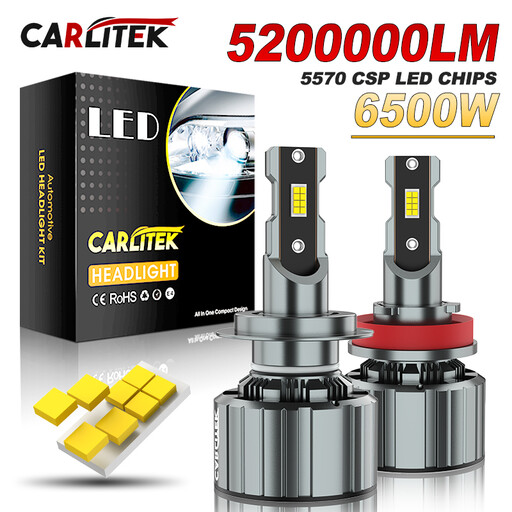
Why It Stands Out: The CARLitek H4 bulbs are centred around a 1:1 design that mimics the original halogen filament. This focus on beam pattern accuracy makes them a responsible choice, minimising glare for other road users. The built-in CANbus decoder and simple plug and play H4 headlight design make for a hassle-free installation.
Pros:
Who is it for? This is an excellent all-round choice for drivers seeking a straightforward and effective H4 halogen upgrade with a focus on safety and simple installation.
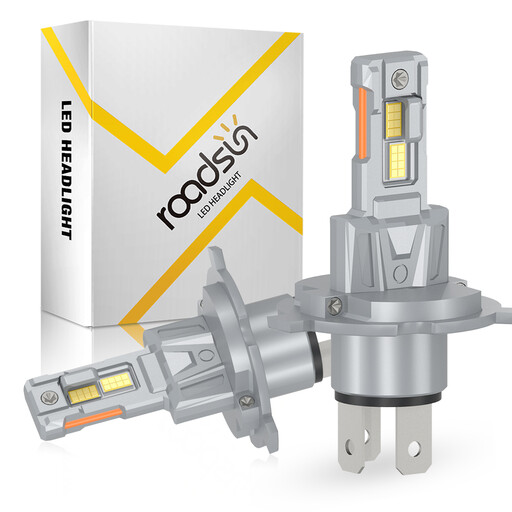
Why It Stands Out: This Roadsun bulb features a fanless cooling system. Instead of a mechanical fan, it uses an integrated aluminium alloy body to dissipate heat. This eliminates any potential noise and removes a moving part that could fail over time, making it a very durable option. Its compact, in-line design is also ideal for headlight housings with limited space.
Pros:
Who is it for? Ideal for vehicle owners who prefer a silent, solid-state cooling solution or have limited space behind their dust covers. It's also a strong contender for off-road vehicles that endure harsh conditions.
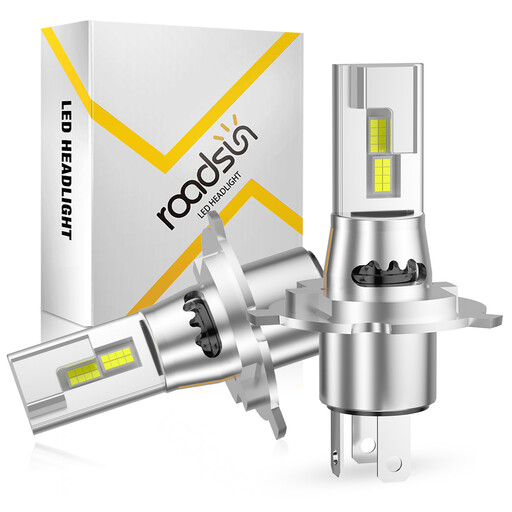
Why It Stands Out: For those seeking a significant jump in illumination, this latest model from Roadsun offers a substantial increase in brightness. It combines this powerful output with a 6500K cool white colour for maximum road clarity. An extremely high-speed 16,000 RPM cooling fan works to manage the extra heat, ensuring the bulb's performance remains stable over its lifespan.
Pros:
Who is it for? This is for the driver who prioritises maximum light output. If you frequently drive on dark country lanes or unlit motorways, these bright H4 LED bulbs offer a powerful lighting solution.
The H4 bulb is one of the most common fittings, but every vehicle and driver has different needs. If these recommendations aren't quite what you're looking for, or if you'd like to compare more models, there are many other choices available.
Explore our full range of low beam bulb options to find the perfect fit for your car.
Yes, in most cases. LED bulbs with an H4 9003 bulb fitting are designed to be a direct, plug and play H4 headlight replacement for their halogen counterparts. The installation process is typically identical. However, it is always a good idea to check the dimensions of the LED bulb, particularly the cooling fan or heatsink at the back, to ensure it will fit inside your vehicle's headlight housing with the dust cover on.
This can happen on vehicles with sensitive computer systems (CANbus). The lower power consumption of LEDs can trigger a "bulb out" warning. To avoid this, select a bulb that is advertised as H4 LED canbus error free or has a built-in decoder. These are designed to communicate correctly with your car's system. For a small number of highly sensitive vehicles, an additional external decoder may still be required.
Not at all for most people. The process is usually very simple and requires no special tools. It involves unplugging the electrical connector, releasing the clip holding the old bulb, swapping it for the new LED bulb and re-securing the clip and connector. Always remember to turn off your car and let the old bulbs cool down completely before you begin. Never touch the LED chips with your bare hands, as oils from your skin can damage them.