
24/7 Customer Support

Free returns

Same-day & Next-day Delivery

Quality Guaranteed

Unlock Your Welcome Offers: FREE Delivery | Up to 80% OFF | Free 30-day JoyPlus trial
Download the APP
Upgrading your car’s standard halogen headlights to modern H4 LED headlight bulbs seems like a straightforward way to improve night-time visibility and give your vehicle a fresh look. However, the market is filled with confusing specifications and overblown marketing claims. Many UK drivers invest in a car headlight upgrade kit only to be met with dashboard error lights, a poor beam pattern that dazzles other drivers or bulbs that fail within months.
As the Joybuy Product Recommendation Officer, my role is to help you navigate these issues. We will look past the hype and focus on the critical factors that determine a successful and lasting upgrade. Here are the common traps to avoid.
To ensure you get a reliable and effective upgrade, focus on these three non-negotiable features.
The single most important factor for safety and legality is the beam pattern. A good LED bulb should precisely replicate the light source position of the halogen bulb it replaces. Look for models that specify a 1:1 halogen design or use high-quality CSP (Chip Scale Package) chips with minimal spacing. This ensures the light is correctly focused by your vehicle's headlight reflector or projector housing, creating a sharp cut-off line for the low beam and a focused high beam. This illuminates the road, not the eyes of other drivers.
If your car was manufactured after the mid-2000s, especially if it's a European brand, it likely has a CANbus system. To avoid electrical gremlins, you need a CANbus ready LED bulb. These bulbs have integrated circuitry (drivers or resistors) that communicates correctly with your car's computer, preventing false "bulb out" warnings and ensuring stable, flicker-free operation. While some bulbs claim 99% compatibility, a few sensitive vehicles may still require an additional external decoder.
A long-lasting LED bulb needs an effective thermal management system. You will typically find two types:
Both are valid options, but the choice depends on the bulb's power output and the space available in your headlight assembly.
Instead of a generic list, we have matched specific H4 LED bulbs to the drivers who will benefit most from their features.
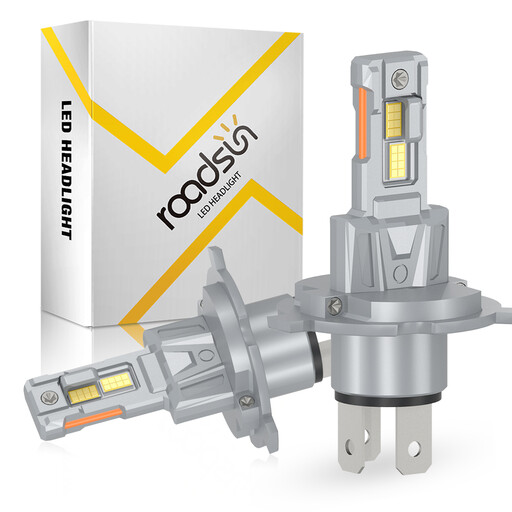
Why This Fits Their Persona: This driver wants a noticeable improvement over halogen without complexity. The fanless, all-in-one design is ideal for a fit-and-forget installation, offering a simple and reliable upgrade for someone who values practicality and ease of maintenance.
Its fanless construction eliminates the risk of a failing mechanical part, directly countering the "short-lived upgrade" pitfall caused by cheap, noisy fans. The focus on a true plug and play headlights design simplifies installation.
Silent operation due to the passive cooling system. The compact, inline design fits easily into headlight housings with limited space.
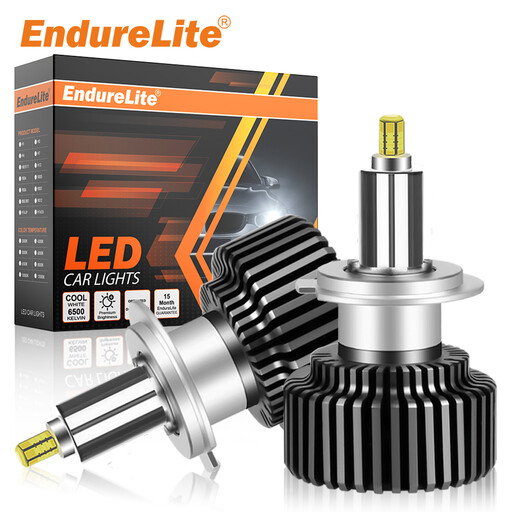
Why This Fits Their Persona: This driver owns a newer vehicle and their primary concern is avoiding dashboard errors and flickering. They want a clean, modern 6000K cool white light that integrates seamlessly with their car's electronics.
It directly tackles the "Universal Fit" myth by including a built-in intelligent driver and a CANbus ready design, which is stated to be compatible with 99% of vehicle systems, providing peace of mind for owners of modern cars.
High electronic compatibility reduces the risk of errors. The 1:1 beam pattern technology ensures the bright output is focused correctly.
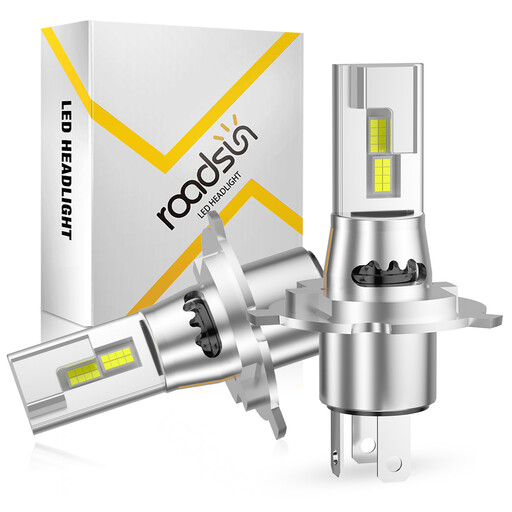
Why This Fits Their Persona: This user frequently drives on unlit rural roads or motorways at night. Their priority is maximum safe illumination to see further down the road and identify hazards earlier. They need high performance that lasts.
It counters the "short-lived upgrade" trap with a powerful 16,000 RPM cooling fan and aviation aluminium housing. This active cooling system is designed to sustain high brightness levels without premature dimming or failure.
High brightness output for enhanced long-range visibility. The active cooling fan ensures performance is maintained during long periods of use.
We have compiled a complete, real-time list of products that fully satisfy these strict selection criteria and UK safety regulations.
This is a crucial point for UK drivers. According to current DVSA guidelines, fitting LED bulbs into a headlight unit that was originally designed for halogen bulbs is not technically permitted for road use on vehicles first used on or after 1st April 1986. This is because the entire headlight unit has not been type-approved with an LED source, which can lead to an MOT failure. Many of these products are therefore intended for off-road use. We strongly advise you to check the latest government guidelines before fitting them to a road-going vehicle.
As a general rule, most European cars manufactured from the mid-2000s onwards (such as VW, Audi, BMW and Mercedes-Benz) and many other modern vehicles use a CANbus system. The easiest way to tell is if your dashboard currently displays a warning when a bulb fails. If it does, you will almost certainly need a CANbus ready LED bulb to prevent errors when you upgrade.
The "K" stands for Kelvin, which measures colour temperature. A standard halogen bulb is around 3200K, producing a warm, yellowish light. 6000K cool white car bulbs emit a crisp, white light that is much closer to natural daylight. This can improve contrast, making road signs and markings appear sharper and more defined during night-time driving.