
24/7 Customer Support

Free returns

Same-day & Next-day Delivery

Quality Guaranteed

Unlock Your Welcome Offers: FREE Delivery | Up to 80% OFF | Free 30-day JoyPlus trial
Download the APP
Replacing tired halogen bulbs can improve road illumination, but choosing H4 LED headlight bulbs is not simply a matter of selecting the highest lumen figure. Fitment, beam control, cooling, electrical compatibility and UK road-use requirements all matter.
This guide explains the specifications worth checking and highlights suitable options for different driving needs, including H4 9003 HB2 LED bulbs, HB4 9006 LED bulbs, motorcycles, SUVs, trucks and powersport vehicles.
Listings may quote impressive output figures such as 20,000LM or 30,000LM per pair. These are useful for comparing the product specification, but they do not automatically guarantee a well-controlled beam on your particular vehicle. Headlight housing design, LED chip position and reflector compatibility affect the light pattern seen on the road.
A bulb with poorly positioned chips may create dark areas or excessive glare, even if its stated output is high. Look for a 1:1 halogen replacement bulb design, thin chip spacing and an adjustable collar where available.
A standard connector does not guarantee that a bulb will fit inside the headlight housing. Check:
CANbus compatible LED bulbs can reduce flickering or dashboard warnings, but “compatible” is not necessarily universal. Some vehicles may still need an additional decoder.
LEDs produce less wasted heat at the light-emitting surface than halogen bulbs, but the electronics and rear housing still require thermal management. Fan-cooled LED bulbs can move heat quickly, while fanless LED bulbs remove a moving part and may be quieter.
For UK rain, road spray and winter grit, check the stated ingress rating. IP65, IP67 and IP68 waterproof LED headlight bulbs offer different levels of protection, but the rating applies to the product when correctly installed and sealed. A damaged dust cap or poorly fitted sealing ring can still allow moisture into the housing.
H4 bulbs combine high and low beam functions in one bulb, making them common on cars, motorcycles and some commercial vehicles. H4 is also commonly listed as 9003 or HB2. By contrast, HB4 is generally cross-referenced with 9006 and is often used for low beam, fog or auxiliary applications.
Do not substitute one type for another solely because the connector appears similar. Confirm the original part number in the vehicle handbook or on the removed bulb.
Many car LED headlight bulbs use 6000K cool white bulbs, while some products specify 6500K. This produces a whiter appearance than traditional halogen light. Colour temperature is not the same as brightness, and a cooler colour does not automatically create better visibility in rain or fog.
For everyday UK driving, focus on an accurate beam cutoff and correct alignment rather than choosing a colour based only on appearance.
Fan-cooled LED bulbs commonly use an aluminium body and a rear fan, with listings specifying fan speeds such as 10,000 or 16,000 RPM. Fanless designs use a compact heat sink instead. Claimed operating lives of 50,000 to 70,000 hours should be treated as manufacturer or listing estimates rather than a guarantee of service life in every vehicle.
Also check whether the rear assembly will fit under the original dust cover. A bulb that cannot dissipate heat or seal correctly may not deliver reliable long-term performance.
After installation, test both high and low beam functions, inspect the beam pattern and adjust the headlamps if needed. Incorrect alignment can dazzle other road users. UK vehicle inspections also assess headlamp aim, condition and operation, so check current MOT requirements and your vehicle manufacturer’s guidance before using an LED retrofit on public roads. It is also sensible to confirm insurance implications where relevant.
Switch off the lights, allow the old bulb to cool and wear gloves during installation. Avoid touching LED chips or fan blades, and make sure the sealing ring is seated correctly.
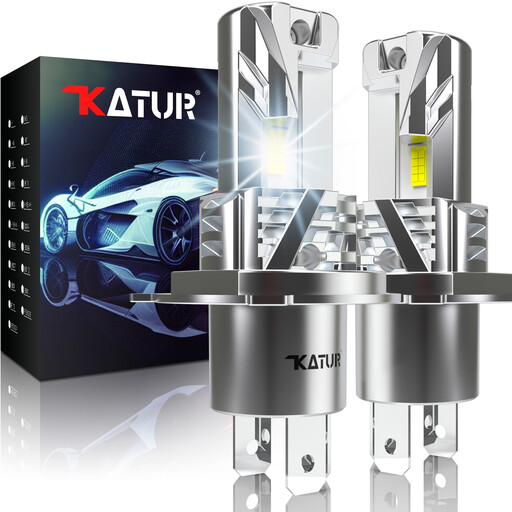
Why This Fits Their Persona: A practical choice for DIY owners seeking compact H4 9003 HB2 LED bulbs without a rear fan or external driver.
Its fanless construction avoids fan noise and removes a moving component. Confirm dust-cap clearance and CANbus needs before ordering.
6000K light, 1:1 mini halogen form, integrated design and plug-and-play installation.
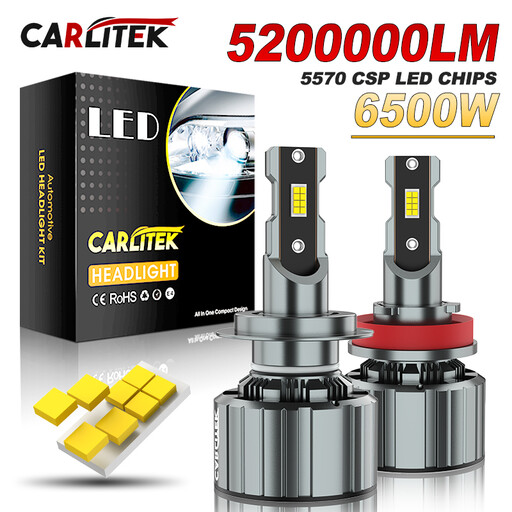
Why This Fits Their Persona: Suits drivers prioritising beam positioning, weather protection and integrated electrical compatibility in one H4 set.
The listing specifies 1:1 filament positioning, built-in CANbus technology and IP68 protection, addressing beam and compatibility concerns.
High and low beam operation, 12V specification, aluminium housing and stated 50,000-hour operating life.
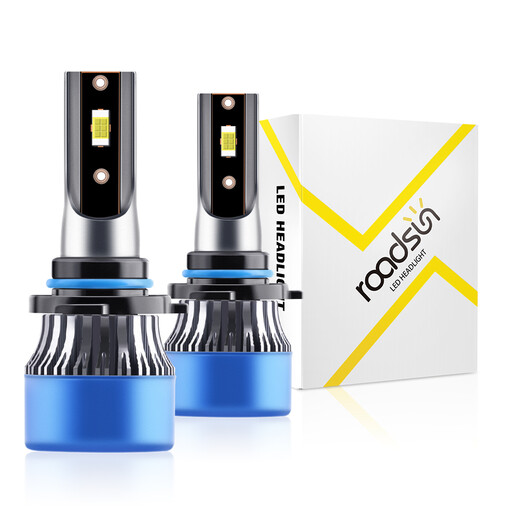
Why This Fits Their Persona: Designed for owners of cars, SUVs, trucks, motorcycles or powersport vehicles using 9006/HB4 sockets.
It combines a stated IP68 rating with active cooling, helping buyers address moisture and heat concerns in exposed or demanding applications.
1:1 fitment, plug-and-play connection, built-in fan and stated operating range from -40°C to 85°C.
We have compiled a complete, real-time list of products that fully satisfy these strict selection criteria and UK safety regulations.
Road-use suitability depends on the vehicle, headlamp approval, bulb design and current UK requirements. An LED retrofit may not be suitable for every halogen housing. Check the vehicle handbook, current MOT guidance, insurer requirements and the product information before fitting. Always verify beam alignment after installation.
Many listings state operating lives between 50,000 and 70,000 hours. These are product claims and should not be treated as a guaranteed lifespan. Heat, voltage, vibration, moisture and daily usage all influence real-world durability. Correct installation and effective cooling are important.
The answer depends on the specific wattage of the LED bulb and the original halogen. Compare the stated wattage rather than assuming every LED replacement consumes less power. Also check for CANbus behaviour, as a lower electrical load can sometimes trigger a vehicle warning system.