
24/7 Customer Support

Free returns

Same-day & Next-day Delivery

Quality Guaranteed

Unlock Your Welcome Offers: FREE Delivery | Up to 80% OFF | Free 30-day JoyPlus trial
Download the APP
Upgrading your car's standard halogen bulbs to modern H4 LED headlight bulbs can feel like a simple way to improve night-time visibility and safety. However, the market is flooded with options and many UK drivers find themselves caught out by misleading claims and poor-quality products that are not only a waste of money but can also be dangerous.
As a Joybuy Product Recommendation Officer, my role is to help you navigate this landscape. We will look at the common pitfalls to avoid and the essential features to check, ensuring your next car headlight upgrade is a successful one.
Before you add any bulbs to your basket, be aware of these frequent issues that catch out unwary buyers:
To make a smart purchase, focus on the technical specifications that directly impact performance and legality on UK roads, not just the marketing buzzwords.
The single most important factor is the beam pattern. An H4 bulb is a dual-filament design, providing both H4 high and low beam functions. A quality LED replacement must replicate the precise positioning of the original halogen filaments.
Most cars built after the mid-2000s use a Controller Area Network (CANbus) to monitor the vehicle's systems, including the headlights. Since LED bulbs draw less power than halogens, the system can mistakenly believe a bulb has failed, leading to dashboard errors or flickering.
An LED chip produces heat, and that heat must be drawn away effectively to maintain brightness and ensure a long operational life. There are two main types of cooling systems:
The choice depends on the space within your headlight housing and your preference for silent operation versus maximum cooling efficiency.
Based on these critical criteria, here are a few options from our catalogue, matched to different types of UK drivers.
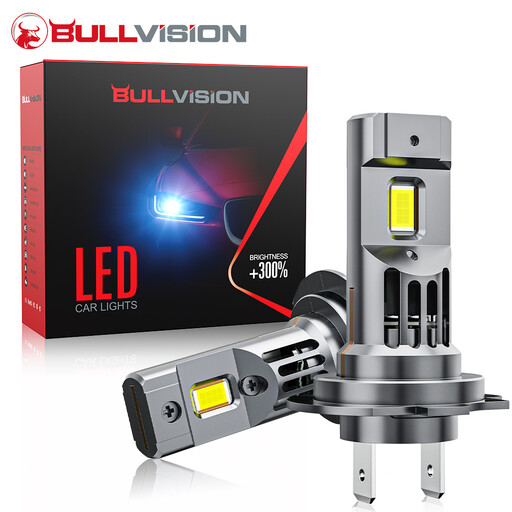
Why This Fits Their Persona: This is a practical, cost-effective car headlight upgrade for daily driving on lit urban streets and motorways. It provides a significant improvement in visibility over old halogens without an excessive price tag.
Its 1:1 size design focuses on replicating the halogen beam pattern, helping to avoid the glare trap. The built-in driver aims to provide a straightforward installation on many common UK vehicles.
Features a 6000K cool white H4 light for a modern look and clear visibility. The active fan cooling system is designed for efficient heat management.
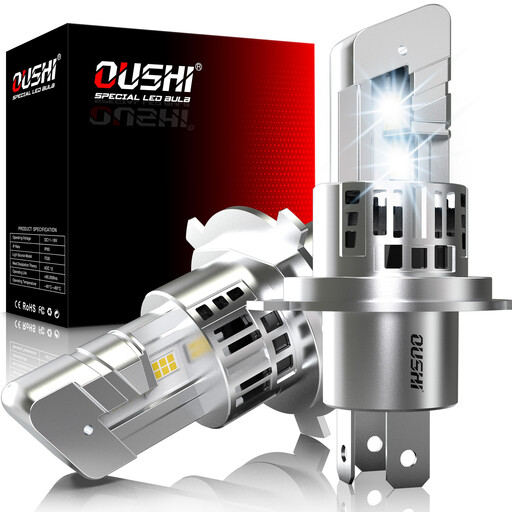
Why This Fits Their Persona: For the driver who frequently travels on unlit B-roads and wants maximum safe illumination. This bulb is geared towards high output and durability for confident night-time driving.
It pairs high brightness with a focus on a 1:1 halogen size to maintain beam control. The high-speed turbo fan and aviation aluminium body directly address the short lifespan trap by prioritising heat dissipation.
Offers very bright H4 LED bulbs with a high lumen output and a crisp 6500K colour. The latest generation CANbus system is designed for enhanced compatibility with European vehicles.
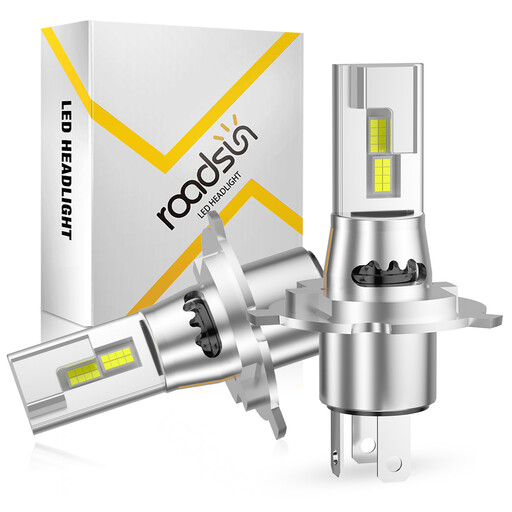
Why This Fits Their Persona: Perfect for the car owner who wants to perform the upgrade themselves but is worried about compatibility issues. The emphasis is on a hassle-free, error-free installation.
This bulb directly counters the "Plug & Play" myth by making its 1:1 halogen size a primary feature. This design significantly increases the chance of it fitting without modification to the housing or dust cap.
A true plug and play headlight design for simple installation. It also features an IP68 waterproof rating, making it a durable choice for the unpredictable UK weather.
We have compiled a complete, real-time list of products that fully satisfy these strict selection criteria and UK safety regulations.
As of 2026, the rules for using LED conversion bulbs in headlights originally fitted with halogen bulbs are strict. For a vehicle to pass its MOT, the LED bulb must be a like-for-like replacement that maintains the original beam pattern without causing glare. It is essential to choose high-quality bulbs that are specifically designed to replicate the halogen filament's position. Always check the latest DVSA guidelines before fitting.
This is a common issue in many modern cars. It happens when the car's CANbus system detects the lower power draw of the LED and assumes the bulb is faulty. To avoid this, you should purchase CANbus ready H4 bulbs which are designed to work with these systems. For some particularly sensitive vehicles, an additional CANbus decoder may still be necessary.
The 'K' stands for Kelvin and it measures the colour temperature of the light. A standard halogen bulb is typically around 3200K (a warm, yellowish light). A 6000K cool white H4 bulb produces a pure, neutral white light. A 6500K bulb is slightly cooler, with a subtle blue tint, similar to natural daylight. Both offer excellent clarity and the choice between them is largely a matter of personal preference.