
24/7 Customer Support

Free returns

Same-day & Next-day Delivery

Quality Guaranteed

Unlock Your Welcome Offers: FREE Delivery | Up to 80% OFF | Free 30-day JoyPlus trial
Download the APP
Driving on poorly lit British roads with standard halogen bulbs can feel like navigating with a pair of candles. The dim, yellowish light reduces visibility and can make spotting hazards on country lanes or in heavy rain a real challenge. Upgrading to an H7 LED headlight bulb seems like a straightforward solution, but the market is flooded with options that often over-promise and under-deliver.
As a Joybuy Product Recommendation Officer, my role is to help you see through the marketing jargon. Many drivers find themselves disappointed with bulbs that don't fit, trigger dashboard errors or fail prematurely. Before you make a purchase, let's look at the common pitfalls to avoid.
To make a smart choice, focus on the technical specifications that actually impact performance and safety. Here are the three non-negotiable factors to check.
A proper H7 bulb upgrade is defined by its beam pattern, not just its brightness. The goal is to replicate the focused output of a high-quality halogen bulb, but with greater intensity and clarity. Look for bulbs that specify a 1:1 beam pattern or use ultra-thin chip spacing. This ensures the light is directed onto the road and provides a sharp cut-off line, preventing glare that can dazzle other road users—a key consideration for passing an MOT.
For colour, a 6000K cool white temperature is a popular choice. This crisp, modern xenon white headlights look is close to natural daylight, which can help in reducing eye strain and improving the visibility of road signs and markings during night-time driving.
Before buying, compare the bulb's dimensions to your original halogen. A true plug and play design should be a near-identical size, requiring no extra adapters or modifications to fit into the housing.
Cooling is also critical for longevity.
The Controller Area Network (CANbus) is your car's central nervous system. It monitors whether all components, including your headlights, are functioning correctly. Standard halogen bulbs have a specific electrical resistance; LED bulbs use far less power, which can make the CANbus system think a bulb has failed, triggering a warning.
A CANbus ready LED has built-in resistors to mimic the load of a halogen bulb. However, the sensitivity varies between car manufacturers. Always check the product description for any specific exclusions (e.g., warnings for BMW, VW or Mercedes-Benz), as some vehicles may still require an additional decoder for flicker-free, error-free operation.
Based on these practical criteria, we've matched several H7 LED bulbs to different UK driver profiles.
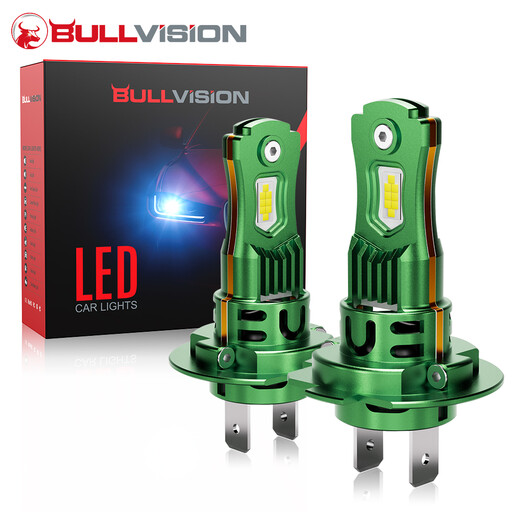
Why This Fits Their Persona: Ideal for the UK driver who wants a noticeable and straightforward safety upgrade for their daily commute. The focus is on reliability and easy installation for common vehicle models like a Ford Fiesta or Vauxhall Corsa.
Its 1:1 mini size design directly counters the "universal fit" myth, making it a genuine plug-and-play option for housings with limited space. The product description is also transparent about needing a decoder for certain European cars.
Provides a significant brightness increase over halogen in a compact, easy-to-install package. The fan-based cooling system is efficient for its size.
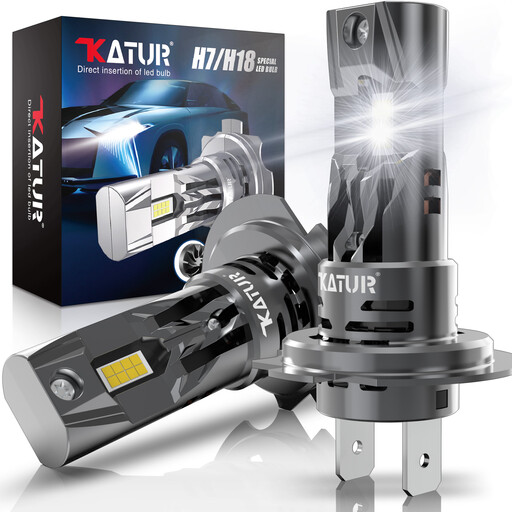
Why This Fits Their Persona: For the driver who values high performance and maximum illumination. This user likely drives a performance-oriented vehicle and wants a powerful, bright H7 bulb with a crisp beam for spirited driving on B-roads.
This bulb addresses the CANbus gamble with a smart external driver, which provides more robust anti-interference and decoding functions than cheaper, fully integrated designs. This improves compatibility with sensitive vehicle systems.
The combination of high power output (100W per pair) and a 16,000 RPM turbo fan delivers exceptional brightness and effective heat management, crucial for sustained performance.
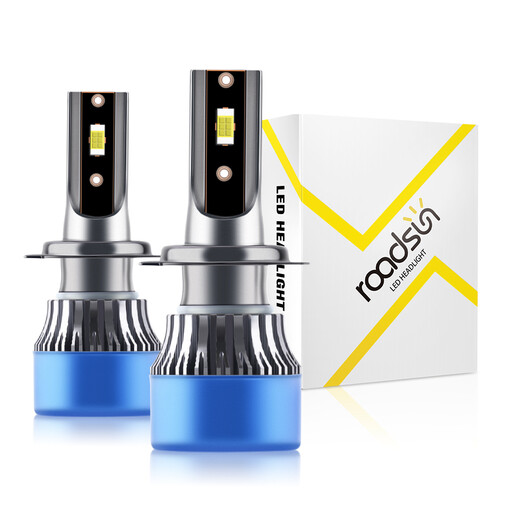
Why This Fits Their Persona: Built for those who take their vehicles off the beaten path. This user needs an H7 fog light bulb or headlight for a UTV, ATV or modified 4x4 that can withstand vibration, mud and water while providing intense light for trail visibility.
Unlike standard car headlight bulbs, this model is specifically marketed with a durable build for all-weather resistance, including the ability to handle extreme temperatures and impacts common in off-roading, addressing the fragility of less robust bulbs.
Its primary advantage is its rugged construction and intense brightness, designed to cut through dust and darkness on uneven terrain. The energy efficiency is also a plus, reducing strain on the vehicle's electrical system during demanding use.
We have compiled a complete, real-time list of products that fully satisfy these strict selection criteria and UK safety regulations.
This is a common and important question for UK drivers. The legality of an LED upgrade in a halogen housing depends on the final beam pattern. For a vehicle to pass its MOT, the headlights must produce a clear, sharp cut-off pattern that does not cause glare to oncoming traffic. Many high-quality LED bulbs are designed to do this, but it is essential to check the beam alignment against a wall or garage door after installation. If the beam is scattered or points too high, it will likely fail the test and be unsafe for road use.
The main difference is the heat dissipation method. Fan-cooled bulbs use a miniature fan to actively draw heat away from the LED chip, which often allows them to be more powerful and brighter. The downside is the fan is a moving part that could fail. Fanless bulbs use a passive aluminium heat sink. They are completely silent and more reliable as there are no moving parts, but they may not achieve the same peak brightness as their fan-cooled counterparts. The choice depends on your priority: maximum brightness or silent, long-term reliability.
For most vehicles, installing an H7 LED bulb is a DIY task that doesn't require a professional. The process typically involves opening the headlight housing, removing the old bulb and inserting the new one. However, on some car models, accessing the bulb can be difficult and may require removing the battery or other engine bay components. It is always advisable to consult your vehicle's owner manual first to understand the specific steps for your car.