
24/7 Customer Support

Free returns

Same-day & Next-day Delivery

Quality Guaranteed

Unlock Your Welcome Offers: FREE Delivery | Up to 80% OFF | Free 30-day JoyPlus trial
Download the APP
Replacing standard halogen lamps can make a noticeable difference to how your car, motorbike, ATV or UTV looks and how the road appears at night. However, choosing H7 LED headlamp bulbs is not simply a matter of selecting the highest lumen figure on a product page.
Socket compatibility, beam control, cooling and UK road-use requirements all matter. This guide explains the main buying pitfalls and compares suitable options for different types of driver.
Listings may advertise figures such as 20,000LM, 30,000LM or “300% brighter”. These are product-listing claims and should not be treated as a guarantee of real-world road illumination. A poorly positioned LED can create glare, dark patches or scattered light, even when its stated output is high.
The position and spacing of the LED chips are important because they influence how closely the bulb imitates the original halogen filament. Look for descriptions mentioning a 1:1 beam pattern, focused light distribution or ultra-thin chip spacing.
An H7 bulb fits an H7 socket, but the headlamp housing, retaining clip, dust cover and vehicle electronics can vary considerably. Some cars monitor bulb load and may show a dashboard warning, flicker or require an additional decoder.
A CANbus-ready LED bulb can reduce compatibility issues on many vehicles, but no generic compatibility statement replaces checking your vehicle’s handbook and the original bulb marking. Pay particular attention to models with sensitive lighting systems, including some Volkswagen, Mercedes-Benz and BMW vehicles.
LEDs produce heat around the chip and need effective heat management. Fan-cooled H7 car headlamp bulbs can offer active cooling, while fanless designs avoid moving parts and operating noise. Neither approach is automatically suitable for every housing.
Before ordering, check whether the rear of the bulb has enough room for a fan, heat sink or driver. A bulky base may prevent the dust cover from closing properly, allowing moisture or dirt into the lamp.
First remove the old lamp only after the vehicle is switched off and the bulb has cooled. Confirm that it is marked H7, rather than H4, H1, H8, H9, H11, 9005, 9006 or 9012. These are different fitments, even when a listing groups several sizes together.
Also check whether your vehicle uses the H7 bulb for dipped beam, main beam or fog lights. H7 LED fog light bulbs may fit the socket but still need to produce a suitable pattern for the specific reflector.
Many products offer 6000K LED headlamp bulbs, producing a cool white appearance. Other listings specify 6500K. A higher Kelvin number does not automatically mean more useful light; it mainly describes the colour tone. Cool white can look crisp, while excessively blue-looking light may be less suitable for poor weather.
For UK driving, prioritise a controlled beam and safe visibility rather than colour alone. After installation, check the beam height and alignment, particularly if the replacement changes the position of the light source.
Useful specifications include:
For public-road use, check whether the complete retrofit is permitted for your vehicle and lamp housing. UK lighting requirements can depend on the vehicle, headlamp approval and how the bulb is used. A product being plug-and-play does not by itself confirm road legality or MOT compliance.
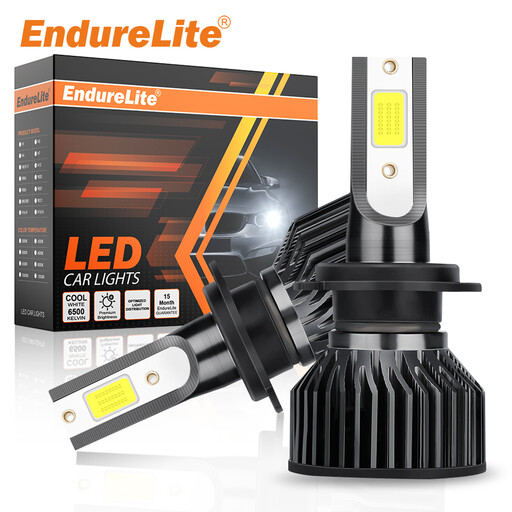
Why This Fits Their Persona: A practical option for DIY vehicle owners seeking 6000K cool-white light and a straightforward replacement for compatible H7 sockets.
The listing specifies a stock-bulb-sized design, plug-and-play installation and CANbus-ready electronics, helping address space and warning-light concerns.
6000K colour, aluminium alloy shell, built-in fan, IP68 waterproof specification and a stated 50,000-hour operating life.
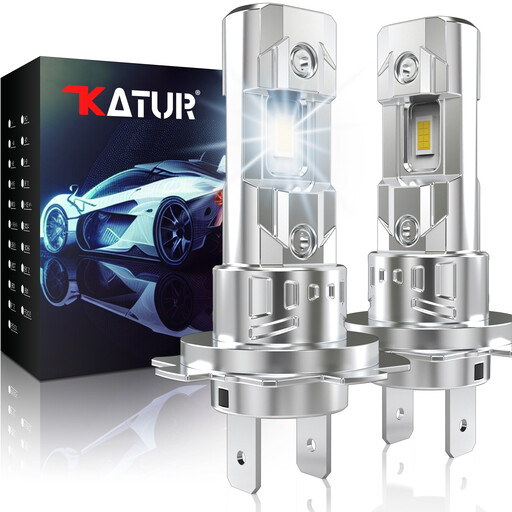
Why This Fits Their Persona: Suitable for drivers who prefer a compact, fanless design and want to minimise moving parts in a confined headlamp housing.
Its fanless construction avoids reliance on a small cooling fan, while the 1:1 mini design is intended for housings with limited rear clearance.
6000K white light, 1:1 mini form, 360-degree illumination specification and all-in-one plug-and-play construction.
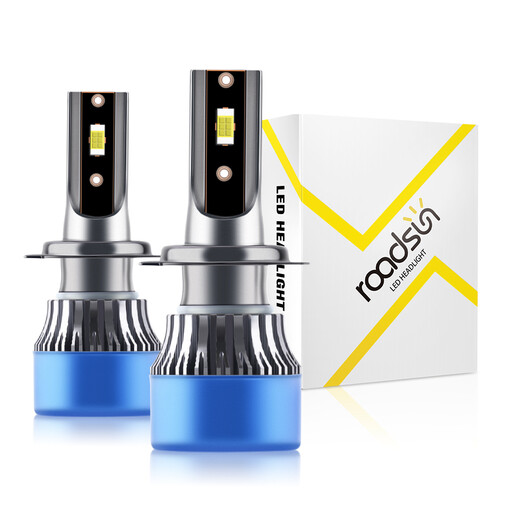
Why This Fits Their Persona: Designed for compatible UTV, ATV and off-road applications, as well as motorists looking for an H7 fog-light replacement.
The listing specifies a compact plug-and-play format, weather-resistant construction and a stated operating temperature range of -40°C to 85°C.
6000K colour, aluminium alloy housing, PC lens, shock-resistant design and compatibility with many H7 powersports sockets.
We have compiled a complete, real-time list of products that fully satisfy these strict selection criteria and UK safety regulations.
A plug-and-play H7 LED bulb usually connects to the original socket without rewiring, but installation still requires care:
LEDs generally use less electrical power than equivalent halogen lamps, but the actual saving depends on the bulb’s wattage and vehicle system. Fan-cooled bulbs may also produce a small operating sound. For daily UK use, a correctly aimed beam is more valuable than an inflated brightness percentage.
Legality depends on the vehicle, lamp housing, bulb approval and intended road use. Check current UK requirements, the vehicle handbook and MOT guidance before fitting an LED retrofit for public roads. Do not assume that an H7 socket or plug-and-play design confirms compliance.
Many listings state operating lives of 50,000 to 60,000 hours, but this is a manufacturer-provided figure. Actual service life can be affected by heat, moisture, voltage, vibration and the vehicle’s headlamp housing.
Not always. CANbus-ready bulbs may work without an additional component on many vehicles, but sensitive systems can still show errors or flicker. If the product listing identifies your vehicle type as requiring a decoder, follow that guidance before purchase.